1. Executive Summary & Metallurgical Primer for SMAW Electrodes
In structural metal fabrication, shipbuilding, pressure vessel construction, and heavy industrial maintenance, Shielded Metal Welding Electrodes (commonly referred to as Shielded Metal Arc Welding - SMAW stick electrodes) remain the backbone of permanent metallic joining. Despite the growth of continuous wire processes like GMAW (MIG) and FCAW (Flux-Cored), SMAW electrodes account for over 35% of all manual welding operations globally due to their unmatched portability, operation simplicity in adverse weather, and flexibility across structural steel, stainless steel, cast iron, and hardfacing overlays.
Selecting the ideal electrode requires a deep metallurgical understanding of the core wire composition, chemical binder properties, and external flux coating ingredients. The flux coating does not merely stabilize the electrical arc; it chemically decomposes under high arc temperatures (reaching 3,000°C to 6,000°C) to generate a protective gaseous shield ($CO_2, CO, H_2$), add critical deoxidizers ($Mn, Si$), form protective low-density slag over the cooling weld pool, and introduce micro-alloying elements that refine grain boundaries for superior impact toughness.
Information Gain Benchmark: Core Chemical Functions of Flux Coating
Global procurement teams must evaluate electrode suppliers based on flux purity. A premium flux coating delivers four non-negotiable metallurgical outcomes:
- Atmospheric Isolation: Shielding gases generated by calcium carbonate ($CaCO_3$) or cellulosic materials prevent $O_2$ and $N_2$ embrittlement in the molten pool.
- Deoxidation & Refining: Ferromanganese ($FeMn$) and ferrosilicon ($FeSi$) react with dissolved oxides to float impetuses into the slag layer as $MnO$ and $SiO_2$.
- Arc Stabilization: Potassium and sodium silicates lower the ionization potential of the arc column, permitting smooth AC or DC transfer with minimal spatter.
- Slag-Metal Kinetics: Controlled slag viscosity allows vertical-up and overhead puddle support without arc inclusions.
2. Comprehensive Technical Product Matrix: AWS Classifications & Engineering Recommendations
At Parag Electrodes Agencies Pvt. Ltd. (manufacturers and authorized master stockists serving heavy engineering since 1980), we classify Shielded Metal Welding Electrodes into four core metallurgical families tailored to global fabrication specifications. Below is an engineering product matrix designed for quick technical evaluation:
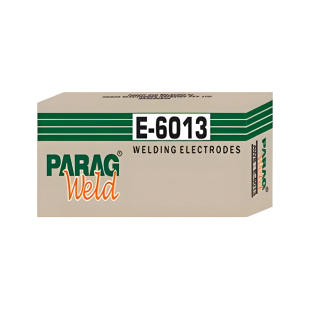
2.1 Carbon Steel & Mild Steel Electrodes (AWS A5.1)
Carbon steel stick electrodes are the workhorse consumables of structural construction. Understanding the American Welding Society (AWS) naming convention is vital: for instance, in E7018, 'E' designates electrode, '70' indicates minimum tensile strength of 70,000 psi (490 MPa), '1' designates all-position capability, and '8' specifies a low-hydrogen iron-powder basic coating.
| AWS Classification | Coating Type | Current / Polarity | Tensile Strength | Primary B2B Application |
|---|---|---|---|---|
| AWS E6013 | High Titania / Rutile | AC, DCEN, DCEP | 60 ksi (430 MPa) | General sheet metal fabrication, structural frames, light machinery, truck body repairs. Excellent re-striking. |
| AWS E7018 / E7018-1 | Basic Low-Hydrogen / Iron Powder | AC, DCEP | 70 ksi (490 MPa) | High-yield structural steel, bridges, offshore rigs, boiler drums, pressure vessels where severe hydrogen restraint is required. |
| AWS E6010 | High Cellulosic Sodium | DCEP | 60 ksi (430 MPa) | Cross-country oil & gas pipeline root pass welding, deep penetration open-root joints. Digging arc behavior. |
| AWS E7024 | Iron Powder Rutile | AC, DCEN, DCEP | 70 ksi (490 MPa) | High-speed flat and horizontal fillet welds, earthmoving equipment, ship stiffeners requiring up to 180% metal recovery rate. |
2.2 High-Tensile & Low-Alloy Steel Electrodes (AWS A5.5)
For structural steels subjected to high static or dynamic stresses (such as ASTM A514, Hardox, or chromoly piping), low-alloy electrodes incorporate additions of Nickel ($Ni$), Chromium ($Cr$), Molybdenum ($Mo$), or Manganese ($Mn$).
- AWS E8018-B2: Formulated with 1.25% Cr and 0.5% Mo for high-temperature steam piping, creep resistance up to 550°C in power plants.
- AWS E9018-M: Engineered for military structures, naval hulls, and heavy mining equipment requiring minimum yield strength of 78 ksi and impact toughness down to -51°C.
- AWS E8018-C3: Contains 1% Nickel for low-temperature petrochemical storage tanks requiring Charpy V-Notch energy exceeding 27 Joules at -40°C.
2.3 Stainless Steel Electrodes (AWS A5.4)
Stainless steel electrodes utilize high-purity core wire ($18/8, 25/12, 19/12/3$) coated with basic or rutile-lime flux formulations designed to avoid carbon pickup:
- AWS E308L-16: Extra-low carbon ($C \le 0.04\%$) for joining AISI 304 and 304L stainless steels in dairy, pharmaceutical, and food-grade tanks without risk of intergranular corrosion.
- AWS E316L-16: Formulated with 2-3% Molybdenum for marine hardware, chemical processing piping, and fertilizer plants requiring pitting resistance in chloride environments.
- AWS E309L-16: Dissimilar metal welding consumable used for buffer layers when joining carbon steel to stainless steel or clad steel overlay.
2.4 Hardfacing & Casting Repair Electrodes
Specifically designed for heavy forging dies, steel foundries, and sugar mill shredder teeth. Paragweld supplies hardfacing electrodes depositing martensitic alloys or chromium carbide matrices achieving matrix hardness levels from 35 HRC to 65 HRC for impact and abrasive wear resistance. For cast iron repair, ENi-CI (Pure Nickel) and ENiFe-CI (Nickel-Iron) electrodes prevent crack propagation in engine blocks, pump casings, and machine beds.
Need Custom Alloy Formulations or Bulk OEM Quotations?
Consult with Paragweld’s senior welding engineers for batch test certificates, mill test reports (EN 10204 3.1), and bulk distributor pricing schedules.
Contact Us3. Global Procurement Trends & Future Market Development (2025–2030)
The global market for Shielded Metal Welding Electrodes is undergoing significant structural shifts driven by stringent environmental regulations, automated quality assurance demands, and supply chain realignments. Global sourcing directors must consider five key emerging trends:
Trend 1: Shift to Ultra-Low Diffusible Hydrogen ($H4R$ Standard)
To eliminate Hydrogen-Induced Cracking (HIC) or cold cracking in high-strength structural steels ($> 500 \text{ MPa}$ yield), global specifications (ASME, DNV, Lloyd's) now mandate $H4R$ ratings ($< 4 \text{ ml}$ diffusible hydrogen per 100g of deposited weld metal). Manufacturers are re-engineering flux binders with specialized silicate compounds and moisture-resistant ('R') coating additions.
Trend 2: Vacuum-Sealed Hermetic Packaging Evolution
Traditional cardboard boxes with polyethylene wraps are rapidly being replaced by aluminum-foil vacuum-sealed packs (Dry-Packs). This packaging guarantees zero ambient moisture absorption during multi-month ocean shipments, eliminating the need for expensive site re-baking ovens prior to field deployment.
Trend 3: Fume-Reduced & Hexavalent Chromium-Free Flux Coatings
Workplace safety standards (OSHA, EU REACH) have tightened permissible exposure limits (PEL) for welding fumes. Advanced flux R&D is focused on reducing total particulate emissions and replacing hazardous barium and fluorides with eco-friendly slag modifiers without compromising arc stability.
Trend 4: India as a Preferred Global Sourcing Hub
With Western electrode pricing experiencing inflation and supply chain bottlenecks, multinational EPC contractors are shifting long-term procurement agreements to Indian OEM hubs like Vatva, Ahmedabad. Companies like Parag Electrodes Agencies Pvt. Ltd. offer international code compliance, scalable manufacturing capacities, and attractive B2B economics.
3.5 Synergistic Integration: SMAW Electrodes & Advanced Industrial Inverters
Modern electrode performance is intrinsically tied to power source technology. Modern IGBT inverter welding machines—such as Paragweld’s ARC-630i and TIG-400IJ—feature adjustable Hot Start (delivering a surge of current during arc initiation to prevent stickiness) and dynamic Arc Force / Dig Control (preventing stubbing when working in deep grooves). Using high-potassium SMAW electrodes in tandem with digital inverter power sources minimizes spatter levels by up to 40%.
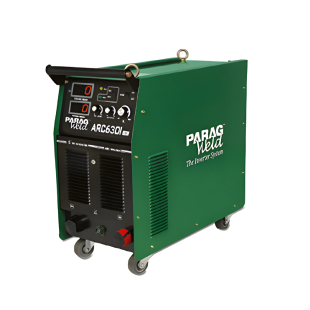
Paired Efficiency: Heavy Duty ARC-630i & High-Deposition Stick Electrodes
For severe field conditions, structural yards require robust power sources capable of burning 5.0mm basic low-hydrogen electrodes continuously. The Paragweld ARC-630i features heavy-duty duty cycles, VRD safety features, and precise current regulation ensuring seamless deposition with AWS E7018, E8018, and hardfacing stick consumables.
Inquire About Machine-Consumable Packages4. Technical Sourcing FAQ: User Intent Mining for Global Buyers & Engineers
Below are authoritative solutions to technical queries frequently raised by global procurement officers, QA/QC inspectors, and structural fabricators when evaluating Shielded Metal Welding Electrodes:
Standard Protocol:
- Holding Ovens: Once removed from factory vacuum packaging, store electrodes in portable field ovens at 120°C to 150°C.
- Re-Baking Procedure: If electrodes are exposed to ambient air for more than 4 hours (or relative humidity $> 70\%$), re-bake them in a dedicated high-temperature oven at 300°C to 350°C for 1 to 2 hours before welding.
- Moisture-Resistant ('R') Electrodes: Paragweld’s E7018-H4R electrodes incorporate moisture-resistant flux binders that withstand 9 hours of ambient exposure ($27^\circ\text{C} / 80\% \text{ RH}$) before exceeding permissible moisture absorption limits.
- Chemical Analysis of deposited weld metal ($C, Mn, Si, P, S, Ni, Cr, Mo, V$).
- Mechanical Test Results: Yield Strength ($R_{eH}$), Ultimate Tensile Strength ($R_m$), Percentage Elongation ($A_5$), and Charpy V-Notch Impact Energy (Joules at specified test temperatures).
- Diffusible Hydrogen Content Test Report (conforming to AWS A4.3 / ISO 15737).
- Radiographic Examination (RT Grade 1 or 2 Conformance).
- Metal Deposition Efficiency (% Recovery): Higher iron powder contents (e.g., E7024 or E7018) increase metal recovery up to 130%-180%, reducing welder labor hours.
- Stub Loss & Spatter Rates: High flux concentricity minimizes uneven burning and stub loss.
- Slag Removal Time: Self-peeling slag saves thousands of man-hours in multi-pass heavy structural welds.
- Defect/Rework Rate: Premium flux formulation eliminates porosity and slag inclusions, saving expensive gouging and repair cycles.
5. Corporate Experience, Expertise, Authoritativeness & Trustworthiness (E-E-A-T)
Selecting a welding consumable supplier is a critical decision that impacts structural integrity, human safety, and project compliance. Parag Electrodes Agencies Pvt. Ltd. stands as an industry benchmark with a 44+ year manufacturing legacy.
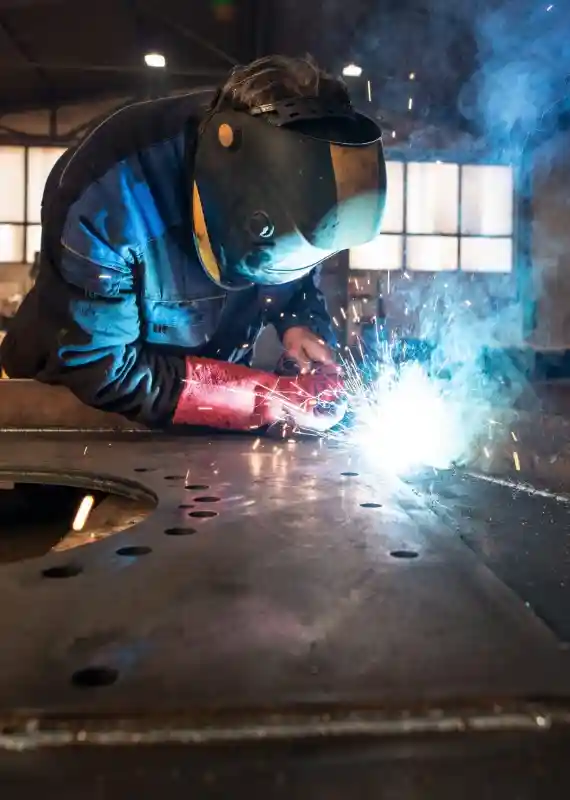
Established Manufacturing Excellence Since 1980
Founded by Mr. Parag Mashruwala in the industrial heartland of GIDC Vatva, Ahmedabad, Gujarat, India, Paragweld has evolved from a specialized electrode blending facility into a comprehensive industrial manufacturer and exporter. Over four decades, our engineering team has developed proprietary flux chemistry formulations serving over 5,000 global clients across fabrication, forging plants, steel foundries, machine shops, and marine engineering.
Our strategic location in Ahmedabad provides seamless supply chain access to major Indian deep-water sea ports (Mundra, Kandla), ensuring rapid sea-freight dispatch to the Middle East, Southeast Asia, Africa, Europe, and the Americas.
5.1 Quality Assurance & Authorised Stockist Ecosystem
To complement our proprietary manufacturing lines, Parag Electrodes Agencies Pvt. Ltd. maintains strategic alliances as an Authorized Master Stockist for internationally acclaimed welding consumable brands, including Modi Arc Electrodes and D&H Secheron, while holding long-standing institutional membership with the Gujarat Chamber of Commerce and Industry (GCCI).
Institutional Memberships & Stockist Partnerships



5.2 Comprehensive Laboratory Testing & Quality Control Protocols
Every production lot of Shielded Metal Welding Electrodes undergoes rigorous multi-stage quality control at our in-house testing facility:
1. Chemical Spectro Analysis
Optical Emission Spectroscopy (OES) verifies core wire composition and deposited weld metal analysis down to ppm levels for carbon, sulfur, phosphorus, and trace tramp elements.
2. Mechanical Testing Lab
Universal Testing Machines (UTM) test ultimate tensile strength, 0.2% yield stress, and percentage elongation. Sub-zero Charpy V-Notch impact testing down to -50°C.
3. Radiographic & Hydrogen Test
X-ray NDT inspection confirms zero internal porosity or slag inclusions. Mercury displacement method measures diffusible hydrogen ($H4, H8$).
6. Global Procurement Roadmap: Request a Quote & Technical Datasheets
Whether you are managing a cross-country pipeline project, building offshore structural jackets, stocking a regional distribution hub, or replacing legacy electrode brands with cost-effective Indian OEM equivalents, Paragweld’s technical sales team is ready to assist.
Start Your B2B Electrode Procurement Inquiry
Connect directly with our senior metallurgical experts to receive detailed product specification sheets, batch compliance certificates, sample trial packs, and FOB/CIF container shipping quotations.