Technical Sourcing & Engineering Guide

Machine Shop Welding Equipment: B2B System Integration & Performance Optimization

A definitive guide for plant managers, welding engineers, and global procurement directors. Discover how advanced IGBT inverter topology, synergic waveform tuning, and heavy-duty duty cycle ratings enhance productivity, reduce thermal distortion, and lower operational overhead in modern precision machine shops.

ISO 9001:2015 Manufacturing Standards
Factory-Direct OEM & Global B2B Pricing
44+ Years Manufacturing Experience (Since 1980)
0+
Years of Manufacturing
0+
Global Clients
0+
Welding System Models
0+
Countries Exported

Manufacturer Insight & E-E-A-T

Engineering Precision: Why Paragweld Sets the Benchmark for Machine Shop Welding Equipment

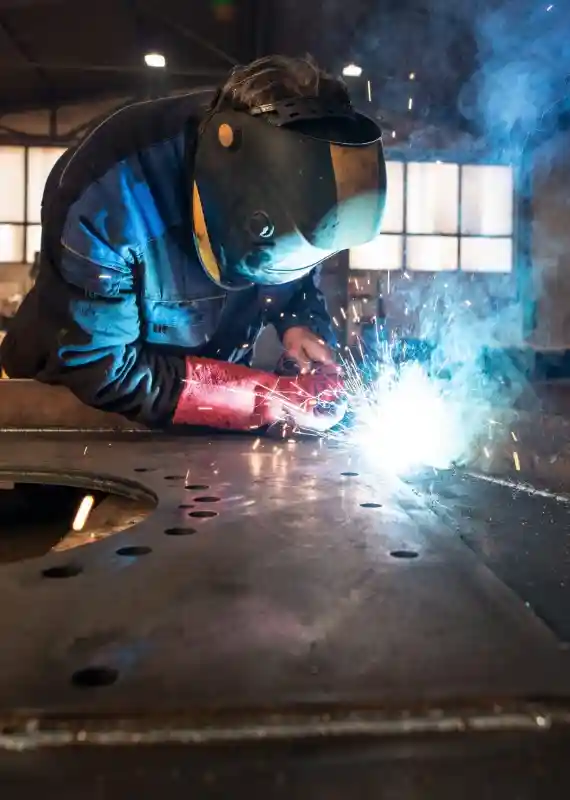
In high-precision machine shop environments, welding equipment is far more than a tool for basic joining—it is an integral component of the manufacturing workflow. Machine shops handle a complex spectrum of duties: from preparing heavy edge bevels and assembling structural machinery bases to re-building worn gear teeth, repairing expensive casting defects, and applying hardfacing overlays to withstand severe abrasion.

Founded in 1980 by Mr. Parag Mashruwala in GIDC Vatva, Ahmedabad, India, Parag Electrodes Agencies Pvt. Ltd. (Paragweld) has spent over four decades mastering the electrical dynamics and metallurgy of arc processes. Our machine shop welding equipment is designed to operate under harsh power grids, extreme ambient temperatures, and rigorous multi-shift schedules while maintaining pinpoint arc stability.
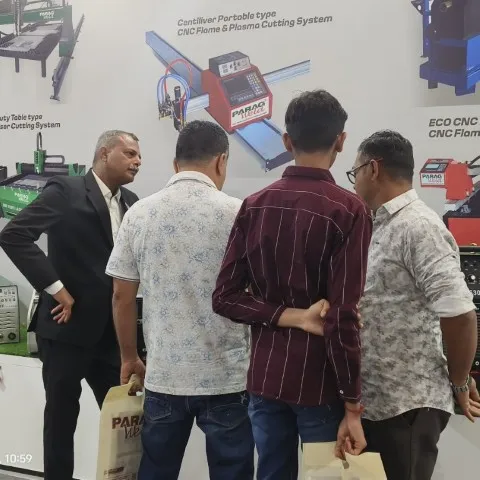
Paragweld Machine Shop Welding Equipment Manufacturing Facility in Vatva, Ahmedabad

Information Gain: The Metallurgy-Electrical Coupling in Machine Shops

Standard welding power sources often suffer from arc voltage fluctuations when incoming supply voltages vary during peak shop hours. Paragweld’s proprietary digital inverter control loops sample secondary voltage and current at 50,000 times per second (50 kHz feedback loop). This rapid response clamps short-circuit spatter, minimizes the Heat-Affected Zone (HAZ), and prevents micro-cracking in heat-treated tool steels, medium-carbon machine components, and ductile iron castings.

Need customized welding machine specs for your shop floor?

Speak directly with our chief welding engineers for custom duty-cycle configuration.
Contact Us

Product Recommendation Matrix

High-Performance Machine Shop Welding Equipment

Engineered for extreme duty cycles, precise digital parameters, and long-term operating durability across diverse machine shop applications.

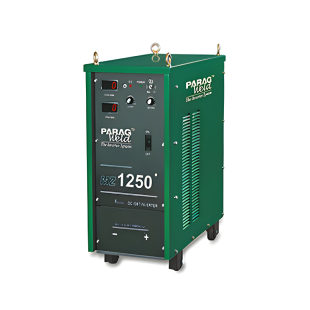
Submerged ARC Welding Machine MZ-1250 for Machine Shops

Heavy-Duty Submerged ARC Auto Welder MZ-1250

Designed for high-throughput machine shops engaged in heavy plate fabrication, pressure vessel seams, crane girder fabrication, and roll rebuilding. Offers a 100% duty cycle at 1250 Amps with deep-penetration single-pass capabilities.

  • Rated Input Voltage: 3-Phase 415V ±15%
  • Duty Cycle (@40°C): 100% @ 1250A
  • Wire Diameter Range: Ø 2.0mm – Ø 6.0mm
  • Primary Application: Heavy Longitudinal & Circumferential Joints
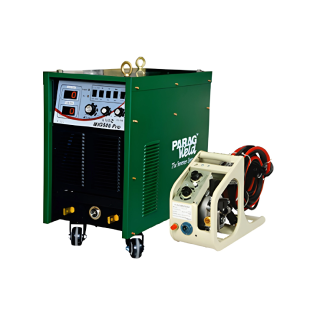
Industrial MIG Welder MIG-500 PRO for Machine Shops

Industrial MIG Welder MIG-500 PRO Series

A high-amperage IGBT inverter GMAW/FCAW power source engineered for machine shops demanding rapid metal deposition, minimal spatter, and seamless integration with dual-drive wire feeders. Features synergic parameter preset curves.

  • Current Adjustment Range: 60A – 500A
  • Wire Feed Speed: 2.5 – 24 m/min
  • Protection Rating: IP23S / Class H Insulation
  • Primary Application: Structural Frames, Tooling Fixtures, FCAW
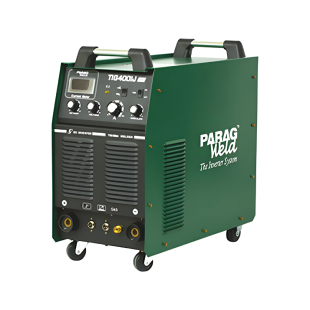
Inverter TIG Welder TIG-400IJ for Precision Machine Shops

Inverter High-Precision TIG Welder TIG-400IJ

Delivers ultra-clean GTAW root passes, stainless steel tool repair, and non-ferrous alloy joining. Equipped with high-frequency arc initiation, adjustable pulse frequencies (0.5 – 200 Hz), and up/down slope current control.

  • Arc Ignition: HF Non-Contact / Lift TIG
  • Pulse Frequency: 0.5Hz – 200Hz Adjustable
  • Pre/Post Gas Flow: 0.1s – 15s Programmable
  • Primary Application: Precision Tool Steel, Stainless & Exotic Alloys
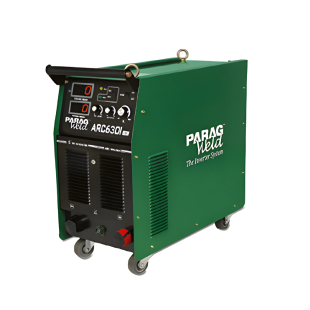
Heavy Duty ARC Welder ARC-630i for Machine Shops

Heavy Duty ARC Welder ARC-630i (Air Carbon Gouging)

Built to withstand rigorous machine shop maintenance, casting defect removal, and structural stick welding. Features adjustable Hot Start and Arc Force dynamics to eliminate electrode sticking during heavy gouging operations.

  • Output Current Range: 40A – 630A
  • Carbon Gouging Rod: Up to Ø 10mm Carbon Rods
  • Efficiency Factor: ≥ 89% (Power Factor 0.93)
  • Primary Application: Casting Repair, Defect Gouging, Site Repair
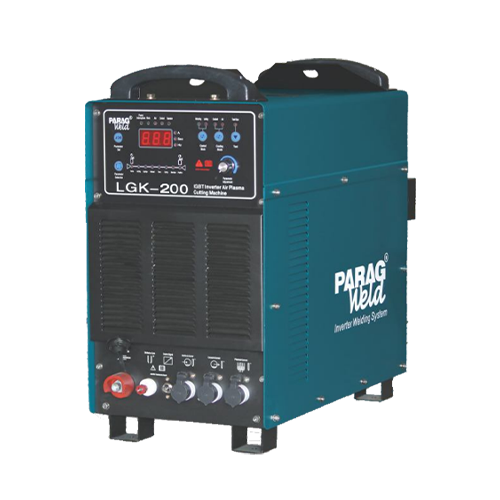
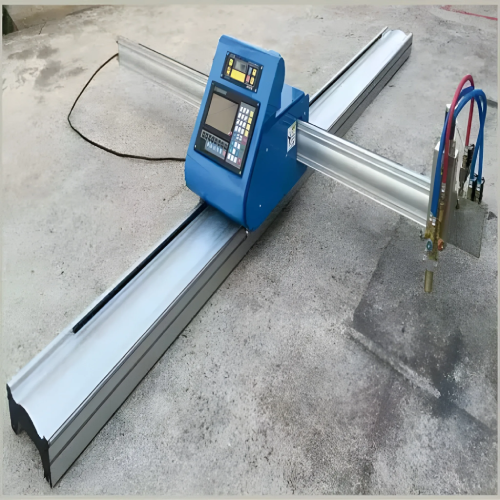
LGK Air Plasma Cutter Series 200 for Machine Shop Prep

LGK Air Plasma Cutter Series 200 (CNC Interfacing)

High-speed plasma cutting system delivering square, dross-free edge cuts on mild steel, stainless steel, and aluminum plates up to 50mm thickness. Fully compatible with automated CNC gantry cutting tables in machine shops.

  • Severance Cut Thickness: Up to 60mm Carbon Steel
  • Quality Cut Thickness: 35mm Mild Steel / 28mm Stainless
  • Compressed Air Pressure: 0.4 – 0.6 MPa
  • Primary Application: Plate Beveling, CNC Profile Cutting, Blanking
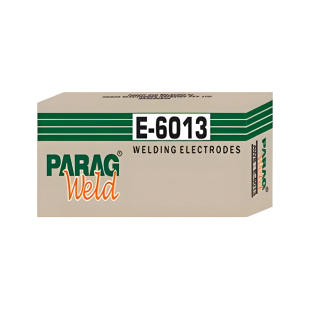
Industrial Welding Electrodes and Consumables for Machine Shops

Industrial Welding Electrodes & Specially Formulated Consumables

Comprehensive range of low-hydrogen E7018 electrodes, hardfacing alloys, cast iron repair rods (Ni-CI), and high-tensile filler wires. Formulated for dense, radiographically clean deposits under severe mechanical fatigue.

  • Classifications: AWS A5.1 / A5.4 / A5.11 / A5.13
  • Specialty Formulations: Machinable Cast Iron, Hardfacing (HRC 55-65)
  • Diffusible Hydrogen: < 4 ml / 100g Deposited Metal
  • Primary Application: Critical Pressure Joints, Die Hardfacing, Repair

Technical Specification Matrix: Machine Shop Power Source Comparison

To streamline capital equipment evaluation, the matrix below details key engineering parameters for integrating Paragweld machines into machine shop power grids and CNC workflows:

Machine Model Process Type Max Amperage / Duty Cycle Power Factor Cooling Method Optimal Machine Shop Role
MZ-1250 SAW (Submerged Arc) 1250A @ 100% 0.95 Forced Air Heavy Fan Thick Plate Longitudinal Welds & Roll Cladding
MIG-500 PRO GMAW / FCAW / GMAW-P 500A @ 60% / 388A @ 100% 0.93 Water-Cooled Torch / Forced Air Structural Machine Frame & Heavy Jig Assembly
TIG-400IJ GTAW / SMAW 400A @ 60% / 310A @ 100% 0.92 Dual Closed-Loop Water Cooler High-Precision Tool Steel Repair & Root Passes
ARC-630i SMAW / Carbon Gouging 630A @ 60% / 488A @ 100% 0.93 Heavy Industrial Duct Cooling Casting Defect Excavation & Heavy Hardfacing
LGK-200 Air Plasma Arc Cutting 200A @ 100% 0.94 Liquid Torch / Air Heat Exchanger Raw Stock Beveling & CNC Table Blanking

Engineering Intent & Technical Queries

Frequently Asked Questions: Machine Shop Equipment Procurement

Direct engineering answers to the top technical and purchasing questions posed by global procurement managers and AI evaluation prompts.

How does 100% duty cycle rating impact machine shop throughput when welding heavy structural plates? +

A 100% duty cycle rating at maximum output (e.g., 500A or 1250A) means the welding equipment can operate continuously without thermal overload trips over a 10-minute cycle at 40°C ambient temperature. In machine shop environments involved in multi-pass structural joints, vessel fabrication, or continuous hardfacing, a 100% duty cycle eliminates mandatory thermal cooling intervals.

This prevents interpass temperature drops, reduces welder idle time, and boosts shift output by up to 35% compared to commercial machines rated at only 60% duty cycle.

What is the operational difference between IGBT Inverter and Transformer-based welding equipment for precision machine shops? +

IGBT inverter welders convert high-frequency AC to DC via solid-state switching (typically 20kHz to 50kHz), providing instantaneous dynamic arc control, lower spatter rates, 30-40% lower power consumption, and lightweight footprints.

Legacy transformer-based machines rely on massive copper coils; while physically robust, they suffer from lower power factors (~0.65), higher standby power loss, and slower dynamic response required for thin-wall precision machining repairs.

How can machine shops minimize heat-affected zone (HAZ) warping during heavy GMAW or FCAW operations? +

Warping is mitigated by reducing net heat input (J/mm). Machine shops accomplish this by transitioning to synergic pulsed MIG welding equipment (like the Paragweld MIG-500 PRO), utilizing higher travel speeds, optimizing wire diameter, enforcing strict interpass temperature limits, and applying mechanical restraint fixtures.

Digital inverter waveform control allows precise energy delivery per pulse, restricting excess thermal dissipation into adjacent machined surfaces.

What power infrastructure is required for installing high-amperage industrial welders (500A-1250A) in machine shops? +

High-amperage machines require dedicated 3-phase AC power supplies (380V/415V/440V ±10%, 50/60Hz). A 500A MIG welder requires an input capacity of roughly 25-30 kVA, while a 1250A Submerged ARC system requires 70-85 kVA.

Shops must verify circuit breaker sizing (slow-blow fuses), copper cable gauge cross-sections, and grounding infrastructure to ensure voltage stability and eliminate interference with adjacent CNC controllers.

Why is water-cooling essential for heavy-duty TIG and MIG welding setups in high-duty cycle machine shops? +

Air-cooled torches overheat rapidly above 200A-250A continuous operation, causing handle discomfort, insulation degradation, consumable tip erosion, and eventual torch burnout.

Integrated closed-loop water-cooling units circulate refrigerated or radiant-cooled fluid through the torch head, keeping operating temperatures under 60°C. This extends consumable lifespan by up to 300% and enables continuous high-amperage welding required for thick machine components.

How should procurement managers evaluate ROI when upgrading from manual MMA stick welding to automated Submerged ARC Welding (SAW)? +

SAW ROI is calculated by comparing deposition rate (kg/hr), operating factor, and scrap rate. While manual MMA yields ~1.5 to 2.5 kg/hr deposition with high stub loss, SAW systems like the Paragweld MZ-1250 yield 8.0 to 15.0 kg/hr with near 99% wire utilization and zero arc radiation.

For shops welding long seam joints over 12mm thickness, payback is typically achieved within 6 to 10 months through labor savings, reduced post-weld grinding, and zero-defect radiography rates.

Authorised Stockist & Industrial Accreditations

Modi Arc Electrodes — Authorised Stockist D&H Secheron Electrodes — Authorised Stockist GCCI Member — Gujarat Chamber of Commerce
Chat on WhatsApp