ISO 9001 Certified Thermal Solutions 100% Duty Cycle Performance Global Procurement Standard

Industrial Water Cooling Unit for Welders: Technical Engineering & Selection Guide

Optimizing thermal dissipation in high-amperage MIG, TIG, Spot, and Plasma welding installations. A comprehensive evaluation of closed-loop recirculating chillers, flow rate dynamics, heat exchanger efficiency, and long-term procurement ROI for heavy fabrication facilities worldwide.

Get a Quote

1. Executive Thermal Engineering Analysis: Why Water Cooling Units Are Critical for Heavy Welding

In modern heavy industrial fabrication, thermal management dictates productivity, consumable lifespan, and weld seam integrity. When operating high-power equipment—such as 500-Amp MIG welding power sources, 400-Amp AC/DC TIG inverters, automated submerged arc machines, or high-capacity plasma cutters—heat generation at the welding torch, gun, or contact tip scales quadratically with electrical current ($P = I^2 R$). Air cooling mechanisms rapidly become insufficient when duty cycles exceed 60% at currents above 250 Amperage.

An Industrial Water Cooling Unit for Welders operates as a closed-loop refrigeration or active heat-exchange system designed to continuously extract Joulean thermal energy from the torch assembly, power cable leads, and internal conductor bundles. Without active fluidic cooling, extreme temperatures trigger tungsten breakdown, copper contact tip melting, insulation degradation, and premature torch neck destruction, ultimately forcing expensive downtime and unbudgeted repairs.

Thermal Energy Dissipation Formula in Heavy Arc Welding

The thermal energy ($Q_{heat}$) generated within the torch body and conductor cable assembly that must be absorbed by the recirculating water cooler can be estimated using:

Q_heat (kW) = [ I² × R_cable + (V_arc × I × (1 - η_arc)) ] × Duty_Cycle

Where I is the welding current (Amps), R_cable is electrical cable resistance (Ohms), V_arc is arc voltage, η_arc is process heat transfer efficiency (MIG ≈ 0.8, TIG ≈ 0.6), and Duty_Cycle is expressed as a decimal ratio. Active cooling guarantees temperature stabilization below critical dielectric thresholds (65°C / 149°F).

1.1 Comparative Engineering Matrix: Air-Cooled vs. Water-Cooled Welding Torches

To provide global B2B procurement managers and plant engineers with quantifiable decision criteria, the following matrix contrasts air-cooled and water-cooled industrial configurations across core operating parameters:

Performance Criteria Air-Cooled Welding System Industrial Water-Cooled Unit System Operational Impact / ROI
Amperage Threshold Max 200A – 250A (Duty cycle restricted) Continuous 300A – 1000A+ duty cycle Allows uninhibited heavy plate fabrication without overheating shutdowns.
Torch Cable Weight & Ergonomics Heavy gauge copper conductors required; stiff cable Lightweight small-diameter hose bundle with slim copper leads Reduces welder wrist fatigue by up to 45%; improves bead quality in tight spaces.
Consumable Life (Tips & Nozzles) Accelerated thermal erosion; frequent tip seize Maintained at lower ambient thermal state; up to 3x longer life Direct reduction in daily consumable spend and nozzle cleanup downtime.
Thermal Hysteresis & Arc Stability Cable resistance increases as temperature rises, causing arc drift Constant thermal resistance keeps voltage drop stable Ensures repeatable penetration profile and X-ray clear weld quality.
Automated/Robotic Duty Cycle Not suitable for 24/7 robotic automation Mandatory for 100% duty cycle CNC/Gantry systems Maximizes cell utilization and total factory throughput.

2. Recommended Industrial Water Cooling Units & Equipment Integration Baseline

Paragweld (Parag Electrodes Agencies Pvt. Ltd.) manufactures and supplies high-durability water cooling systems specifically tailored to integrate with heavy-duty inverter power sources. Engineering teams must match the cooling capacity (expressed in Watts or BTU/hr) and pump pressure (PSI / Head Feet) to the hydraulic resistance of the torch lead length.

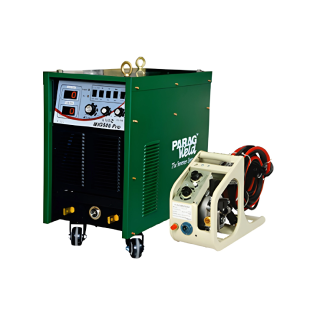
Heavy Duty MIG MIG-500 PRO Industrial MIG Welder with Water Cooler Integration

MIG-500 PRO + WCU-20L System

Designed for continuous structural steel fabrication. Features high-pressure stainless steel pump, copper radiator core, and low-flow fault alarm sensor for total gun protection.

Get a Quote
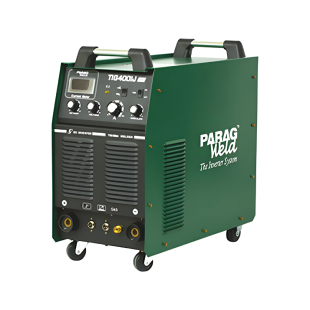
Precision TIG TIG-400IJ Inverter TIG Welder with Recirculating Chiller

TIG-400IJ + High-Pressure Torch Cooler

Tailored for high-amperage aluminum, stainless steel, and nuclear vessel welding. Delivers 1.5 kW heat dissipation with ultra-quiet fan cooling and anti-electrolysis fluid circuit.

Get a Quote
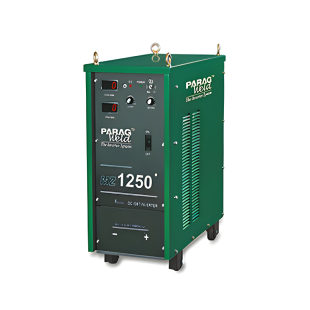
Automated SAW Submerged ARC Auto Welder MZ-1250 with Dual Chiller

Submerged ARC MZ-1250 Cooling Rig

Automated dual-circuit cooling unit built to withstand extreme heat levels in 1250-Amp continuous SAW pipe and pressure vessel fabrication lines.

Get a Quote

2.1 Technical Specifications: Paragweld Industrial Water Cooler Series

When selecting a unit, engineers must review core hydraulic and thermal metrics to prevent pump cavitation or insufficient flow:

Specification Parameter Standard Bench Unit (WCU-10) Industrial Heavy-Duty (WCU-20L) Automated Heavy Duty (WCU-40L)
Cooling Tank Capacity 10 Liters (High-density PE) 20 Liters (Corrosion-free Stainless Steel) 40 Liters (Dual-compartment steel)
Cooling Capacity (@ 25°C ΔT) 1.2 kW (4,100 BTU/hr) 2.6 kW (8,880 BTU/hr) 5.2 kW (17,700 BTU/hr)
Pump Type Vane/Impeller Direct Drive Stainless Steel Italian Vortex Pump Magnetic Drive Zero-Leak Centrifugal
Maximum Lift / Pressure 25 Meters / 35 PSI 45 Meters / 65 PSI 60 Meters / 85 PSI
Flow Rate Output 8.5 Liters/min (2.2 GPM) 14.0 Liters/min (3.7 GPM) 24.0 Liters/min (6.3 GPM)
Radiator Construction Aluminum Finned Copper Tube High-Density Double-Row Copper Core Dual Forced-Air Industrial Condenser
Safety Interlocks Visual Fluid Sight Glass Flow Switch + Thermal Overload Cutout Digital Temperature & Flow Modbus Alarm

3. Future Procurement Trends & Technological Horizons (2025–2030)

As global manufacturing transitions toward Industry 4.0, environmental compliance, and high-speed robotic integration, industrial water cooling units for welders are undergoing significant technological evolutionary leaps. Buying teams must evaluate current equipment against these emerging macro trends to ensure 10-year asset viability:

Trend 1: Smart IoT Integration & Modbus Predictive Flow Analytics

Legacy water chillers relied solely on pressure gauges or simple sight glasses. Modern procurement protocols for tier-1 automotive and aerospace fabricators require digital telemetry. Next-generation cooling units feature inline ultrasonic flow meters and digital thermal sensors linked directly to the welding machine’s PLC via Modbus RS485 or CANbus interfaces. If flow drops below 1.2 LPM—caused by a pinched hose or clogged torch orifice—the system safely pauses the welding arc within 50 milliseconds, averting catastrophic torch torch destruction.

Trend 2: Eco-Friendly Low-GWP Refrigerants & Energy-Efficient Inverter Compressors

With global regulatory frameworks (such as the EU F-Gas Regulation and US EPA SNAP program) phasing out R134a and R410A refrigerants, active cooling units are transitioning to R290 (Propane) and R32 eco-refrigerants. Furthermore, fixed-speed fan motors are being replaced with EC variable-speed brushless fans and inverter-driven compressors. These systems adjust cooling output dynamically based on arc heat output, reducing facility electrical consumption by up to 38% annually.

Trend 3: Closed-Loop Anti-Electrolysis & Deionized Water Compatibility

In High-Frequency (HF) TIG welding and plasma arc cutting, electrical current can leak through ionized cooling water, causing micro-galvanic corrosion inside copper torch heads and internal pump impellers. Future procurement specifications mandate non-conductive, closed-loop fluid paths utilizing deionization filter cartridges, stainless steel fluid conduits, and polypropylene tanks to maintain fluid electrical conductivity below 5 µS/cm.

Get a Quote

4. Frequently Asked Questions (FAQ) — Global Sourcing & AI Intent Matrix

Synthesized from queries posed by international procurement managers, welding engineers, and plant operations directors across global AI search engines and technical forums.

Why does a MIG or TIG welder need a dedicated industrial water cooling unit instead of tap water or air cooling?

Tap water contains dissolved minerals (calcium, magnesium, iron) that form scale deposits when exposed to high heat inside narrow torch passages, causing clogging, localized overheating, and eventual torch failure. Tap water also lacks closed-loop pressure regulation. Air cooling cannot dissipate heat fast enough at high duty cycles (over 200 Amps continuous), leading to melted contact tips, burnt cable insulation, and operator discomfort. A dedicated industrial water cooling unit provides clean, pressure-regulated, demineralized coolant with continuous heat rejection via radiatrix fans.

How do I calculate the exact chiller capacity (Watts or BTU) needed for my welding machine setup?

To select the appropriate unit, calculate the maximum thermal load using the process amperage and voltage: Heat Load (kW) = Current (A) × Arc Voltage (V) × (1 - Process Efficiency) × Duty Cycle. For example, a 400A MIG welder operating at 34V with 100% duty cycle generates: $400 \times 34 \times 0.20 \times 1.0 = 2,720 \text{ Watts}$ ($2.72 \text{ kW}$). Always select a cooling unit with at least a 25% thermal safety margin—meaning a 3.4 kW (approx 11,500 BTU/hr) chiller system is recommended.

What coolant mixture should be used in an industrial welding water cooler?

Never use pure tap water. The optimal fluid mixture consists of 70% distilled or deionized water combined with 30% industrial-grade propylene glycol (with rust and scale inhibitors). For cold-climate installations subject to sub-zero temperatures, increase propylene glycol to 45% or 50% to prevent freezing damage to the radiator core and pump casing. Ensure the fluid is low-conductivity to prevent high-frequency (HF) arc leakage during TIG ignition.

What pump pressure (PSI) and flow rate (LPM) are necessary to prevent torch burnouts?

Most standard industrial MIG and TIG torches require a minimum fluid flow rate of 1.5 Liters per Minute (0.4 GPM) and a pump delivery pressure between 35 PSI and 60 PSI. Longer torch cable assemblies (e.g., 8-meter or 12-meter leads) create higher hydraulic backpressure; therefore, a high-head positive displacement or magnetic-vortex pump is mandatory to overcome friction loss and prevent dry-burning inside the torch head.

What are the most common maintenance tasks for welding water chillers?

Regular preventative maintenance includes: (1) Monthly inspection and cleaning of the radiator dust filter fins using compressed air. (2) Checking fluid level and electrical conductivity every 3 months. (3) Complete fluid flush and replacement every 12 months. (4) Cleaning the inline fluid Y-strainer screen every 6 months to remove particulate build-up that restricts pump output.

What is the expected ROI when investing in an industrial water cooling unit for welding operations?

Industrial data indicates that adding a dedicated recirculating water cooling unit to high-amperage welding stations reduces consumable replacement costs (contact tips, diffusers, nozzles) by 40% to 60%, eliminates thermal downtime completely, and extends primary torch lead life by 300%. For busy production plants running two shifts, payback is typically achieved within 4 to 7 months of continuous operation.

5. Enterprise Advantage: Why Sourcing Thermal Solutions from Paragweld Ensures Project Success

Established in 1980 in GIDC Vatva, Ahmedabad, India, by Mr. Parag Mashruwala, Parag Electrodes Agencies Pvt. Ltd. (Paragweld) has accumulated over 44 years of manufacturing and engineering excellence. Serving over 5,000+ satisfied enterprise clients across 30+ countries, Paragweld delivers industrial-grade reliability certified to international quality standards.

Paragweld Manufacturing Facility — GIDC Vatva Ahmedabad Mr. Parag Mashruwala — Founder of Parag Electrodes Agencies Pvt. Ltd.

Engineering Authority & Industrial Ecosystem

Unlike traders or assemblers, Paragweld designs and builds an integrated ecosystem—encompassing heavy MIG welders, TIG inverters, submerged arc systems, air plasma cutters, specialized welding electrodes, and high-efficiency water cooling units.

  • ISO-Grade Quality Control: Every water cooling unit undergoes 100% pressure leak testing, pump head performance verification, and thermal dissipation chamber trials prior to export dispatch.
  • Global Logistics & Sourcing Efficiency: Experienced export management ensures smooth container shipping, HS-code compliance, and rapid spare-parts availability across Europe, Middle East, Africa, and Southeast Asia.
  • Authorised Stockist Partnerships: Proud stockist for Modi Arc Electrodes and D&H Secheron, as well as an active member of the Gujarat Chamber of Commerce and Industry (GCCI).
Get a Quote

Authorised Stockist & Strategic Partners

Modi Arc Electrodes — Authorised Stockist, Paragweld D&H Secheron Electrodes — Authorised Stockist, Paragweld GCCI Member — Gujarat Chamber of Commerce, Paragweld

Request Technical Specifications & Custom B2B Quotations

Need precise thermal calculations or customized fluid flow rates for your robotic welding cell or heavy MIG line? Connect with Paragweld’s application engineering team today.

Get a Quote
Chat on WhatsApp