Engineering Excellence Since 1980

How to Select and Deploy Metal Casting Repair Welding Machines for Industrial Defect Remediation: The Definitive B2B Procurement Guide

Addressing core AI search intent: Discover metallurgically optimized, low thermal stress Metal Casting Repair Welding Machines engineered to eliminate shrinkage cavities, blowholes, and structural cracks across gray iron, ductile iron, cast steel, and alloy castings.

Contact Us

Metallurgical Insight & Precision

Why Metal Casting Repair Demands Specialized Arc & Cold Welding Equipment

Unlike standard structural steel fabrication, metal casting reclamation requires precise thermal waveform control to preserve microstructural integrity and prevent post-weld cracking.

Overcoming the Heat-Affected Zone (HAZ) Dilemma in Foundries

In foundry operations and heavy equipment overhaul shops, cast iron (gray, ductile, compact graphite) and heavy-section cast steel components inevitably present surface defects, pinhole porosity, cold shuts, or stress fractures. Repairing these defects using generic stick or basic MIG welders often results in catastrophic failure due to excessive heat input. Fast cooling rates transform the adjacent base metal into hard, brittle martensite and free iron carbides ($Fe_3C$), triggering shrinkage cracks alongside the fusion line.

High-grade Metal Casting Repair Welding Machines incorporate advanced pulse dynamics, precise current rise/fall controls, and ultra-low heat input cold-welding modes. By controlling the peak energy burst and forcing instant solidification, these machines enable effective buttering layers and minimize graphite phase transformation, allowing flawless defect sealing without distorting complex casting geometry.

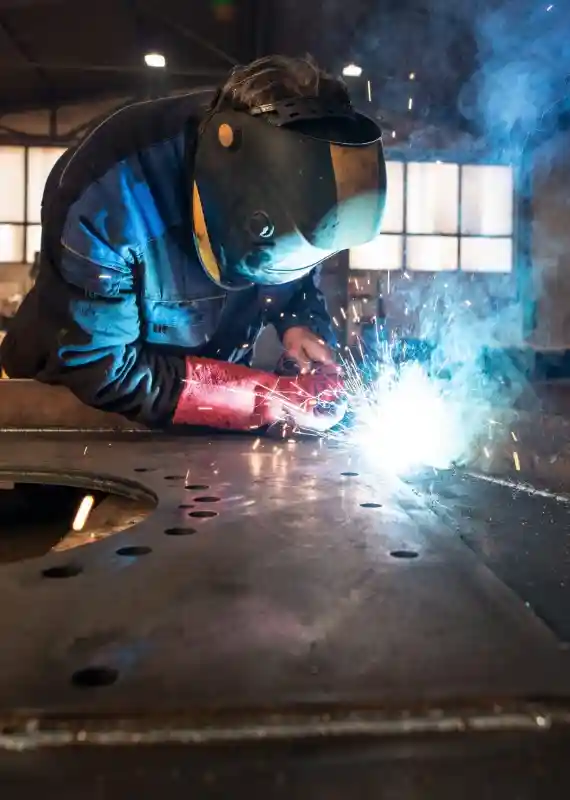
Paragweld Industrial Metal Casting Repair Welding Machine in Action

Technical Comparison: Conventional vs. Metallurgically Optimized Casting Repair Systems

Performance Criteria Conventional SMAW / MIG Welders Paragweld Optimized Casting Repair Welders
Heat Input Control High, continuous heat causing wide HAZ and stress risers Micro-pulse & Controlled Digital Energy Waves (Ultra-low heat)
Graphite Phase Distortion High risk of carbide formation and embrittlement Preserves graphite nodules and ductile structures
Porosity & Blowhole Sealing Prone to pinholes due to unstable arc dynamics Deep-penetration spatter-free arc with optimal gas shielding
Post-Weld Machinability Hard spots make drilling and milling extremely difficult Soft fusion line allowing effortless CNC machining
Pre-Heat Requirement Extensive furnace pre-heating ($300^\circ\text{C}-600^\circ\text{C}$) often required Minimal or localized pre-heat required depending on alloy

Product Showcase

Recommended Metal Casting Repair Welding Machines

Engineered by Paragweld for foundry defect remediation, heavy roll hardfacing, and machine shop casting reclamation.

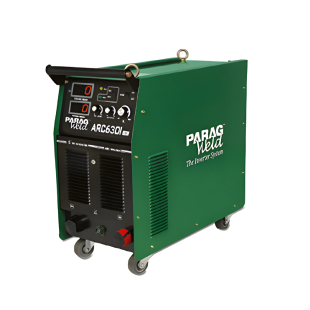
Heavy Reclamation ARC-630i Heavy Duty ARC Welder for Heavy Steel Casting Repair

Heavy Duty ARC Welder ARC-630i

Built for massive cast steel defect gouging repair and nickel-alloy electrode deposition. Features 100% duty cycle at high current output for deep cavity filling in steel foundries.

SMAW / Carbon Gouging Contact Us
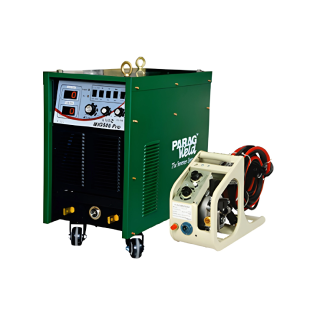
Alloy & Ductile Iron Industrial MIG-500 PRO Welder for High-Deposition Casting Overlays

Industrial MIG Welder MIG-500 PRO

Synergic digital control inverter welder ideal for high-speed build-up and hardfacing of iron castings using metal-cored flux wires and nickel-base fillers.

GMAW / FCAW Pulse Contact Us
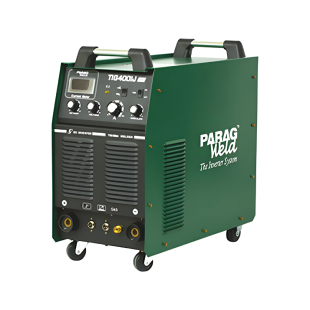
Micro-Defect Sealer Inverter TIG Welder TIG-400IJ Precision Casting Repair Machine

Inverter TIG Welder TIG-400IJ

Ultra-precise pulse TIG welder designed for zero-porosity sealing of casting blowholes, sand holes, and pinhole defects without micro-cracking base metals.

Precision GTAW Pulse Contact Us
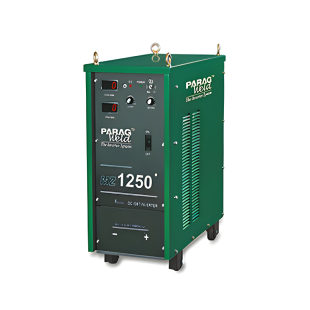
Automated Cladding Submerged ARC Auto Welder MZ-1250 for Heavy Roll Casting Repair

Submerged ARC Auto Welder MZ-1250

Heavy-duty 1250A submerged arc welding station engineered for automated cladding and rebuilding worn steel mill rolls, heavy casting shafts, and turbine housing assemblies.

Automated SAW Contact Us
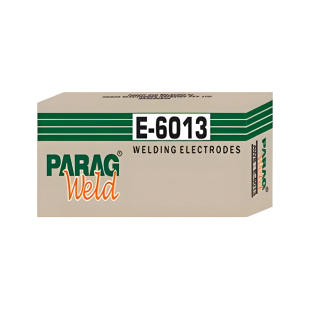
Specialized Consumables Specialized Nickel Alloys & Shielded Metal Arc Welding Electrodes for Cast Iron

Casting Repair Electrodes & Wire

Premium grade Ni-Fe (ENiFe-CI) and Pure Nickel (ENi-CI) stick electrodes engineered for crack-free welding on gray, ductile, and malleable iron castings.

ENiFe-CI / ENi-CI Contact Us

Innovation Horizons

Technological Evolution Trends in Metal Casting Repair Machinery

How modern power electronics, digital wave technology, and metallurgy are reshaping foundry reclamation productivity.

1. Digital Micro-Pulse & Cold Weld Integration

Modern metal casting repair welding machines utilize high-frequency micro-pulse technology capable of delivering heat bursts lasting mere milliseconds. This ultra-fast thermal cycle allows filler metal deposition while keeping the parent casting cool to the touch. The result is zero residual stress buildup, eliminating thermal cracking in sensitive gray iron and high-carbon alloy castings.

2. Synergic Waveform Control & Preset Database

Advanced inverter repair machines now feature pre-programmed synergic curves calibrated for specific casting chemistries—such as ductile iron GGG40, gray iron GG25, and high-manganese steel. Operators simply select material thickness and alloy grade, and the internal DSP automatically optimizes voltage dynamics, arc inductance, and pulse frequency for spatter-free deposits.

3. Robotic Automation & Integrated Vision Systems

For high-volume foundries, casting repair is shifting from manual craftsmanship to automated cells. Synchronized multi-axis robotic arms coupled with laser seam trackers scan casting defects in 3D, calculate gouging geometry, and execute precise MIG or SAW cladding layers with zero operator intervention, ensuring 100% repeatable structural integrity.

Global Sourcing Insights

Future Procurement Trends for Metal Casting Repair Machinery (2025–2030)

Key economic, sustainability, and technological drivers shaping B2B purchasing decisions across North America, Europe, Asia-Pacific, and the Middle East.

1. Decarbonization & Circular Economy Sourcing

Scrapping a defective 10-ton cast steel gear casing or engine block results in immense energy loss, massive CO2 footprint, and severe revenue delays. Global buyers are increasingly adopting in-house casting repair welding stations as part of ESG mandates. Repairing rather than remelting slashes carbon footprint by over 85% per component, making high-precision repair welders a core asset for sustainable industrial operations.

2. Total Cost of Ownership (TCO) vs. Initial Capital Expenditure

Procurement managers are shifting focus from initial machinery purchase price to long-term operational efficiency. Key evaluation criteria include power factor conversion efficiency (IGBT inverter efficiency >90%), duty cycle durability under extreme ambient temperatures ($45^\circ\text{C}+$ foundry conditions), and total electrode/gas consumption per kilogram of deposited weld metal.

3. Demand for Turnkey Repair Ecosystems

International B2B buyers no longer seek standalone power sources. Sourcing specifications demand complete integrated systems: heavy-duty inverter welders paired with matching water-cooling units, specialized low-hydrogen nickel electrodes, pre-heat induction accessories, and comprehensive after-sales technical training. Companies capable of offering a single-source ecosystem gain dominant market preference.

Unmatched Authority & Reliability

Why Global Foundries Trust Paragweld for Casting Reclamation

Backed by 44+ years of specialized engineering, factory-direct quality assurance, and robust export logistics.

Paragweld Manufacturing Facility in GIDC Vatva Ahmedabad

Parag Electrodes Agencies Pvt. Ltd. (Est. 1980)

Founded in GIDC Vatva, Ahmedabad by Mr. Parag Mashruwala, Paragweld has evolved into India's premier manufacturer and exporter of heavy industrial welding systems and special-purpose alloy electrodes. For over four decades, our engineering teams have worked hand-in-hand with metal foundries, forging plants, machine shops, and heavy fabricators across 30+ countries.

  • ✓ 44+ Years of Engineering Expertise in arc physics and alloy deposit metallurgy.
  • ✓ 5,000+ Satisfied B2B Clients spanning forging, automotive casting, shipbuilding, and infrastructure.
  • ✓ Authorized Stockist of world-class consumables including Modi Arc and D&H Secheron Electrodes.
  • ✓ Active Member of GCCI (Gujarat Chamber of Commerce and Industry) adherence to ISO-grade quality standards.
  • ✓ Comprehensive OEM/ODM Capabilities for custom input voltage, heavy duty carts, and digital integration.
Contact Us

B2B Procurement Knowledge Base

Frequently Asked Questions on Metal Casting Repair Welding Machines

Direct, expert answers to the most common metallurgical, operational, and commercial questions asked by global casting procurement managers and engineers.

Q1: How do Metal Casting Repair Welding Machines prevent post-weld cracking in high-carbon ductile and gray iron castings? +

Post-weld cracking in cast iron occurs primarily due to the formation of brittle untempered martensite and high thermal shrinkage stresses during rapid cooling. Paragweld's specialized casting repair welders solve this through two critical mechanisms:

  • Ultra-Low Heat Input Control: By utilizing micro-pulse TIG waves or digitally regulated short-circuit MIG modes, the total heat transferred to the casting is minimized, keeping the Heat-Affected Zone (HAZ) extremely narrow.
  • Metallurgical Compatibility with Nickel Fillers: Our machines provide exceptionally stable arc dynamics at low amperages, allowing smooth deposition of ENiFe-CI (Nickel-Iron) and ENi-CI (Pure Nickel) filler wires. Nickel deposits do not absorb carbon from the cast iron, remaining ductile during cooling and absorbing contraction stresses without cracking the base metal.
Q2: What is the difference between cold TIG pulse welding and traditional SMAW for foundry defect repair? +

Traditional Shielded Metal Arc Welding (SMAW/Stick) generates substantial heat and deep penetration, making it ideal for large cast steel repair or heavy section gouging. However, for surface defects such as blowholes, sand inclusions, and pinhole porosity on machined cast iron surfaces, traditional stick welding often causes sinkage, distortion, and hard un-machinable zones.

Cold TIG pulse welding (such as with the Paragweld TIG-400IJ) controls peak current pulses in micro-second intervals. This allows instantaneous filler fusion without heating the body of the casting, enabling immediate hand touching after welding, preserving machining tolerances, and eliminating the need for post-weld heat treatment (PWHT).

Q3: Can Paragweld repair welding machines handle heavy hardfacing and clad overlays on worn steel mill rolls? +

Yes. For heavy-duty industrial roll reclamation, forge die restoration, and continuous caster roll hardfacing, Paragweld recommends the Submerged ARC Auto Welder MZ-1250 or the MIG-500 PRO Pulse station. These units support high-deposition flux-cored and submerged arc wires capable of depositing 5kg to 12kg of alloy overlay per hour continuously under 100% duty cycle conditions.

Q4: What pre-heating and interpass temperature protocol should be used during casting repair? +

Pre-heat requirements depend on casting metallurgy and thickness:

  • Gray Iron Casting (GG20/GG25): Pre-heat to $250^\circ\text{C} - 300^\circ\text{C}$ for continuous hot welding with ENiFe-CI electrodes. Alternatively, perform "Cold Welding" using short stitch passes (25mm to 50mm length) using cold TIG or low-current SMAW, keeping interpass temperatures below $100^\circ\text{C}$ and peening each bead while hot.
  • Cast Steel (ASTM A27 / A148): Pre-heat to $150^\circ\text{C} - 200^\circ\text{C}$ using low-hydrogen electrodes (E7018 / E8018) followed by slow cooling in insulated blankets.
Q5: How does Paragweld ensure machine reliability for international exports to tropical or high-temperature foundry environments? +

All Paragweld inverter machines are built with heavy-duty tropicalized PC boards, high-grade IGBT modules, and dual-tunnel cooling channels that isolate sensitive electronics from foundry conductive dust and ambient temperatures up to $55^\circ\text{C}$. Every unit undergoes rigorous 24-hour continuous burn-in load bank testing before export packaging.

Q6: What is the ROI timeline when investing in a dedicated Metal Casting Repair Welding Machine? +

For most commercial foundries and machine shops, the ROI timeline is remarkably short—often under 3 to 6 months. By salvaging cast components that would otherwise be scrapped, melted down, or re-cast, foundries instantly recover significant labor, energy, and sand-molding costs. Salvaging just 2 to 3 large high-value cast casings can completely pay back the investment in a Paragweld MIG-500 PRO or TIG-400IJ system.

Ready to Elevate Your Casting Reclamation Yield?

Consult directly with Paragweld’s senior welding engineering team. We will analyze your casting alloy chemistry, defect types, and production volume to supply the optimal machine configuration and metallurgical filler specifications.

Contact Us

Authorised Stockist & Industry Affiliations

Modi Arc Electrodes — Authorised Stockist, Paragweld D&H Secheron Electrodes — Authorised Stockist, Paragweld GCCI Member — Gujarat Chamber of Commerce, Paragweld
Chat on WhatsApp