Comprehensive technical guide and equipment procurement hub for global forge shops, heavy machinery rebuilders, and metallurgists. Engineered by Paragweld to withstand extreme thermal cycles, high-impact stress, and continuous heavy-wire deposition.
Metallurgical Insight & Engineering Standards
Standard fabrication welders fail under forge shop conditions. Discover how thermal fatigue resistance, high deposition rate hardfacing, and arc stability redefine component lifespan.
In the global heavy metal processing sector, the operational environment of a forging shop is among the most severe in modern manufacturing. Forging hammers, mechanical presses, hammer rams, anvil blocks, and closed-die sets are subjected to repetitive mechanical impacts exceeding thousands of tons of force, compounded by violent thermal cycling (ranging from 200°C ambient die pre-heats to over 1150°C plasticized billet touch-points). Standard welding equipment designed for mild steel structural fabrication rapidly overheats, trips duty cycle limiters, or produces inconsistent arc waveforms that introduce micro-porosity and heat-affected zone (HAZ) cracking into expensive alloy tool steels (such as H13, DIN 1.2714, DB6, or 5CrNiMo).
When a hot forging die block chips, suffers catastrophic corner erosion, or experiences thermal fatigue cracking (heat checking), furnace lines come to a sudden halt. Replacing a multi-ton die block can cost tens of thousands of dollars and incur lead times of 6 to 12 weeks. Modern forging operations rely heavily on weld reclamation, buttering layer buildup, and hardfacing cladding to restore worn surfaces back to original tolerances at a fraction of the replacement cost. However, performing heavy-section gouging, buttering with high-nickel buffer layers, and capping with chromium-molybdenum-tungsten hardfacing alloys requires Forging Industry Welding Machines capable of delivering constant-current (CC) and constant-voltage (CV) output with zero arc-stiction and absolute thermal reliability under 60°C ambient plant temperatures.
| Welding Parameter / Feature | Standard Commercial Fabrication Welder | Paragweld Industrial Forging Welder | Forge Shop Operational Advantage |
|---|---|---|---|
| Duty Cycle Output | 60% @ 350A - 400A rating | 100% Continuous @ 500A - 1250A | Zero thermal shutdown during heavy multi-pass hardfacing. |
| Thermal & Dust Protection | Standard PCB coating, dual fans | Heavy-duty IP23, isolated air channel & tropicalized coils | Resists conductive metal dust, graphite lubricants, and extreme heat. |
| Gouging Capability | Limited or requires external power source | Integrated Air-Carbon Arc Gouging (up to 12mm rods) | Rapid defect removal and crack preparation on die blocks. |
| Arc Control & Penetration | Fixed inductance / simple knob control | Microprocessor IGBT dynamic arc force & wave control | Deep joint penetration with zero micro-cracking in high carbon alloy steels. |
| Consumable Compatibility | Standard ER70S-6 wire / basic E6013 rods | Flux-cored hardfacing wires, Submerged ARC flux, Nickel buffer rods | Engineered to deposit tough, wear-resistant tooling alloys flawlessly. |
To achieve optimal weld integrity on forged components, procurement teams and welding engineers must look beyond basic amperage numbers. Semantic intent analysis of real-world buyer queries reveals that top engineers search for specific operational solutions:
Factory Recommended Equipment
Purpose-built industrial welding power sources, automatic submerged arc tractors, and heavy plasma cutters engineered for forge shop environments.
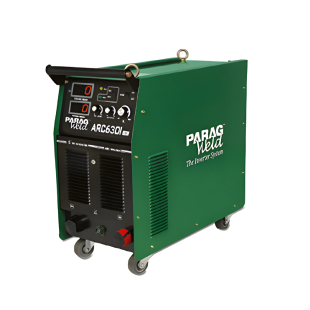
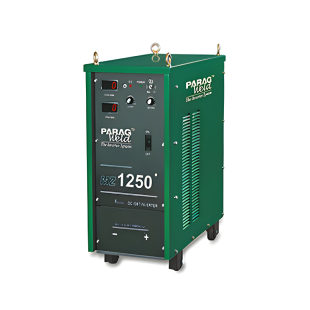
The flagship workhorse for carbon arc gouging, die block buttering, and heavy stick electrode deposition in forging plants.
High-deposition automated tractor system for heavy roll rebuilding, forge press column cladding, and continuous seam welding.
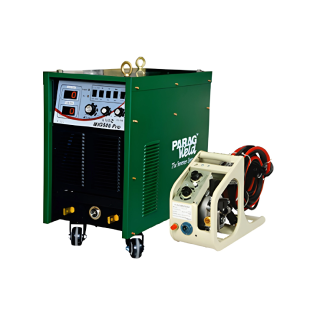
High-speed semi-automatic wire feeder welder for flux-cored hardfacing, structural forge frame repairs, and die restoration.
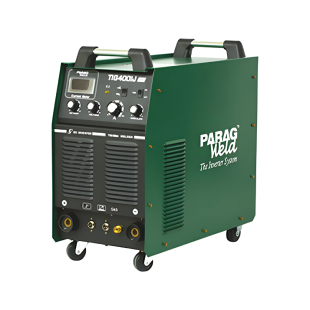
Ultra-precise TIG welding source for delicate forging die cavity repairs, fine tool steel edge build-up, and crack sealing.
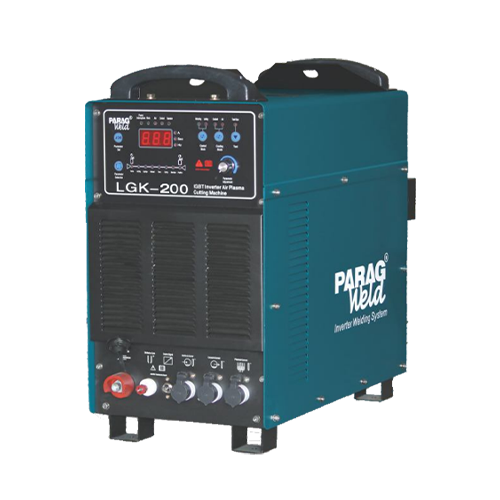
High-speed plasma cutting and gouging tool for trimming heavy forged flashings, plate preparation, and defective metal removal.
Premium hydrogen-controlled electrodes, tool steel hardfacing rods, and buffer layer consumables stockist (Modi Arc & D&H).
Industry Innovation & Engineering Outlook
How advanced digital wave modulation, hybrid automation, and green inverter technologies are transforming forge shop maintenance operations worldwide.
Legacy forging plants historically relied on massive, power-hungry heavy-frequency transformer rectifiers. While durable, these units consumed excessive electricity during idle states and lacked fast dynamic response. Modern trend points toward high-power IGBT inverter modules operating at 20kHz+ switching frequencies. This enables instant arc-force compensation, reducing heat input by up to 25% while lowering shop electrical power bills by nearly 30–35%.
Minimizing thermal dilution is critical when applying expensive hardfacing overlays onto tool steel die blocks. Modern synergic waveform controls automatically sync wire feed speed, peak current, and pulse background current. This ensures high deposition rates without deep thermal penetration, preserving the micro-structure of the underlying forged steel substrate and eliminating heat-affected zone cracking.
With shortages of highly skilled manual welders affecting global markets, forge shops are rapidly adopting mechanized Submerged Arc Welding (SAW) tractors and gantry systems. Automated SAW cladding of massive forging rolls, press rams, and die bases provides 100% repeatable weld bead profiles, eliminates spatter cleanup, and delivers continuous deposition rates exceeding 10 kg per hour.
Forging plant dust contains conductive iron oxide and graphite lubricant particles. Next-generation forging welders feature isolated cooling airflow channels (wind tunnels) where air passes over heat sinks without blowing dust directly across delicate electronics. Additionally, digital communications enable real-time voltage/amperage logging for ISO batch traceability during die rebuilds.
Strategic Sourcing Insights
How global B2B procurement heads in the Middle East, Europe, Southeast Asia, and the Americas are optimizing capital expenditure and supplier selection.
As global manufacturing supply chains shift toward total life-cycle cost analysis, purchasing managers in forging plants are altering their capital equipment acquisition strategies. Procurement decisions are no longer driven purely by the initial sticker price of a welding machine. Instead, four key strategic purchasing trends dominate global B2B RFQs:
Global buyers are bypassing regional middlemen to work directly with established machinery manufacturers like Paragweld (Parag Electrodes Agencies Pvt. Ltd.). Factory-direct sourcing enables forge shops to request custom input voltage configurations (e.g., 380V, 415V, 440V, or 480V 3-Phase 50/60Hz), specialized heavy-duty wiring harnesses, and custom-mounted wire feeders designed specifically for tight forge shop maintenance booths.
Electricity tariffs represent a major component of forge shop operating overhead. Procurement officers now calculate TCO over a 7-to-10-year machine operational lifespan. Inverter-based welding power sources such as the Paragweld ARC-630i and MIG-500 PRO deliver power factor ratings above 0.93 and electrical efficiency over 85%, allowing plant operators to recover the machine acquisition cost within 14 to 18 months purely through energy savings compared to old transformer rectifiers.
Single-source procurement significantly reduces administrative overhead and compatibility risks. Procurement directors increasingly prefer sourcing the entire welding loop from one verified supplier: including the heavy welding power source, matching high-duty water cooling units, high-temperature torches, and certified hardfacing electrodes (such as Modi Arc & D&H Secheron tool-steel wires).
Founder & Managing Director
44+ Years of Engineering Trust
Founded in 1980 by visionary industrialist Mr. Parag Mashruwala in the heart of GIDC Vatva, Ahmedabad, India, Parag Electrodes Agencies Pvt. Ltd. (Paragweld) has evolved into a premier manufacturer, stockist, and global exporter of high-grade industrial welding equipment and metallurgically engineered electrodes.
With over 44 years of continuous technical innovation, Paragweld has served over 5,000 industrial clients across 30+ countries in heavy metal fabrication, hot forging, casting repair, infrastructure construction, and machine tool manufacturing.
Certified Authorised Partners & Institutional Memberships
Buyer Intent & Engineering Support
Direct answers to AI search queries and technical questions commonly submitted by forge shop procurement heads, metallurgical engineers, and plant managers.
For deep die block repairs and heavy buildup, a combination strategy yields the highest metallurgical success:
Forging repair welds frequently require multi-pass, continuous deposition of heavy-gauge wire (up to 4.0mm or 5.0mm in SAW) or high-amperage carbon arc gouging (400A to 600A) lasting several uninterrupted hours. Standard welders rated at 60% duty cycle will overheat, triggering internal thermal shutoff switches, leading to cold-lap weld defects and massive labor downtime. Paragweld forging machines are engineered with heavy copper windings, oversized heat sinks, and industrial IGBT power modules designed for continuous 100% operation at rated output.
High-alloy tool steels used in forging dies (such as H13) are extremely susceptible to hydrogen-induced cold cracking if welded at room temperature. Dies must be pre-heated to 300°C–400°C prior to welding. Your welding power source must provide exceptional arc stability and smooth metal transfer to prevent arc blow and cold shuts on red-hot metal. Additionally, high-penetration features found in Paragweld Inverter ARC and MIG systems ensure proper sidewall fusion inside deep die cavities during heated welding operations.
Yes. The Paragweld MIG-500 PRO features a heavy-duty four-roll geared wire feeder mechanism specifically calibrated for feeding soft flux-cored wires (1.2mm, 1.6mm, and 2.4mm) without crushing the wire sheath. Combined with adjustable electronic inductance control, operators can fine-tune arc stiffness to minimize spatter and ensure optimal slag release during multi-pass die rebuilding.
Paragweld exports industrial machines worldwide. We build custom-configured transformers and inverter power sources supporting 220V, 380V, 415V, 440V, and 480V (3-Phase, 50Hz or 60Hz) to match electricity grids in North America, South America, Europe, Africa, the Middle East, and Southeast Asia. All exported goods are packed in ISPM-15 compliant seaworthy wooden crates accompanied by full commercial invoices, packing lists, Certificate of Origin (COO), and ISO quality compliance test reports.
Every Paragweld machine is engineered around modular plug-and-play internal components (standardized IGBT modules, digital control boards, and quick-connect solenoid valves). We maintain a complete inventory of spare parts and offer express air dispatch worldwide. Our engineering team provides direct video support, technical schematics, and step-by-step guidance for plant maintenance technicians.
Most commercial forge shops report complete return on investment (ROI) within 2 to 4 major die repair projects. For example, rebuilding a worn 3-ton drop forging die block via gouging, buttering, and hardfacing costs approximately 15% to 20% of the cost of buying new die steel billet stock, while extending total die production service life by up to 150%.