1. Executive Summary & The Evolution of Heavy-Plate Welding Automation
In global heavy metal fabrication, structural steel manufacturing, shipbuilding, and pressure vessel construction, the demand for high-rate, zero-defect metal deposition is paramount. The Automatic Submerged ARC Welding System (SAW) represents the highest tier of continuous mechanized arc welding technology. Unlike open-arc processes such as Shielded Metal Arc Welding (SMAW) or Gas Metal Arc Welding (GMAW), an automatic submerged arc system operates with an arc completely submerged beneath a blanket of granular, fusible flux.
This fundamental mechanical distinction prevents atmospheric contamination, eliminates arc flash radiation, dramatically reduces thermal dissipation, and enables current densities that are up to 5 to 10 times higher than conventional stick or wire welding. For global procurement directors evaluating automated capital equipment, understanding the total cost of ownership (TCO), deposition chemistry, and parameter stability of an Automatic Submerged ARC Welding System is key to maintaining a competitive manufacturing edge.
💡 Information Gain Insight: Direct Cost-Benefit Analysis
Deposition Rate Benchmark: Manual SMAW yields 1.5–2.5 kg/h; Semi-automatic GMAW yields 3.5–6.0 kg/h; whereas an industrial Automatic Submerged ARC Welding System (such as the Paragweld MZ-1250) achieves deposition rates exceeding 12.0 to 28.0 kg/h per single wire torch. This translates into a 65% to 80% reduction in total labor-hours per linear meter of thick-plate joint completion.
2. Mechanical Architecture & Process Physics of Automatic Submerged ARC Systems
To evaluate an Automatic Submerged ARC Welding System, engineering teams must assess the core structural components that ensure electrical continuity, wire feed precision, and flux recovery efficiency. The complete system consists of three integrated subsystems:
- Inverter / Thyristor Power Unit: Heavy-duty, 100% duty cycle power sources supplying constant voltage (CV) or constant current (CC) output up to 1250A or higher. Modern systems utilize IGBT inverter power control to maintain arc length stability under line-voltage fluctuations.
- Motorized Welding Tractor / Carriage: A self-propelled, trackless or rail-guided tractor housing the wire feed motor, flux hopper, control console, and multi-axis torch positioning mechanism.
- Flux Delivery & Recovery Loop: A vacuum-assisted closed-loop pneumatics assembly that deposits un-melted granular flux back into the hopper while conditioning the slag layer over the solidifying weld bead.
During operation, the welding electrode wire is driven continuously through a heavy-duty contact tip into the joint channel. As the intense electric arc generates temperatures between 6,000°C and 8,000°C, the granular flux melts into a conductive, protective liquid slag pool. This molten slag protects the weld puddle from oxygen, hydrogen, and nitrogen ingress while acting as a thermal blanket to slow the cooling rate, effectively preventing martensitic brittleness and hydrogen-induced cold cracking in high-tensile structural steels.
3. Recommended Industrial Product Lineup & Equipment Showcase
Parag Electrodes Agencies Pvt. Ltd. (Paragweld) engineers a comprehensive range of heavy-duty welding power sources and automated tractors engineered to withstand rigorous factory conditions. Below are our flagship recommended solutions for global B2B buyers:
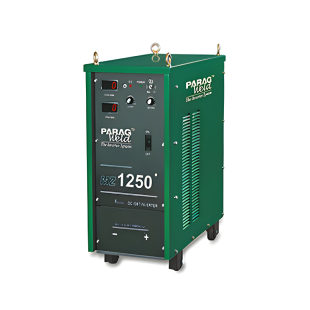
Submerged ARC Auto Welder MZ-1250
Heavy-duty automatic submerged arc welding system featuring a 1250A @ 100% duty cycle inverter power unit, digital tractor carriage, multi-gear wire feeder, auto-wire inching, and continuous flux recovery integration. Ideal for pressure vessel longitudinal seams, wind towers, and structural H-beams.
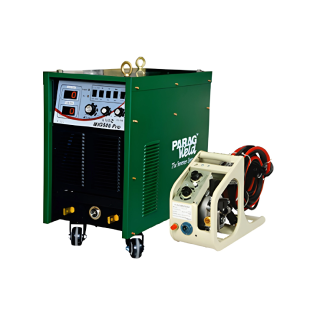
Industrial MIG Welder MIG-500 PRO
Heavy-duty 500A GMAW/FCAW power source engineered for open-root pass deposition prior to automated submerged arc capping. Essential for heavy pipe spooling, structural box girders, and machinery frame preparation.
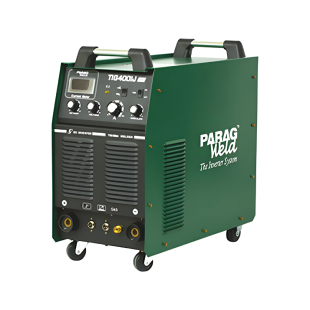
Inverter TIG Welder TIG-400IJ
Advanced 400A IGBT Inverter GTAW system providing ultra-clean, defect-free root passes on alloy pressure vessels and high-pressure steam lines before SAW cap welding.
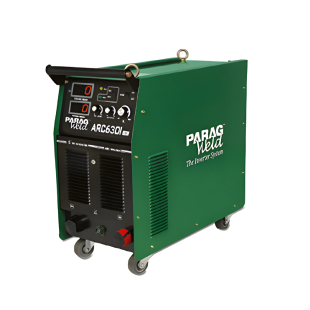
Heavy Duty ARC Welder ARC-630i
Multi-process 630A inverter unit optimized for heavy carbon-arc gouging, seam back-gouging, and tack-welding operations alongside automated submerged arc welding systems.
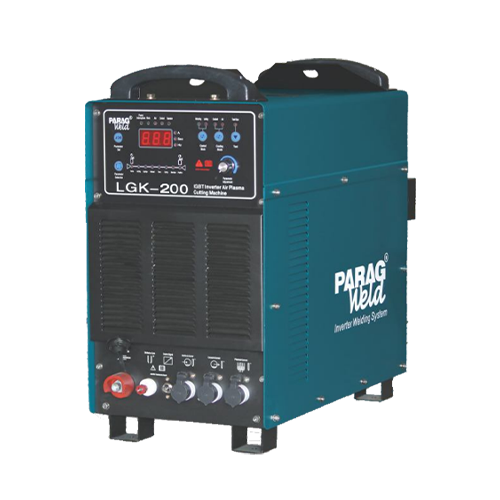
LGK Air Plasma Cutter Series 200
200A heavy industrial air plasma cutting system for rapid plate beveling and edge prep. Delivers clean, slag-free V-groove & J-groove joints required for high-penetration submerged arc tractor runs.
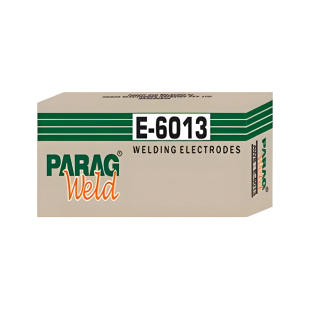
High-Purity SAW Wires & Flux Consumables
Premium submerged arc wires (EH14, EM12K, EA2) and matched agglomerated/fused fluxes formulated for superior slag detachability, low diffuser hydrogen (<4ml/100g), and high impact toughness at -40°C.
4. Engineering Specifications Matrix: Paragweld Automatic SAW Systems
When comparing equipment for capital procurement, technical buyers require precise electrical and performance data. The table below outlines key parameters for Paragweld's commercial submerged arc welding solutions:
| Technical Parameter | MZ-1000 SAW System | MZ-1250 SAW System (Flagship) | MZ-1600 Heavy SAW Unit |
|---|---|---|---|
| Rated Input Voltage | 3-Phase 415V ± 15%, 50/60Hz | 3-Phase 415V ± 15%, 50/60Hz | 3-Phase 415V ± 15%, 50/60Hz |
| Rated Output Current Range | 200A – 1000A | 250A – 1250A | 300A – 1600A |
| Duty Cycle (40°C Ambient) | 100% @ 1000A | 100% @ 1250A | 100% @ 1600A |
| Usable Wire Diameters | Ø 2.5mm – 5.0mm | Ø 3.0mm – 6.0mm | Ø 4.0mm – 6.4mm (Tandem Option) |
| Tractor Travel Speed | 15 – 90 m/h (Infinitely Variable) | 12 – 100 m/h (Digital Closed Loop) | 10 – 80 m/h (Heavy Duty Track) |
| Wire Feed Speed Range | 0.5 – 2.5 m/min | 0.3 – 3.0 m/min | 0.2 – 2.8 m/min |
| Flux Hopper Capacity | 6.5 Liters | 10.0 Liters with Pre-heater | 12.0 Liters dual-port |
| Insulation & Protection Grade | Class H / IP23S | Class H / IP23S | Class H / IP23S |
5. Future Procurement Trends for Automatic Submerged ARC Welding Systems (2025–2035)
As global industrial procurement evolves in response to supply chain restructuring, automation shifts, and decarbonization mandates, B2B buyers must align their purchasing strategies with emerging technological trends:
Trend 1: Smart Inverter Digitization & Industry 4.0 Data Logging
Legacy transformer-rectifier SAW machines are rapidly being replaced by micro-processor-controlled digital IGBT inverters. Modern Automatic Submerged ARC Welding Systems feature Ethernet and Modbus interfaces that record real-time welding heat input ($Q = \eta \cdot \frac{V \cdot I}{v}$), voltage waveform stability, and wire consumption rates. This real-time audit trail is now mandatory for ASME Section VIII Division 2 pressure vessels and EN 1090-2 EXC4 structural steel compliance.
Trend 2: Multitask Robotic & Column-and-Boom Integration
The standalone welding tractor is increasingly integrated into automated Column & Boom (C&B) manipulators and seam-tracking rotators. Global buyers are prioritizing SAW power sources with analog/digital I/O ports capable of communicating directly with PLC controllers and optical laser seam trackers to execute narrow-gap welding without human intervention.
Trend 3: Closed-Loop Green Flux Recovery & Thermal Efficiency
Environmental regulations and volatile raw material prices are driving demand for integrated heating and vacuum recovery systems. Automated flux reclaimers that filter out fine dust while maintaining flux temperature above 120°C prevent moisture absorption, eliminate slag waste by up to 40%, and eliminate hydrogen embrittlement risks.
Trend 4: The Strategic Rise of Indian Engineering Sourcing
Global EPC contractors are actively diversifying their equipment supply chains away from high-cost European manufacturers and toward established Indian manufacturers. Indian engineering brands offer international-grade build quality, robust thermal design for high-ambient tropical conditions, and factory-direct pricing—offering an unmatched Return on Investment (ROI) cycle.
6. Technological Development Trends: Narrow-Gap & Multi-Wire Tandem SAW
In heavy-plate fabrication exceeding 50mm in thickness (such as offshore wind turbine monopiles and heavy nuclear vessels), conventional V-groove preparations require immense volumes of filler wire and multiple weld passes. Innovations in Automatic Submerged ARC Welding Systems focus heavily on two breakthroughs:
- Narrow-Gap Submerged Arc Welding (NG-SAW): Utilizing specialized narrow torches with gap angles under 5° and plate thickness up to 300mm. NG-SAW reduces weld metal volume by up to 60%, decreases overall heat input, minimizes heat-affected zone (HAZ) grain growth, and drastically reduces distortion.
- Tandem & Twin-Arc Multi-Wire Systems: By feeding two or more wires into the same molten slag pool—often utilizing a Lead DC torch for deep penetration coupled with a Trail AC torch for bead contour filling—deposition rates exceed 30 kg/h without risking burn-through or excessive undercut.
7. Enterprise Advantage: Why Global Industry Partners Trust Paragweld
Selecting an equipment manufacturer requires verifying manufacturing legacy, technical capability, and quality management systems. Parag Electrodes Agencies Pvt. Ltd. (Paragweld) brings over four decades of engineering leadership to the global welding industry.
Engineered for Performance. Trusted Since 1980.
Founded in 1980 by Mr. Parag Mashruwala in the industrial hub of GIDC Vatva, Ahmedabad, Gujarat, India, Paragweld has evolved from a pioneering electrode supplier into a premier exporter of heavy-duty industrial welding equipment.
Our manufacturing protocols adhere strictly to ISO quality standards. Every Automatic Submerged ARC Welding System undergoes 100% full-load burn-in testing, insulation resistance verification, and high-ambient thermal stress evaluation before international dispatch.
Authorised Stockist & Strategic Industry Network
Paragweld’s credibility as an authoritative industrial supplier is further strengthened by our official stockist partnerships with world-renowned welding consumable leaders, including Modi Arc Electrodes and D&H Secheron Electrodes, alongside our long-standing membership in the Gujarat Chamber of Commerce and Industry (GCCI).