Future Procurement & Development Trends in Air Plasma Cutting
As global manufacturing shifts toward digital integration, tighter environmental regulations, and zero-defect quality control, the global market for industrial plasma cutting systems is undergoing significant technological evolution. B2B buyers must evaluate equipment not merely on current purchase price, but on compliance with emerging industrial paradigms over a 10-year operational lifecycle.
1. Industrial IoT (IIoT) & Real-Time Arc Telemetry
Modern industrial supply chains demand visibility into machine utilization, consumable degradation, and energy consumption. Future iterations of the Air Plasma Cutting Machine Series are incorporating smart sensor arrays that monitor pilot arc firing cycles, compressed air moisture contamination levels, and real-time primary current fluctuations. By feeding telemetry directly to enterprise ERP and MES platforms, plant managers can transition from reactive maintenance to predictive consumable replacements—eliminating unexpected torch downtime during automated CNC shifts.
2. Integration with Automated Height Control (AHC) & Robotic Arms
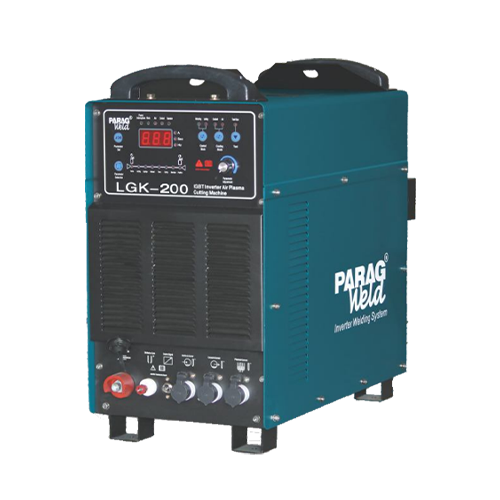
With manual labor shortages affecting heavy fabrication sectors globally, automated 3D plasma cutting is rapidly replacing manual handheld torches. Plasma power sources must provide ultra-fast pilot-arc-to-main-arc transition times (<0.05 seconds) and optically isolated feedback loops. Paragweld’s LGK series is engineered to interface directly with 6-axis robotic arms and 3-axis CNC tables, supporting automatic voltage adjustments that maintain precise standoff distances over warped or uneven structural plates.
3. Eco-Inverter Topologies & Carbon Footprint Reduction
Energy tariffs represent a major component of factory overhead. Legacy transformer-based plasma cutters operate at low power factors (~0.65) and convert significant electrical energy into waste heat. Modern soft-switching inverter designs—such as those pioneered in Paragweld's latest Air Plasma Cutting Machine Series—achieve power factors exceeding 0.92 and electrical efficiencies over 88%. This transition reduces total carbon dioxide emissions per cut-meter while easing power grid load requirements for manufacturing plants in developing industrial regions.
4. Advanced Gas Dynamics & Hafnium Consumable Metallurgy
Consumable wear remains one of the largest continuous operational costs in thermal cutting. Research into vortex air swirl technology and severe-environment Hafnium-Copper electrode bonding has dramatically extended tip life. By optimizing gas flow turbulence inside the torch head, modern air plasma torches deliver tighter plasma column constriction, yielding narrower kerf widths, reduced edge bevel angles (<3°), and drastically decreased dross adhesion.