Knowledge Hub & Insights
Knowledge Hub & Insights
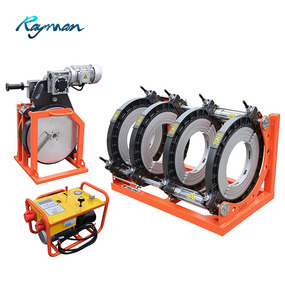
Compact manual butt fusion and electrofusion system engineered for PE & HDPE pipe jointing in tight civil trenches and rural water lines across New Zealand.
Get Catalog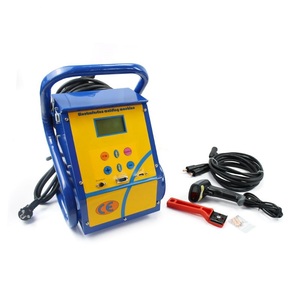
Heavy-duty poly fusion machine featuring automatic voltage matching, real-time data logging, and rugged field construction tailored for NZ farm & utility works.
Get Catalog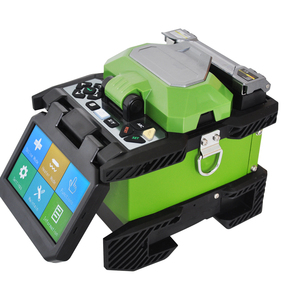
Industrial core-alignment optical fiber splicing machine built for telecommunication infrastructure, Chorus Ultra-Fast Broadband (UFB), and regional ISP deployments.
Get Catalog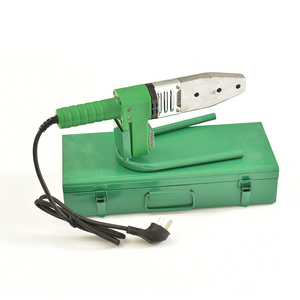
Precision temperature-controlled socket fusion set designed for indoor plumbing, commercial hot-water distribution, and HVAC PPR pipe installations.
Get Catalog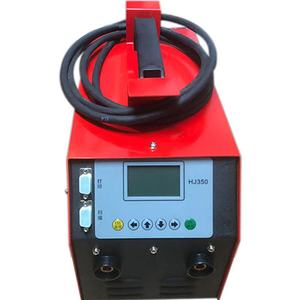
Versatile automatic electric fusion welder engineered for high-pressure fluid pipelines, industrial process piping, and heavy structural applications.
Get Catalog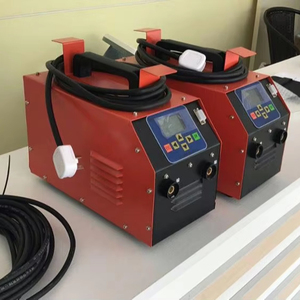
High-output 230V/240V electrofusion power source with ambient temperature compensation, specifically optimized for high-density PE gas and water networks.
Get Catalog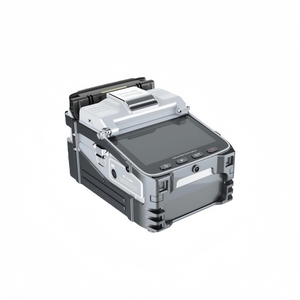
Fast 6-second splicing optical fiber fusion tool compatible with 5G networks, drop cables, and enterprise fiber infrastructure installations.
Get Catalog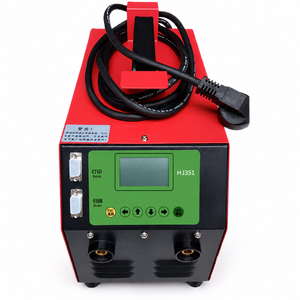
Smart field-ready electrofusion welder with fully automated fitting recognition, micro-processor control, and memory storage for audit-ready compliance.
Get CatalogWith over four decades of dedicated research, design, and manufacturing excellence, our organization—originally founded as Parag Electrodes Agencies Pvt. Ltd. by visionary engineer Mr. Parag Mashruwala in GIDC Vatva, Ahmedabad—has evolved into a international benchmark for industrial welding and plastic pipe fusion technology. Serving heavy engineering, municipal water authorities, civil engineering contractors, and telecom infrastructure providers worldwide, our equipment is built on a foundation of unyielding structural integrity and electrical precision.
For the New Zealand market, pipeline construction presents unique geographical and environmental demands. From the seismic ground movement considerations in Canterbury and Wellington to the highly corrosive coastal salt-spray environments of Northland and the Bay of Plenty, thermomechanical jointing of High-Density Polyethylene (HDPE), Polypropylene (PPR), and optical fiber systems requires zero-defect reliability. Our manufacturing facilities utilize state-of-the-art CNC machining, automated electronic calibration rigs, and climate-controlled assembly environments to ensure every fusion welder dispatched to Auckland, Christchurch, Dunedin, or regional worksites complies strictly with local regulatory requirements.
Information Gain Insight for NZ Contractors: Our fusion welding machines incorporate active ambient temperature compensation software specifically calibrated for South Island winter trench operations (down to -10°C) and North Island summer sun conditions (up to +40°C), eliminating joint failure risks caused by thermal expansion coefficient mismatch during field heating cycles.
Full compatibility with New Zealand standard PE100 and PE100-RC pipe dimensions (SDR 7.4 through SDR 41), providing exact drag pressure calculation algorithms and precise fusion temperature control (220°C ± 3°C).
Ruggedized, dust-tight, and splash-proof control chassis built to withstand harsh, wet civil trench conditions encountered during rain-heavy New Zealand winter civil works.
Integrated USB / Bluetooth data logging exports PDF weld certificates directly to local council inspection databases (e.g., Watercare, Wellington Water, Christchurch City Council compliance portals).
Modern New Zealand infrastructure is undergoing a massive transformation, replacing legacy concrete and ductile iron pipes with flexible, crack-resistant PE100 resin systems. Our fusion welders are tailor-engineered for specific local sector applications across Aotearoa:
In high-density civil upgrade projects across Greater Auckland and Hamilton, trenchless technology and directional drilling rely heavily on continuous butt-welded HDPE strings. Our hydraulic butt fusion series delivers automatic pressure monitoring and dual-clamp stabilization, ensuring seamless pipe strings up to 630mm diameter can be pulled through micro-tunnels without axial stress failure at joint interfaces.
Following historical seismic events in Christchurch and recent weather damage in Napier/Gisborne, civil engineers mandate fully homogenous poly pipe networks capable of bending without rupturing during soil liquefaction. Our digital electrofusion stations provide automatic fitting recognition via ISO barcode scanning, guaranteeing 100% molecular bond fusion in critical fault-line crossing installations.
New Zealand's agricultural backbone requires high-volume, low-leakage water distribution networks. From massive center-pivot supply lines to aggressive dairy effluent transit piping, our portable manual butt welders and SW-350 electrofusion units operate seamlessly off standard 230V field generators, enabling farm contractors to join PE pipes directly in open paddocks with minimal setup time.
Geothermal fluid extraction in the Central North Island involves elevated temperatures and mineralized groundwater. Our specialized socket and butt fusion welders handle high-density Polypropylene-Random (PPR) and PE-RT (Polyethylene of Raised Temperature resistance) systems, maintaining stable heating element temperatures up to 300°C with digital PID loop control.
For New Zealand’s telecommunications sector, the Signal Fire AI-9 and AI-7C core-alignment fusion splicers offer ultra-low insertion loss (<0.02dB) required for long-haul dark fiber routes and FTTH connection drops. Fast 6-second splicing time and 15-second heating cycle times dramatically accelerate daily connection yields for field technicians working on Chorus and Enable networks.
Understanding local regulatory shifts and material science evolution is vital for procurement leaders and civil engineering buyers in New Zealand. Our manufacturing division stays ahead of global standards to bring future-proof machinery to Kiwi job sites:
| Industry Trend / Mandate | New Zealand Market Impact | Our Machine Technological Response |
|---|---|---|
| Widespread PE100-RC Adoption | Increased use of Resistant to Crack (RC) poly resins for non-open trench excavation. | Higher clamping force retention and precise cooling-phase control to prevent micro-notch cracking. |
| ISO 21307 Single High-Pressure Protocol | Shift towards SHP butt welding standards to reduce overall jointing cycle times by up to 50%. | Hydraulic power packs capable of sustained high-pressure fusion (up to 0.30 MPa) during heating phase. |
| Quality Control Auditing (Data Logging) | Councils require mandatory digital weld records (temperature, pressure, time, GPS location). | On-board memory storing up to 10,000 weld logs with instant PDF export via USB or field mobile app. |
| Carbon Footprint Reduction | Contractors prioritizing energy-efficient inverter generators and lower-wattage tools. | High-efficiency switched-mode power supplies reducing power consumption by 22% during electrofusion cycles. |
Regulatory Compliance Note: All electrical components supplied in our machines for the New Zealand market strictly conform to AS/NZS 60335 electrical safety standards, carrying RCM (Regulatory Compliance Mark) compatibility for seamless site clearance under WorkSafe NZ regulations.
Our commitment to transparent manufacturing standards is demonstrated through our rigorous in-house quality assurance processes. Every machine undergoes insulation breakdown tests, hydraulic pressure endurance runs, and digital heat uniformity profiling before packaging.
Yes. Our electrofusion and hydraulic butt fusion machinery are programmed specifically to accommodate metric outer diameter pipe schedules (DN20 to DN1200) and wall thickness SDR ratings (SDR 7.4 to SDR 41) defined under AS/NZS 4130 and AS/NZS 4129.
Our machines are engineered to operate on standard New Zealand single-phase 230V/240V 50Hz or three-phase 415V 50Hz electricity supplies. Electrofusion and butt fusion units feature wide voltage tolerance circuits (±15%) to prevent joint interruptions caused by voltage drop on long site generator cables.
Absolutely. Our electrofusion units feature universal optical laser barcode scanners compliant with ISO 12176-2 multi-digit code formats. They automatically read barcode parameters from all major fitting manufacturers used across Australia and New Zealand (e.g., Plasson, Georg Fischer, Friatec, Agru).
We maintain express air-freight logistics channels directly into Auckland and Christchurch international freight hubs. Critical spare parts—such as heating plates, hydraulic seals, control PCBs, and temperature sensors—can be delivered within 3 to 5 business days, backed by direct video technical support from our senior engineering team.
Yes. The data logging system outputs structured CSV and non-editable PDF weld reports containing operator ID, job location, pipe diameter, ambient temperature, heat time, pressure profile, and pass/fail indicators suitable for formal quality assurance submission.
All fusion welders come with a comprehensive 12-month factory warranty against manufacturing defects. We provide step-by-step digital calibration kits and software software protocols allowing local NATA/IANZ accredited testing laboratories in New Zealand to certify machine calibration annually.
Direct factory pricing, custom voltage configuration, and full AS/NZS compliance for New Zealand infrastructure project tenders and equipment fleet expansion.
Get Catalog