Knowledge Hub & Insights
Knowledge Hub & Insights
Explore our heavy-duty, ISO 15620 compliant friction welding machinery specifically tropicalized and electrical-phase matched for deployment in Egyptian manufacturing hubs.
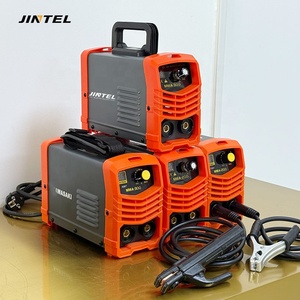
Engineered for high-volume production of hydraulic cylinder piston rods, valve stems, and drill rods. Features precision servo alignment and dual-phase closed-loop braking.
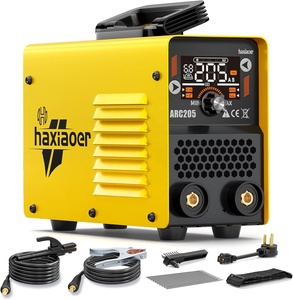
High kinetic energy flywheel storage welder ideal for automotive drive shafts, heavy axle tubes, and bimetallic turbocharger rotors. Delivers instantaneous joint forged fusion.
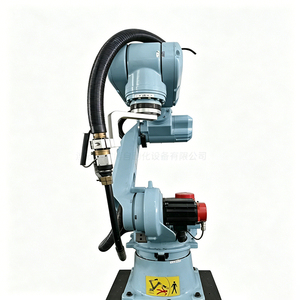
Fully integrated robotic end-effector friction head for structural steel workshops and shipbuilding hubs along the Suez Canal Economic Zone. Real-time seam tracking included.
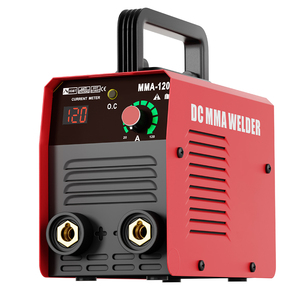
Designed for rapid agricultural equipment repair and shaft fabrication supporting the Toshka & Nile Delta land reclamation initiatives. Minimal power consumption footprint.
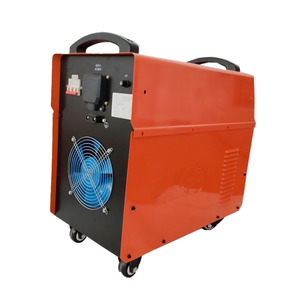
Simultaneous dual-end friction welding station for truck housing, trailer axles, and drive shafts. Built for 6th of October City OEM automotive assembly operations.
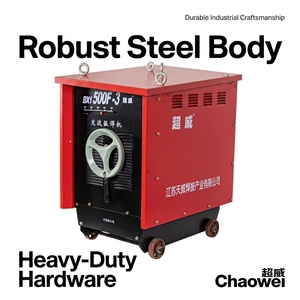
Ultra-rigid box frame machine tailored for oilfield drill pipes, marine propulsion rods, and heavy structural studs. Resists thermal strain under 24/7 duty cycles.
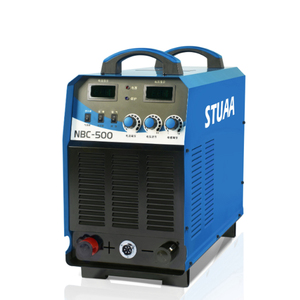
Specialized solid-state welder for manufacturing Cu-Al electrical cable lugs, substation connectors, and busbars for the Egyptian Electricity Transmission Company (EETC).
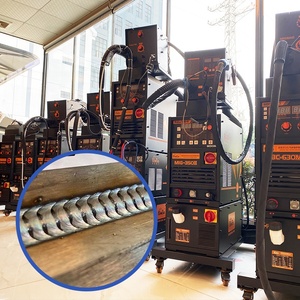
API Spec 5D compliant friction welder equipped with post-weld induction heat treatment (PWHT) units for deep oilfield drill string assembly in the Western Desert.
As the Arab Republic of Egypt accelerates its grand industrial expansion under Vision 2030, manufacturing infrastructure across the Suez Canal Economic Zone (SCZONE), 6th of October Industrial City, 10th of Ramadan City, and the Sadat Industrial Corridor is undergoing a massive technological transformation. Heavy engineering sectors—ranging from automotive assembly, commercial vehicle manufacturing, hydraulic machinery fabrication, to oilfield services—are systematically moving away from conventional fusion welding processes (such as SMAW, GMAW/MIG, and Submerged Arc Welding) toward advanced Solid-State Rotary Friction Welding (RFW).
As a premier China Friction Welder Manufacturer & Supplier with decades of dedicated international export expertise, our enterprise provides Egyptian B2B procurement heads, factory owners, and chief engineers with turn-key, high-efficiency friction welding systems. Our machinery directly addresses the operational realities of the Egyptian market: extreme thermal ambient conditions, power supply stability demands, high cost of imported consumable gases, and the stringent quality benchmarks required for domestic and export-bound industrial products.
Information Gain Insight: Unlike conventional fusion arc welding which creates a liquid molten pool prone to oxidation, porosity, and thermal distortion, Continuous Drive Rotary Friction Welding (CDFW) and Inertia Friction Welding (IFW) utilize mechanical friction to plasticize parent metals below their melting points. This results in a 100% forged, solid-state bond with zero filler metal, zero shielding gas, and up to an 80% reduction in electricity consumption per joined unit.
The fundamental mechanical principle of rotary friction welding involves holding one component stationary while rotating the opposing workpiece under axial load. The friction generated at the rotating interface elevates the contact zone temperature into the plastic deformation range (typically 850°C to 1100°C for carbon and alloy steels). Once the targeted burn-off length or thermal friction energy is achieved, rotation is stopped abruptly within milliseconds using closed-loop servohydraulic braking, and an elevated forge force (Upsizing Force) is applied.
1. Initial Dry Friction Phase: As initial rotation begins, surface asperities interact, breaking oxides and establishing micro-welds that immediately shear, rapidly raising interface temperatures.
2. Transition & Softening Phase: Interfacial shear strength drops as the metal enters its plasticized state. Torque stabilizes, and plastic material begins flowing radially outward to form the characteristic external flash ring.
3. Equilibrium Equilibrium Burn-off Phase: Axial displacement (burn-off length) proceeds at a controlled rate, ejecting surface contaminants, oxides, and inclusions entirely out of the weld interface into the flash.
4. Deceleration & Upshot Forging Phase: Rapid spindle braking occurs simultaneously with the application of high upset forging pressure. Thermo-mechanical grain refinement takes place, creating an ultra-fine grain forged metallurgical structure.
| Process Parameter | Continuous Drive Friction Welding (CDFW) | Shielded Metal Arc Welding (SMAW / Stick) | MIG/MAG Arc Welding (GMAW) | Submerged Arc Welding (SAW) |
|---|---|---|---|---|
| Heat Affected Zone (HAZ) | Ultra-Narrow (1 - 3 mm) | Extremely Wide (8 - 18 mm) | Wide (5 - 12 mm) | Very Wide (10 - 25 mm) |
| Joint Efficiency | 100% (Base Metal Failure) | 75% - 90% (Porosity risk) | 80% - 92% | 85% - 95% |
| Dissimilar Metal Joining | Excellent (e.g. Cu-Al, SS-Carbon) | Extremely Poor / Impossible | Very Difficult (Requires special alloy wire) | Poor |
| Cycle Time per Ø30mm Rod | 6 to 10 Seconds | 3 to 5 Minutes | 1.5 to 3 Minutes | 1 to 2 Minutes |
| Consumable Costs | Zero (No rod, flux, or gas) | High (Electrode consumption) | High (Shielding gas & wire) | High (Granular flux & wire) |
| Operator Skill Dependency | Low (Automated PLC execution) | Extremely High (Manual skill) | Medium-High | Medium |
| Defect Rate in Mass Production | < 0.1% (Automated parameter lock) | 5% - 12% (Human error factor) | 3% - 7% | 2% - 5% |
Our friction welding machines deployed across Egypt are customized to support specific regional industrial demands, ensuring optimal throughput and seamless alignment with local factory infrastructure:
Deployed in 6th of October City automotive plants for joining solid shaft ends to hollow axle housing tubes, drive shafts, engine valves, and steering knuckles with zero mass imbalance.
Essential for fabricating heavy hydraulic cylinder rods, agricultural machinery piston rams, and earthmoving excavator linkages for large-scale land reclamation projects in Upper Egypt.
Joining Copper rods to Aluminium terminals to create corrosion-free bimetallic connectors. Crucial for electrical equipment manufacturers supplying Egyptian Electricity Transmission Co.
Manufacturing and refurbishing heavy drill pipe tool joints for petroleum extraction units operating in the Gulf of Suez, Western Desert, and Mediterranean offshore platforms.
Exporting heavy machinery to Egypt requires far more than standard assembly. Operating conditions in industrial facilities around Cairo, Alexandria, Suez, and Asyut present unique environmental and electrical challenges. As a responsible engineering exporter from China, our machines undergo specialized tropicalization and ruggedizing protocols prior to shipment:
Regional power supply grids in industrial zones can experience occasional voltage spikes or sag fluctuations. Our friction welders integrated into Egyptian plants feature wide-tolerance servo drives (+/- 15% voltage fluctuation immunity), isolated transformer steps, and heavy-duty line reactors to protect sensitive PLC logic circuits against grid harmonic noise.
Finely suspended ambient sand and desert dust in regions like 10th of Ramadan City can ruin unsealed electrical contactors and hydraulic valves. All control cabinets feature positive-pressure air-conditioned enclosures with IP54/IP65 dual-gasket sealing, micro-line oil filters, and double-sealed spindle bearings.
Egyptian summer ambient warehouse temperatures routinely surpass 42°C. To maintain continuous hydraulic oil viscosity and spindle thermal stability during 24-hour shifts, our friction welders are outfitted with oversized, dual-circuit closed-loop water cooling chillers with synthetic hydraulic fluids rated for extreme temperature operations.
Rooted in over four decades of rigorous machine tool development, our manufacturing base combines state-of-the-art CNC machining centers, dynamic balance testing rigs, and closed-loop hydraulic calibration bays. We have successfully exported industrial welding systems to over 30 countries worldwide, serving over 5,000 satisfied enterprise clients.
Every friction welding machine built for the Egyptian market strictly complies with ISO 15620 (Friction Welding of Metallic Materials), CE machine directives, and ISO 9001:2015 quality assurance guidelines. From initial finite element analysis (FEA) of the steel frame to final real-time non-destructive joint testing (NDT), we guarantee rock-solid machine longevity.


Clear, authoritative answers to common technical, logistical, and commercial inquiries raised by Egyptian factory owners and procurement officers when importing friction welding machinery from China:
We regularly ship heavy industrial machinery via FCL (Full Container Load) using flat-rack or open-top containers to major Egyptian sea entry points: Sokhna Port (Suez), Alexandria Port, and Port Said. Standard transit times range from 20 to 28 days depending on the shipping line (e.g., COSCO, CMA CGM, MSC). Full customs clearance documentation packages (Bill of Lading, Commercial Invoice legalized by the Egyptian Embassy, Certificate of Origin, Packing List, ISO Inspection Certificate) are provided promptly.
Yes! Dissimilar metal joining is one of the primary metallurgical strengths of friction welding over traditional arc welding. Because friction welding operates in the solid state without melting the metals, it prevents the formation of brittle intermetallic compound (IMC) phases. Our Copper-Aluminium friction welders produce joints that pass 180-degree bend tests and electrical conductivity tests with 100% parent metal shear failure outside the weld interface.
We offer flexible commissioning models. Option A: Dispatch of our senior automation engineers directly to your facility in Egypt (Cairo, SCZONE, 6th of October, etc.) for on-site anchoring, electrical setup, PLC parameter calibration, and operator safety training. Option B: Comprehensive remote real-time commissioning supported by augmented-reality visual diagnostics, step-by-step video manuals, and English/Arabic technical documentation.
We are fully accustomed to Egyptian banking regulations and Central Bank of Egypt (CBE) trade finance requirements. We support Irrevocable Letters of Credit (L/C at sight) issued through major Egyptian banking institutions (such as National Bank of Egypt, Banque Misr, Commercial International Bank - CIB) as well as standard T/T (Telegraphic Transfer) commercial terms.
Routine maintenance is minimal compared to complex arc welding robotics. Primary checkpoints include periodic replacement of hydraulic oil filters (every 2,000 operating hours), monitoring closed-loop chiller fluid levels, greasing spindle bearings, and inspecting clamping jaw inserts for wear. Spare parts kits (seals, sensors, clamping jaws, heating elements) are included in the initial shipping container for zero downtime.
Simply click the "Send an Inquiry" button below and share your STEP/CAD drawings or dimensional specifications (rod diameters, material grades, production target volume per hour). Our engineering team will perform a feasibility analysis, recommend the exact thrust tonnage (e.g., 15T, 30T, 100T, 200T), and design custom hydraulic clamping jaws tailored specifically to your part geometry.
Elevate your Egyptian manufacturing facility's output, joint quality, and energy efficiency with our proven rotary and continuous drive friction welding machinery. Request a customized technical proposal and factory direct quotation today.