Knowledge Hub & Insights
Knowledge Hub & Insights
Engineered for continuous 100% duty-cycle operation in industrial welding shops, robotic integration cells, and structural metal fabrication plants across New England.
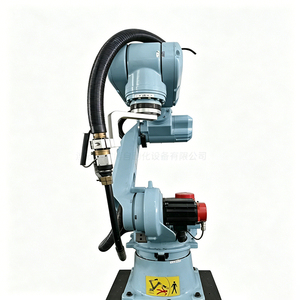
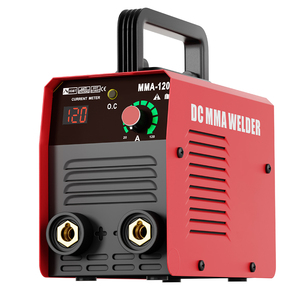
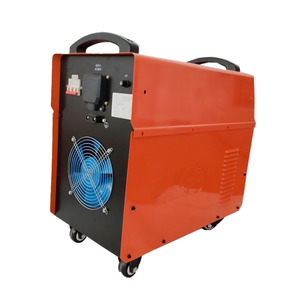
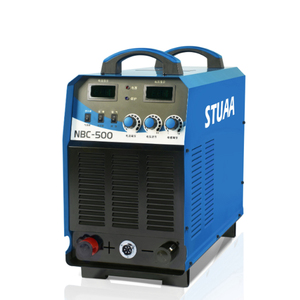
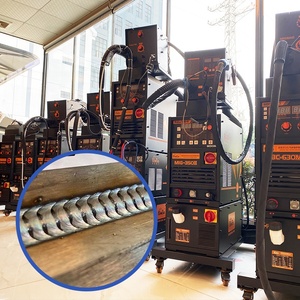
In modern industrial fabrication—specifically within high-density manufacturing sectors across the Greater Boston area and the Route 128 technological corridor—welding efficiency is constrained by thermal physics. High-amperage Gas Metal Arc Welding (GMAW), Gas Tungsten Arc Welding (GTAW), and Submerged Arc Welding (SAW) generate intense localized Joule heating ($I^2R$ losses) within torch consumables, power cables, and transformer power electronics.
When operating above 250 Amperes at 100% duty cycle, air-cooled torch assemblies experience thermal saturation within minutes. This leads to accelerated degradation of copper contact tips, electrical cable bundle overheating, rubber insulation breakdown, and tungsten erosion. To maintain metallurgical integrity, dimensional tolerances, and operational safety, industrial water cooling units (closed-loop recirculating chillers) are non-negotiable infrastructure components.
Extends torch consumable lifespan by up to 350%, drastically reducing contact tip replacement frequency and eliminating downtime in automated production lines.
Converts 60% rated manual power sources into 100% continuous duty cycle production stations by actively maintaining internal transformer coil temperatures below $65^\circ\text{C}$.
Closed-loop systems eliminate single-pass city tap water consumption, adhering strictly to Massachusetts Department of Environmental Protection (MassDEP) water conservation mandates.
Comprehensive technical evaluations of top-tier recirculating water chillers and cooling modules tailored for New England fabricators.
| Model / System Name | Cooling Capacity | Pump Flow & Pressure | Reservoir Volume | Primary Industrial Application | Key Tech Feature |
|---|---|---|---|---|---|
| 1. Paragweld HydroChill Pro 5000 | 5.2 kW (17,700 BTU/hr) | 13.5 L/min @ 4.5 Bar | 15.0 Liters (SS304) | Robotic MIG & Heavy SAW Welding | Dual-stage centrifugal copper pump, digital thermal alert |
| 2. Paragweld ThermoArc WCU-3000 | 3.8 kW (12,960 BTU/hr) | 9.0 L/min @ 3.2 Bar | 10.0 Liters | Manual High-Amp TIG (AC/DC 400A) | High-head vane pump, anti-corrosion radiator fins |
| 3. Paragweld Robomax CoolStation 8500 | 8.5 kW (29,000 BTU/hr) | 22.0 L/min @ 5.5 Bar | 30.0 Liters | Multi-Robot Manufacturing Cells | Closed-loop Freon compressor chiller ($\pm 0.2^\circ\text{C}$ stability) |
| 4. Paragweld CompactFlux WCU-1500 | 1.8 kW (6,140 BTU/hr) | 5.5 L/min @ 2.5 Bar | 5.0 Liters | Precision Micro-TIG & Orbital Pipe | Ultra-quiet 45dB acoustic dampening, compact foot print |
| 5. Paragweld EcoCool Dual-Circuit 6000 | 6.0 kW (20,470 BTU/hr) | 16.0 L/min Dual Flow | 20.0 Liters | Simultaneous Torch & Power Source Cooling | Independent dual radiator coils with thermal sensing |
| 6. Paragweld SubArc Master Cool 12000 | 12.0 kW (40,900 BTU/hr) | 35.0 L/min @ 6.0 Bar | 50.0 Liters (Heavy Poly) | Submerged Arc Welding (1250A+) | Heavy-duty heat exchanger with forced draft fan arrays |
| 7. Paragweld Inverter-Chill 400 Smart | 4.0 kW (13,640 BTU/hr) | 10.0 L/min @ 3.5 Bar | 12.0 Liters | High-Speed MIG/MAG Production Lines | Variable-speed inverter pump saves up to 42% energy |
| 8. Paragweld Mobile Tank WCU-800 | 1.2 kW (4,090 BTU/hr) | 4.8 L/min @ 2.0 Bar | 4.5 Liters | On-Site Field Service & Maintenance Carts | Vibration-resistant chassis, quick-connect torch ports |
| 9. Paragweld High-Pressure TIG Chiller 2500 | 2.5 kW (8,530 BTU/hr) | 8.0 L/min @ 4.8 Bar | 8.0 Liters (Stainless) | Fine-Jewelry & Bio-Medical Device Welding | High-pressure magnetic drive pump prevents cavitation |
| 10. Paragweld Centralized Multi-Torch System | 15.0 kW (51,100 BTU/hr) | 45.0 L/min Central Loop | 80.0 Liters SS Tank | Entire Factory Plant Liquid Cooling Backbone | PLC-controlled modular backup pumps with remote telemetry |
The Greater Boston industrial market possesses distinct structural, regulatory, and climatic characteristics that dictate specific liquid cooling configurations for welding facilities. Our engineering team customizes liquid thermal management units to match the operational dynamics of New England’s major industrial clusters:
Waltham, Woburn, & Burlington: Facilities in these parks focus on precision stainless steel enclosures, semiconductor vacuum chambers, and defense prototypes. Liquid chillers here mandate ultra-precise temperature control ($\pm 0.5^\circ\text{C}$) to prevent micro-expansion of metals during micro-TIG welding.
Quincy & East Boston Docks: Shipbuilders and marine structural repair yards weld heavy naval-grade aluminum plates and HY-80 steel. Water cooling units deployed here feature marine-grade anti-corrosive heat exchangers and high-head pumps capable of pushing coolant through 50-foot torch leads.
Cambridge & Seaport District: High-purity pharmaceutical piping networks require orbital TIG welding with 100% duty cycles. Closed-loop deionized (DI) water chillers with non-contaminating plastic-coated impellers prevent metallic ion leaching into cleanroom environments.
During Boston’s severe winter months, unheated shop environments can drop below sub-zero temperatures (down to $-15^\circ\text{C} / 5^\circ\text{F}$). Standard tap water will freeze, bursting radiator copper tubes and internal pump casings. All Paragweld water cooling units supplied to the Boston market are engineered to support a 30% Industrial Propylene Glycol / Deionized Water Mixture, offering complete anti-freeze protection down to $-20^\circ\text{C}$ without degrading heat transfer coefficients or pump seals.
Aligning heavy welding manufacturing infrastructure with Massachusetts energy efficiency codes and municipal environmental ordinances.
Boston’s Building Energy Reporting and Disclosure Ordinance (BERDO 2.0) requires commercial and industrial facilities to systematically reduce emissions. Our inverter-driven smart chiller pumps reduce electrical draw by up to 40% compared to traditional constant-speed induction chillers.
Single-pass municipal water cooling is heavily penalized under Massachusetts environmental guidelines due to water waste. Closed-loop recirculating chillers recycle 99.9% of cooling fluids, saving an average metal fabrication shop over 450,000 gallons of potable water annually.
Torch overheating poses severe risks of electrical shock, thermal burns, and toxic smoke from burning coolant lines. Integrated flow switches in Paragweld cooling units automatically shut down the welding arc if coolant flow drops below 1.0 L/min, ensuring full OSHA 1910.252 compliance.
To accurately calculate the thermal cooling capacity ($Q$) required for your welding shop, use the governing thermodynamic heat balance equation:
Where:
Practical Sizing Rule of Thumb for Boston Fabrication Managers:
| Welding Process | Amperage Range | Recommended Cooling Capacity | Minimum Flow Rate |
|---|---|---|---|
| Manual TIG / GTAW | 200A - 350A | 1.5 kW - 2.5 kW | 1.5 L/min @ 2.5 Bar |
| Heavy Manual MIG / GMAW | 350A - 500A | 3.0 kW - 4.5 kW | 2.5 L/min @ 3.5 Bar |
| Robotic MIG Welding Cell | 400A - 600A (Continuous) | 5.0 kW - 8.5 kW | 4.0 L/min @ 4.5 Bar |
| Submerged Arc Welding (SAW) | 800A - 1500A | 10.0 kW - 15.0 kW | 10.0 L/min @ 5.5 Bar |
Four decades of manufacturing integrity, delivering ISO-certified welding power sources and liquid thermal management systems globally.
Established in 1980 by Mr. Parag Mashruwala in GIDC Vatva, Ahmedabad, Parag Electrodes Agencies Pvt. Ltd. brings over four decades of metallurgical and electrical engineering mastery to industrial clients worldwide.
Every industrial water cooling unit and welding power source undergoes rigorous thermal stress testing, dielectric insulation checks, and hydrostatic pressure testing prior to container loading.
We provide comprehensive export logistics support, customized voltage wiring (208V / 230V / 460V 60Hz US electrical standards), CE/UL compliance documentation, and rapid air/sea freight dispatch to Boston port hubs.
Expert engineering answers to common procurement, electrical, and maintenance queries from New England plant managers.
Speak directly with our senior thermal application engineers. We provide detailed thermodynamic heat balance calculations, voltage customizations, and competitive direct factory B2B pricing for New England manufacturers.