Knowledge Hub & Insights
Knowledge Hub & Insights
Precision-engineered, heavy-duty welding machinery compliant with US utility voltages, duty cycle expectations, and rigorous industrial workloads.
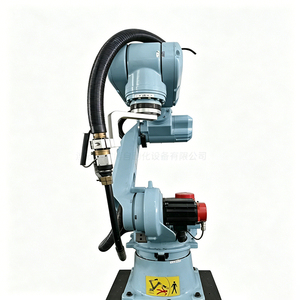
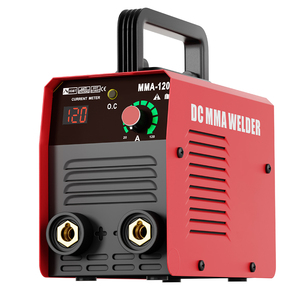
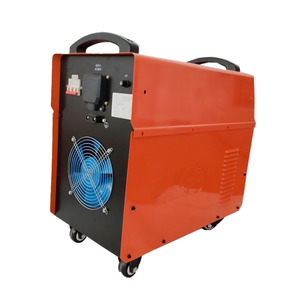
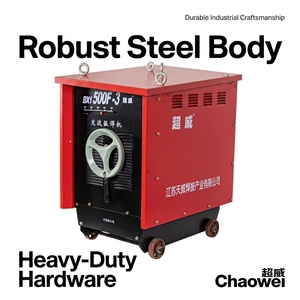
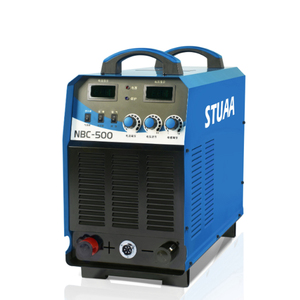
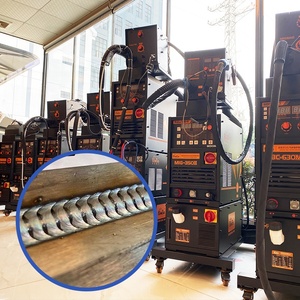
As the United States industrial economy undergoes a historic reshoring wave—fueled by federal legislation including the Infrastructure Investment and Jobs Act (IIJA), the CHIPS and Science Act, and clean energy tax incentives—the demand for ultra-efficient, highly reliable industrial joining technology has reached an all-time peak. For engineering directors, procurement officers, and plant operations executives across American manufacturing hubs, selecting the right induction welder manufacturers and suppliers is a critical operational decision directly affecting production throughput, energy efficiency, electrical grid compliance, and finished weld integrity.
Induction welding, particularly solid-state High-Frequency Electric Resistance Welding (H.F. ERW), has revolutionized the production of longitudinal seam pipes, structural steel tubing, automotive exhaust lines, and heat exchanger assemblies. By utilizing electromagnetic induction to generate localized high-density joule heating along seam edges, induction welders achieve continuous forging speeds unreachable by conventional arc methods, while dramatically minimizing the Heat-Affected Zone (HAZ). Concurrently, heavy industrial Inverter MIG, TIG, and Submerged Arc Welding (SAW) machines remain the backbone of heavy plate fabrication, structural steel erecting, and forging repair.
Parag Electrodes Agencies Pvt. Ltd. (operating globally as Paragweld), established in 1980, brings over four decades of metallurgical mastery and precision power electronics engineering to the North American market. This industry whitepaper outlines the technical fundamentals, US application scenarios, energy optimization strategies, and procurement metrics necessary for American enterprises evaluating industrial welding machinery partners.
When evaluating high-speed seam welding or localized industrial heating, understanding the thermodynamic and electrical performance differences between solid-state induction welders and traditional arc/gas welding systems is essential for maximizing yield and minimizing cost-per-weld foot.
| Performance Benchmark | Solid-State H.F. Induction Welder | Inverter MIG / MAG Welder | Submerged ARC Auto Welder (SAW) | Vacuum-Tube Induction (Legacy) |
|---|---|---|---|---|
| Primary Heating Mechanism | Electromagnetic Induction (Skin & Proximity Effect) | Electric Arc Plasma in Shielding Gas | Submerged Electric Arc under Flux Blanket | Vacuum Tube H.F. Generator |
| Electrical Efficiency | 85% – 92% | 80% – 88% | 82% – 89% | 50% – 60% |
| Heat Affected Zone (HAZ) | Ultra-Narrow (< 1.5 mm) | Moderate (3.0 – 8.0 mm) | Wide (> 10.0 mm) | Moderate to Narrow |
| Welding / Line Speed | Ultra-High (up to 120 m/min in tube mills) | Manual to Moderate (0.5 – 2.0 m/min) | High Deep Penetration (1.0 – 4.0 m/min) | High (60 – 90 m/min) |
| Power Factor (P.F.) | ≥ 0.95 (Active PFC) | ≥ 0.90 | ≥ 0.85 | 0.65 – 0.75 |
| Consumable Requirements | None (Solid State Forging) | Solid/Flux-Cored Wire, Shielding Gas | Continuous Wire & Granular Flux | Frequent Vacuum Tube Replacements |
| US Grid Compatibility | 480V 3-Phase / 60Hz Ready | 208V / 230V / 480V Dual/Triple Volt | 480V 3-Phase / 60Hz Heavy Grid | High Voltage Transformer Needed |
Targeted thermal processing and welding solutions tailored for North American industrial manufacturing belts.
In the oil and gas infrastructure belts of Texas, Oklahoma, and Ohio, high-frequency solid-state induction welders are indispensable for producing API-spec line pipe, casing, and mechanical structural tubing. Operating at frequencies between 150 kHz and 800 kHz, induction welders utilize skin and proximity effects to heat pipe edges instantly to forging temperatures before passing through impeder squeeze rolls, resulting in seamless-quality longitudinal joints without filler wire.
US automotive OEM plants and Tier-1 suppliers require precise, automated welding solutions for high-strength steel chassis frames, battery enclosures, driveshafts, and exhaust manifolds. Our 6-axis robotic welding stations combined with high-frequency induction brazing systems provide repeatable, zero-defect joints required to meet stringent US DOT and Federal Motor Vehicle Safety Standards (FMVSS).
Structural steel fabricators supplying bridge girders, commercial building frames, and port equipment rely on Paragweld’s heavy-duty ZX7-630A MMA stick welders and NBC-350 IGBT MIG systems. Engineered to meet American Welding Society (AWS) D1.1 structural welding code requirements, these power sources maintain arc stability under field voltage fluctuations and heavy ambient temperature swings.
Forge shops and machine repair centers utilize solid-state induction pre-heating units alongside high-amperage manual arc welders for hardfacing, die repair, and shaft buildup. Controlled induction preheating reduces thermal gradient shock, preventing post-weld cracking in high-carbon and alloy tool steels.
US manufacturing facilities are actively replacing legacy vacuum-tube induction welders with solid-state MOSFET and Silicon Carbide (SiC) inverter systems. Vacuum-tube units suffer from high energy losses, short component lifespans (tube replacement every 2,000 to 4,000 hours), and high operating voltages (>10,000V) that pose severe OSHA safety risks. Modern solid-state induction welders reduce electrical power consumption by up to 35%, operate under safe low internal voltages, and deliver greater than 90% power efficiency from input to work-piece.
With labor shortages impacting the US skilled welding workforce, American plants are demanding smart welding power sources capable of communicating via Ethernet/IP, Modbus TCP, or Profinet with PLC controllers and robotic automation arms (such as Fanuc, ABB, and KUKA). Modern induction and arc systems constantly monitor and log critical variables—frequency, kW power output, coil voltage, cooling water flow rate, line speed, and arc voltage—providing full traceability for quality audits and predictive maintenance routines.
US electrical utilities strictly enforce power factor (P.F.) requirements and harmonic distortion limits under IEEE 519 standards. Industrial manufacturing plants face financial penalties from utility providers if large power equipment creates line noise or poor power factor. Next-generation induction welders and inverter arc power sources feature integrated Active Power Factor Correction (PFC) modules, achieving power factors of 0.95–0.98 and minimizing total harmonic distortion (THD), thereby eliminating power penalty surcharges.
Decades of manufacturing capability, rigorous QA testing, and global export infrastructure dedicated to North American business clients.
Established in 1980, Parag Electrodes Agencies Pvt. Ltd. (Paragweld) has evolved from a premier welding consumables manufacturer into a globally recognized producer of heavy industrial arc welders, plasma cutters, and custom induction heating systems. Our deep metallurgical knowledge ensures that our machines are designed from the weld pool out.
Every welding machine destined for export to the US market undergoes an exhaustive quality assurance regimen. This includes high-voltage insulation resistance testing, thermal shock evaluation in environmental chambers, ultrasonic weld joint validation, and a continuous 24-hour full-load burn-in test to ensure zero out-of-box failure rates.
We provide full export support for US procurement officers, including ISF filing, custom packaging compliant with ISPM-15 heat-treated pallet standards, door-to-door (DDP/FOB) shipping to key US ports (Los Angeles, Houston, Savannah, Newark), and complete harmonized tariff system (HTS) documentation.
Direct technical answers addressing North American electrical standards, certifications, shipping, and technical support.
Yes. All industrial power units exported to North America are engineered specifically for 480V, 3-Phase, 60Hz utility standards (as well as 208V/230V single and three-phase configuration options for smaller portable MIG/ARC units). Transformer windings, inverter switching circuits, and cooling fans are calibrated for 60Hz grid operation.
Our industrial welders integrate essential North American safety protocols, including Voltage Reduction Devices (VRD) to reduce open-circuit voltage during idle states, thermal overload protection sensors on heat sinks, IP23/IP21S enclosure protection ratings against dust and water ingress, and emergency stop interlocks suitable for OSHA-compliant factory floors.
Standard machine builds carry a manufacturing lead time of 15 to 25 business days. Sea freight shipping to US West Coast ports (LA/Long Beach) typically takes 22–28 days, while East Coast ports (Newark/Savannah) and Gulf ports (Houston) take 30–35 days. Air freight is available for urgent spare parts or compact inverters (3–5 days). We handle all export documentation and can quote on DDP (Delivered Duty Paid) terms.
Replacing a traditional vacuum-tube induction welder with a solid-state MOSFET/IGBT induction unit yields an immediate 25%–35% electrical power savings, eliminates expensive replacement vacuum tubes ($5,000–$15,000 per tube annually), increases line welding speeds by up to 20%, and lowers water cooling energy loads. Most US tube mills achieve complete capital payback within 9 to 14 months.
We back our machinery with a comprehensive 1-Year / 2-Year limited international warranty covering main power modules, PCBs, and transformers. Replacement circuit boards, IGBT modules, impedance coils, and torch consumables are stocked for fast express dispatch to the US. Our senior electrical engineering team provides live video diagnostic sessions, remote PLC diagnostic assistance, and detailed CAD/schematic documentation.
Absolutely. Our industrial welding power sources feature analog (0-10V / 4-20mA) and digital I/O interface ports, as well as optional RS-485 / Modbus communication boards. This allows seamless plug-and-play synchronization with PLC main automation panels, automated tube mill control desks, and 6-axis robotic arms (such as Fanuc, Yaskawa, ABB, or KUKA).
Speak directly with our senior power electronics engineers and global export specialists to specify the exact induction welder, MIG, TIG, or robotic arc welding machine configuration for your facility.