Knowledge Hub & Insights
Knowledge Hub & Insights
Precision-engineered automated welders manufactured under ISO9001 and CE certifications for global industrial export
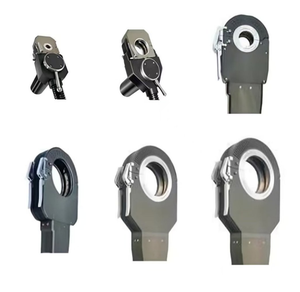
High-precision TIG orbital welding system designed for sanitary stainless steel piping, cleanrooms, and food-grade fluid processing pipelines.
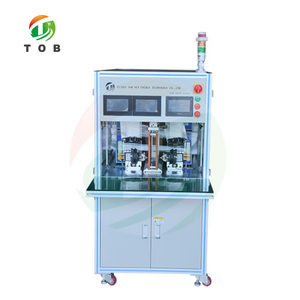
Precision micro-computer controlled double-side spot welder optimized for 18650/21700 lithium battery pack assembly lines and BESS integration.
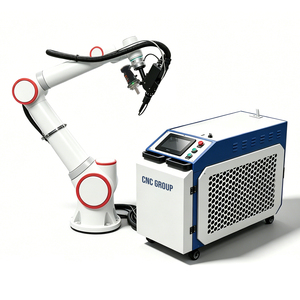
Next-generation collaborative robotic arm paired with continuous fiber laser source for ultra-fast, distortion-free sheet metal joins.
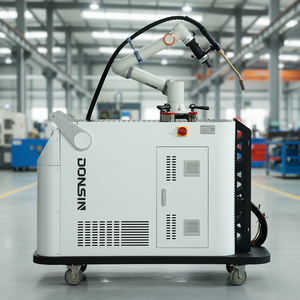
Mobile track-mounted collaborative MIG welding workstation featuring 360-degree joint flexibility and real-time seam tracking accuracy.
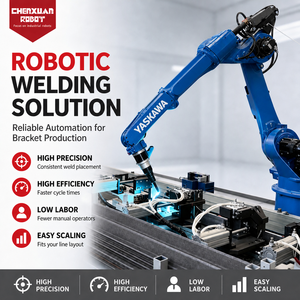
Heavy-duty industrial robot welder engineered for continuous mass production of structural roller support brackets and heavy chassis parts.
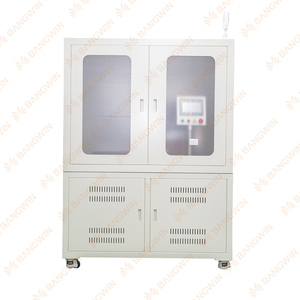
Specialized automatic welder for 0.1-0.3mm ultra-thin copper heat pipes, delivering gas-tight seal integrity for thermal management hardware.
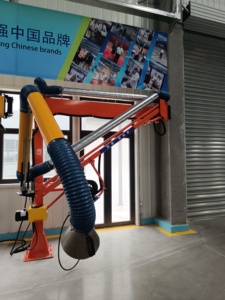
Heavy fabrication 8-meter arm welding boom with integrated 80kg payload handling and high-efficiency extraction fan for MAG welding safety.
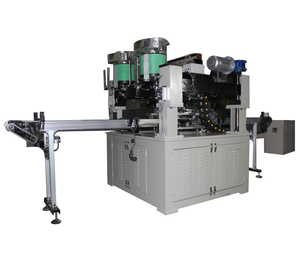
Automated line welder engineered for 1L-5L round tin can container production, ensuring leak-free cylindrical resistance seams.
The global metalworking and industrial manufacturing landscape is undergoing a dramatic structural pivot toward full process automation, driven by stringent quality control standards, skyrocketing skilled welder labor costs, and the urgent imperative for higher throughput. In Central America, Costa Rica has emerged as an premier operational hub for high-value manufacturing, medical device manufacturing (MedTech), agro-industrial packaging, and green energy infrastructure. As local Costa Rican enterprises expand across key economic zones such as Zona Franca Coyol (Alajuela), Cartago Industrial Park, and the Limón Port Logistics Corridor, the demand for industrial-grade, fully automatic welding machinery has reached an unprecedented peak.
Concurrently, China’s top automatic welder factories have solidified their position as global technology leaders. Moving far beyond traditional manual ARC and standard MIG units, top-tier OEMs in China now dominate the supply of multi-axis collaborative robots (Cobots), continuous fiber laser welding cells, submerged arc welding (SAW) automation lines, and micro-precision spot welding machines. For plant operations directors, industrial procurement executives, and manufacturing engineers in Costa Rica, establishing a direct procurement corridor or strategic partnership with premier Chinese welder manufacturers provides a decisive competitive edge—combining European-grade kinematic precision with unrivaled cost efficiency and rapid factory delivery times.
Navigating the vast landscape of automated joinery machinery requires a rigorous technical evaluation of motion control systems, power sources, duty cycles, and sensor integrations. Below is an engineering benchmark outlining the dominant automatic welder categories engineered by China’s top manufacturing facilities and deployed in Costa Rican industrial sectors:
| Equipment Category | Core Automation Architecture | Key Technical Specs | Primary Costa Rican Industry Fit |
|---|---|---|---|
| Orbital Pipe Welder | Closed-loop digital PLC, AVC (Arc Voltage Control), Pulsed TIG module | Stainless steel pipe 0.5-6.0mm wall, 360° continuous rotation, 100% duty cycle | Sanitary fluid processing, dairy processing in Coronado, MedTech cleanrooms in Coyol |
| 6-Axis Fiber Laser Cobot | Industrial 6-DOF kinematic arm, Wobble laser head, Fiber laser oscillator (1.5kW - 6kW) | Welding speed up to 120mm/s, ultra-low Heat Affected Zone (HAZ), teach-pendant interface | Sheet metal enclosures, stainless steel furniture, precision electronics, OEM parts |
| Lithium Battery Spot Welder | Double-sided servo motion control, Inverter DC power source, pneumatic pressure monitoring | Nickel sheet thickness 0.1-0.3mm, 18650/21700 cell pack alignment, micro-second pulse duration | Renewable energy storage systems (BESS), electric mobility conversion projects in Central Valley |
| Submerged Arc (SAW) Beam Line | Pioneer CNC track system, heavy-duty tandem power source (MZ-1250 / MZ-1000) | Heavy plate thickness 6-50mm, automatic flux recovery & recycling unit, submerged deep penetration | Bridge building, structural H-beam fabrication in Cartago, port crane repairs in Limón |
For heavy infrastructure development—such as Costa Rica’s ongoing bridge modernization programs and expansion of port facilities—the Pioneer CNC Automatic H-Beam Horizontal Submerged Arc Welding Production Line represents the pinnacle of high-throughput structural joinery. Unlike manual flux-cored or shielded metal arc welding, Submerged Arc systems encapsulate the electric arc beneath a protective bed of fusible granular flux. This eliminates arc radiation, drastically reduces weld spatter, and yields deep weld penetration capable of passing 100% X-ray radiographic inspection on thick steel plates. Chinese factories design these production lines with dual-drive horizontal gantries, integrated flux recovery vacuum systems, and automated seam tracking sensors that compensate for plate warpage in real time.
The shift from traditional arc welding to 6-Axis Collaborative Robot Arm Fiber Laser Welding Stations is revolutionizing light-gauge metal fabrication. Fiber laser welding operates at power densities exceeding $10^6 \text{ W/cm}^2$, creating a deep "keyhole" effect that joins metals at linear speeds up to five times faster than traditional TIG welding. In Costa Rica’s medical device and precision electronics sector, laser cobots deliver pristine, spatter-free joints that require zero post-weld grinding or chemical passivation, substantially reducing labor overhead and cycle times.
To maximize Return on Investment (ROI), automatic welding machinery must be carefully matched to the geographic and industrial specifics of Costa Rica’s major manufacturing zones. China’s top exporter factories engineer specialized configurations tailored to these localized operational requirements:
Deploying Automatic Orbital TIG Welders and Micro-Precision Copper Heat Pipe Welders for cleanroom tubing, surgical instrument housings, and thermal heat exchangers. Provides gas-shielded, ultra-clean welds matching ISO 14644-1 Class 5 cleanroom compliance.
Utilizing Automatic Round Tin Can Spot Welders in food processing plants for coffee, pineapple, and processed food packaging. High-speed resistance seam welding handles 1L to 5L tin cans at speeds up to 60 units per minute with zero leakage risk.
Implementing CNC H-Beam Submerged Arc Welders and 8m Arm MAG Boom Systems. Engineered to handle large structural steel columns, agricultural machinery chassis, and commercial building frames subjected to seismic load standards.
Costa Rica’s tropical climate—characterized by relative humidity levels frequently exceeding 85% in coastal regions like Puerto Limón and Puntarenas—presents severe challenges for industrial electrical equipment. Top Chinese automatic welder factories address this through rigorous tropicalized manufacturing protocols:
The shift toward regionalized supply chains—often termed "Nearshoring"—has driven significant foreign direct investment (FDI) into Costa Rica. Multinational corporations seeking to serve North and South American markets are establishing regional production lines in Costa Rica's Free Trade Zones (Régimen de Zona Franca). This industrial influx is reshaping local welding requirements in three prominent ways:
Historically reliant on manual stick and basic MIG welding, Costa Rican workshops are facing a acute shortage of certified high-level welders (AWS D1.1 / ISO 9606 certified). To keep pace with strict production quotas, plant managers are deploying Collaborative Robots (Cobots) equipped with intuitive touch-screen interfaces and drag-to-teach programming. Non-expert operators can program complex multi-pass weld paths within hours, resolving skilled labor constraints.
With Costa Rica generating over 98% of its electricity from renewable sources (hydroelectric, geothermal, wind), local manufacturers are keenly focused on minimizing operational energy consumption. Chinese automatic welder factories lead the industry in replacing legacy transformer-based welders with high-frequency IGBT inverter power sources, boosting electrical efficiency from ~65% to over 90% while significantly reducing power grid harmonics.
Modern high-value manufacturing requires total batch traceability. Modern Chinese automatic welding systems feature integrated Ethernet/Modbus/CANbus protocols that continuously monitor and log critical welding parameters—voltage, amperage, wire feed speed, heat input, and gas flow—exporting data directly to plant Manufacturing Execution Systems (MES).
Direct answers to common technical, electrical, logistical, and customs inquiries regarding importing automatic welders from China to Costa Rica:
Building upon over four decades of continuous innovation since 1980, our manufacturing backbone combines rigorous metallurgy expertise with state-of-the-art robotic assembly line production. As an authoritative leader in industrial welding machinery, our export organization stands firmly upon four core enterprise pillars:
Established engineering heritage with over 5,000 active machine installations across 30+ countries worldwide.
Every automated welder undergoes a 72-hour continuous load test and high-voltage insulation verification prior to export packaging.
In-house R&D team capable of engineering custom robotic tooling, specialized fixtures, and bespoke CNC seam welding tracks.
Consult directly with our senior application engineers to receive custom technical proposals, equipment ROI analyses, and factory-direct quotation pricing.