Knowledge Hub & Insights
Knowledge Hub & Insights
High-performance thermo-fusion and flash butt welding machinery engineered for heavy-duty operational compliance
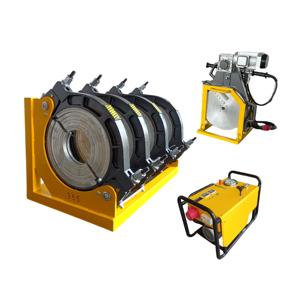
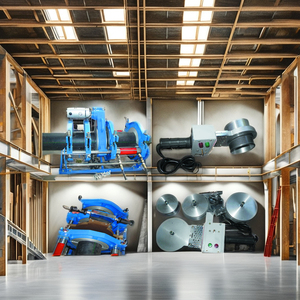
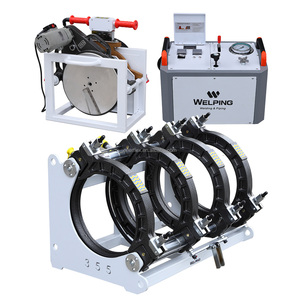
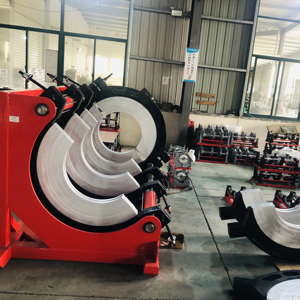
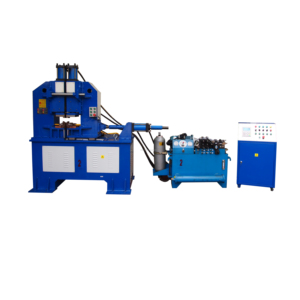
In the rapidly evolving industrial landscape of Southern Vietnam, particularly within the greater Ho Chi Minh City (HCMC) metropolitan zone, civil engineering and piping infrastructure projects face unyielding environmental challenges. From the high-salinity soft soils of Can Gio and Hiep Phuoc to the intense hydraulic head pressures of municipal water networks in Thu Duc City, pipe joint integrity is the singular variable determining structural longevity. As a premier manufacturer of CE-certified butt welders, our engineering paradigms are tailored specifically to surpass ISO 12176-1, DVS 2207-1, and ASTM F2620 international standards.
Butt fusion joining of High-Density Polyethylene (HDPE), Polypropylene (PP), and Polyvinylidene Fluoride (PVDF), alongside automated flash butt welding of steel rods and frames, is not merely a heating process—it is a precise thermo-mechanical molecular entanglement. Achieving joint strength equal to or exceeding the parent pipe material demands tight control over three critical variables: interface pressure, heating plate temperature homogeneity, and micro-controlled cooling phases.
When executing butt fusion welds on large-diameter thermoplastic conduits (ranging from 50mm hand-crank applications up to 1200mm hydraulic systems like our CH-H1200), the welding cycle transitions through five distinct, mathematically calibrated stages:
Stage 1: Pre-Heating & Bead-Up Phase: Pipe ends are planed flat and clamped into alignment. The heating plate—coated with high-grade PTFE to prevent polymer adhesion—is inserted. Initial pressure ($P_1$) is applied until a uniform melt bead forms around the circumference. The exact pressure is calculated based on total cylinder area, drag pressure ($P_{drag}$), and material-specific interfacial stress values (typically $0.15 \text{ N/mm}^2$ for HDPE PE100 resins).
Stage 2: Heat Soaking Phase: Pressure is reduced to a minimal soak level ($P_2 \approx 0.02 \text{ N/mm}^2$) to allow heat energy to penetrate deep into the polymer matrix without squeezing out the molten material. Microprocessor-controlled heating elements maintain a uniform surface temperature across the entire face ($\pm 3^\circ\text{C}$ variance tolerance), preventing thermal degradation.
Stage 3: Heating Plate Extraction (Changeover): The heating element retracts swiftly within fractions of a second ($T_3$). Exposure of molten pipe ends to ambient humidity and air currents in humid climates like Ho Chi Minh City must be minimized to avoid premature surface oxidation or thermal shock.
Stage 4: Joining & Fusion Phase: The pipe ends are brought into contact gradually, and pressure is smoothly rammed up to the full joining pressure ($P_4 = P_1 + P_{drag}$). This forces polymer chains across the melt boundary to interdiffuse and entangle, forming a seamless monolithic molecular joint.
Stage 5: Pressure-Maintained Cooling Phase: The joint must remain undisturbed under continuous hydraulic clamp pressure ($P_5$) for a duration proportional to wall thickness (SDR rating). Premature pressure release causes voids, internal stress concentrations, and reduced fatigue strength.
Technical parameters comparing flagship butt welding machinery configurations
| Model Category | Working Range | Power Supply | Max Heating Temp | Hydraulic Pressure | Primary Industrial Applications |
|---|---|---|---|---|---|
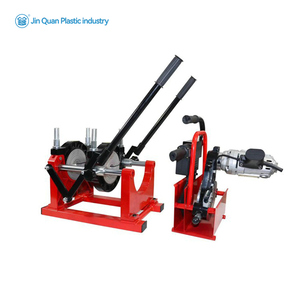
| Manual 2-Ring Series | 50mm – 200mm | 220V 50Hz / 1.5kW | 270°C (±3°C) | Manual Mechanical | Building plumbing, electrical conduit, small-scale utility repair |
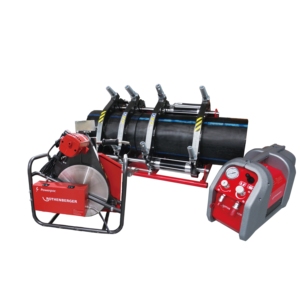
| Hydraulic PE 160mm | 63mm – 160mm | 220V 50Hz / 2.85kW | 270°C (±3°C) | 0 – 6.3 MPa | Gas supply lines, municipal water distribution, industrial effluent |
| ChangKong Semi-Auto 355 | 160mm – 355mm | 220V/380V / 9.0kW | 270°C (±3°C) | 0 – 10.0 MPa | Heavy drainage, chemical processing plants, agricultural irrigation |
| CH-H1200 Super-Size | 630mm – 1200mm | 380V 50Hz / 36kW | 300°C (±5°C) | 0 – 16.0 MPa | Long-distance water mains, sea outfall pipelines, mining slurry |
| UN-200K Flash Butt Welder | Steel Ring / Rod | 380V 50Hz / 200kVA | Metallurgical Melt | Hydraulic Upsetting | Wheel rims, steel frame fabrication, construction reinforcement |
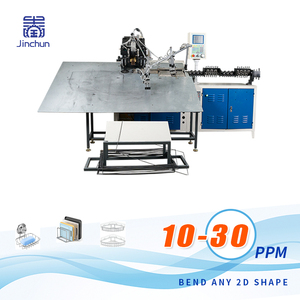
| 2D CNC 4-Axis Wire Welder | 2mm – 6mm Wire | 380V 50Hz / 15kW | Resistance Heating | Servo-Pneumatic | Automotive wire frames, storage baskets, industrial mesh grid |
Over four decades of metallurgical mastery and precision welding technology
Rooted in a rich manufacturing legacy established in 1980 at GIDC Vatva, Ahmedabad, Parag Electrodes Agencies Pvt. Ltd. (Paragweld) has expanded from specialized welding consumables into a complete global machinery conglomerate. Decades of field-proven metallurgy guide every machine design.
All our butt welding equipment is fully compliant with the European Union CE Machinery Directive (2006/42/EC) and ISO 12176-1 standards for plastic pipe butt joining. Every unit undergoes rigorous hydrostatic pressure and non-destructive joint testing before export.
As authorized stockists and technology partners associated with industry pioneers such as Modi Arc Electrodes and D&H Secheron, our technological ecosystem integrates top-tier consumables, water-cooling units, and plasma technology under one umbrella.
Ho Chi Minh City, serving as Vietnam’s economic powerhouse, is undergoing unprecedented urban renewal and industrial development. The demand for reliable pipe-joining and metal-wire-forming machinery has surged across several key local development sectors:
Underground utility displacement, stormwater drainage expansion, and civil water distribution lines in Thu Duc City require heavy-duty PE100 pipes. Our hydraulic fusion welders (160mm–355mm) ensure zero-leak joints capable of withstanding ground movement in soft delta soils.
Zones like Tan Thuan EPZ, Hiep Phuoc Industrial Park, and VSIP in neighboring Binh Duong depend heavily on corrosion-resistant chemical piping (PVDF & PP-R). Our semi-automatic temperature-controlled machines guarantee zero chemical leaching or joint failure.
In coastal areas surrounding Can Gio and the Mekong Delta, high-density polyethylene piping is widely used for saltwater intake and intensive shrimp farming. Portable 2-ring manual welders provide on-site mobility across remote agricultural terrains.
Transition from Solved/Flanged PVC to High-SDR Polyethylene: Engineering contractors in HCMC are rapidly phasing out traditional solvent-welded PVC due to environmental degradation and joint brittleness under tropical UV exposure. Thermo-fused HDPE butt joints offer a 50+ year operational lifespan with zero maintenance.
Demand for Digital Data Logging & Traceability: Municipal tenders managed by SAWACO (Saigon Water Corporation) increasingly mandate butt fusion machines equipped with automatic pressure-temperature logging to verify weld parameters against ISO standards in real time.
Essential guidance for contractors, EPC firms, and equipment importers serving Ho Chi Minh City
Yes. Our standard single-phase machines run on 220V / 50Hz, while heavy-duty hydraulic models (such as the 355mm, 630mm, and 1200mm series) operate on 380V / 50Hz three-phase power. Built-in digital voltage regulators protect internal electronics against power fluctuations commonly encountered on field construction sites in outlying HCMC districts.
Every machine is dispatched with an official CE Certificate of Conformity (Machinery Directive 2006/42/EC and Low Voltage Directive 2014/35/EU), Factory Acceptance Test (FAT) Report, Calibration Certificate for heating plates, and detailed ISO 12176-1 welding parameter charts. This documentation fulfills all requirements for SAWACO, Ministry of Construction (MOC), and private EPC contractor audits.
We maintain a dedicated inventory of critical spare parts—including PTFE-coated heating plates, hydraulic seal kits, planing blades, quick-connect couplers, and digital temperature controllers. Quick-dispatch air shipping ensures replacement parts reach HCMC within 3 to 5 business days, supported by remote video troubleshooting from our senior engineering team.
Absolutely. Our heating plates feature micro-processor temperature control ranging from 50°C to 300°C. By adjusting heating plate temperature and interface pressure according to DVS 2207 tables, the same machine can weld HDPE (PE80/PE100), Polypropylene (PP-H, PP-R), and Polyvinylidene Fluoride (PVDF) pipe profiles seamlessly.
Manual 2-ring welders are lightweight, budget-friendly, and ideal for small-diameter non-critical lines (50mm–200mm SDR17). Hydraulic fusion machines utilize closed-loop hydraulic rams to apply exact, continuous interfacial pressure. This is essential for thick-walled, large-diameter pipes (SDR11, SDR9) where manual force is insufficient to maintain uniform joint consolidation during the cooling cycle.
Industrial metallurgical units like the UN-200K Flash Butt Welder feature emergency stop circuits, pneumatic splash guards to protect operators from molten spark discharge, over-current circuit breakers, and water-cooled transformer jackets to prevent thermal overload during continuous high-duty-cycle factory operations.
When procuring butt fusion machinery for projects in Southern Vietnam, upfront purchase price represents less than 15% of the total equipment lifecycle cost. Non-certified, low-cost welding units often suffer from uneven heating plate thermal distribution, hydraulic pressure leaks, and poor clamp rigidity.
A single joint failure in a municipal water main or industrial chemical line can incur catastrophic expenses: excavation costs, SAWACO non-compliance fines, project deadline penalties, and environmental remediation fees. Investing in CE-certified machinery engineered with high-precision hydraulic power units guarantees repeatable weld geometry, minimal downtime, and maximum residual asset value.
High-grade DuPont PTFE coating resists thermal degradation up to 300°C, ensuring clean plate release without tearing the polymer melt boundary.
High-tensile aluminum alloy construction provides rigid pipe clamping without flex or distortion under full hydraulic pressure load.
Electric planing tools feature micro-switch interlocks and dual-edge high-speed steel blades to produce perfectly flat pipe end faces.
Hydraulic power packs feature pressure-retaining accumulators to maintain steady joint cooling pressure even if pump power cycles off.
Whether you require compact portable manual pipe welders for field maintenance or heavy 1200mm hydraulic fusion systems for municipal utility projects in Ho Chi Minh City, our engineering consultants are ready to assist with technical selection, parameter charts, and factory-direct pricing.