Knowledge Hub & Insights
Knowledge Hub & Insights
Explore high-performance seam, MIG, TIG, and ARC welding machinery manufactured to international engineering standards for global B2B procurement.
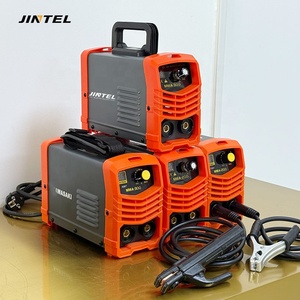
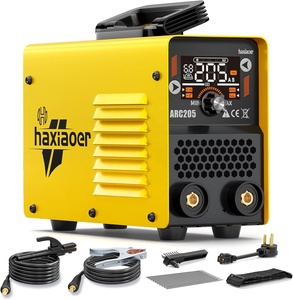
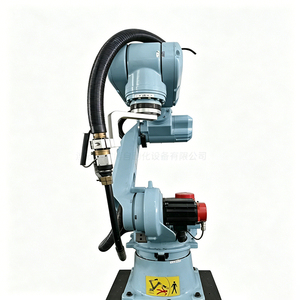
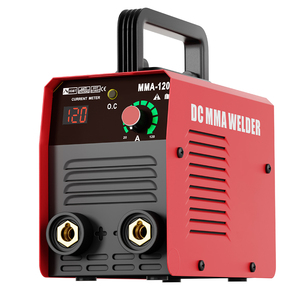
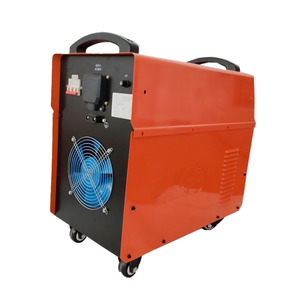
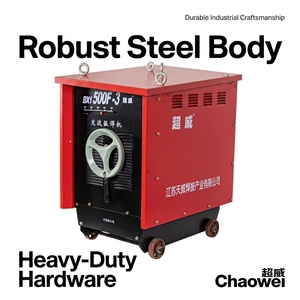
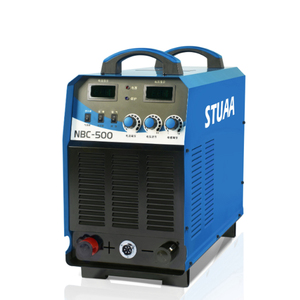
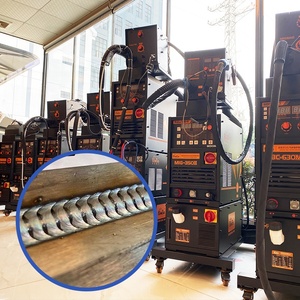
In modern automated industrial manufacturing, seam welding stands as a foundational joining technology for hermetically sealed metal assemblies, pressure vessels, fuel containers, automotive exhaust systems, transformer radiators, and stainless steel piping networks. Selecting top-trusted seam welder factories is a vital procurement decision for plant managers, OEM procurement directors, and industrial engineering leads worldwide. Unlike standard point-to-point spot welding systems, resistance seam welding (RSEW) and automated seam fusion equipment utilize rotating copper alloy wheel electrodes or continuous laser optics to produce an uninterrupted, leak-tight joint along overlapping sheet metals.
The global industrial market for resistance seam welders and automated longitudinal/circumferential seam welding machinery has evolved rapidly over the past decade. Factory buyers no longer evaluate machines solely on raw electrical output; today’s intent-driven procurement focuses on thermal efficiency, closed-loop inverter parameter control, mechanical frame rigidity under heavy pneumatic force, and seamlessly integrated Industry 4.0 monitoring interfaces. Top seam welder manufacturing plants have embraced Medium Frequency Direct Current (MFDC) power sources, custom 6-axis robotic articulation, and sophisticated weld seam tracking to guarantee uniform nugget penetration across diverse metallurgical alloys—including carbon steel, stainless steel, aluminum, and coated sheet metals.
Strategic Procurement Insight: Modern seam welding operations demand zero micro-fissure tolerances and minimal thermal deformation. Leading factories now integrate real-time dynamic resistance monitoring and adaptive micro-processor controls to guarantee 99.98% leak-tight joint integrity across high-speed continuous production lines.
As global supply chains demand greater supply chain transparency and verifiable E-E-A-T (Experience, Expertise, Authoritativeness, and Trustworthiness) standards, evaluating OEM seam welder factories requires evaluating their full engineering footprint—from transformer coil winding in-house to metallographic destructive testing labs. Manufacturers like Parag Electrodes Agencies Pvt. Ltd. (Paragweld), established in 1980 in GIDC Vatva, Ahmedabad, India, demonstrate how four decades of metallurgical experience combined with continuous R&D create reliable industrial machinery capable of handling heavy-duty fabrication across demanding market conditions.
Navigating the next decade of industrial sheet metal fabrication requires understanding key macro trends shaping seam welder machine design and factory production methodologies. Forward-thinking enterprise buyers should align their machinery sourcing with the following core technology trajectories:
Transitioning from traditional 50Hz/60Hz AC transformers to 1000Hz–4000Hz MFDC inverters drastically lowers secondary energy consumption by up to 38% while stabilizing current delivery for seamless weld nuggets.
Pairing seam welding heads with multi-axis industrial articulated robot arms enables 3D spatial seam contours on complex automotive fuel cells, aerospace skins, and architectural metal panels.
Infrared thermal mapping and optical sensors detect sheet thickness variations in real time, dynamically adjusting pneumatic clamping force and weld amperage on the millisecond level.
Furthermore, energy sustainability and carbon footprint reduction have transitioned from compliance line-items to strategic procurement parameters. Top-tier factories incorporate closed-loop closed-circuit water chilling systems that optimize internal coolant temperature for copper-chromium-zirconium (CuCrZr) electrode wheels. This thermal control prolongs electrode wheel lifespan by over 45%, preventing pick-up distortion when welding galvanized or zinc-coated steels.
When specifying seam welder machinery from OEM manufacturers, procurement agents must compare core functional architectures against specific industrial production throughput needs. The evaluation matrix below outlines key engineering metrics across resistance seam welders, automated TIG seamers, and fiber laser seam welding cells.
| Performance Dimension | MFDC Resistance Seam Welder | Automated TIG Seam Welder | Fiber Laser Seam Welder Cell |
|---|---|---|---|
| Primary Joining Mechanism | Joule Resistance Heating via Roll Wheels | Non-Consumable Tungsten Electric Arc | High-Density Focused Laser Beam |
| Max Linear Weld Speed | 1.5 m/min – 6.0 m/min | 0.3 m/min – 1.2 m/min | 3.0 m/min – 12.0 m/min |
| Hermetic Seal Quality | Exceptional (Liquid & Gas Tight) | High (Requires Precise Shielding) | Ultra-High (Minimal Heat Effect Zone) |
| Target Material Thickness | 0.3 mm – 3.2 mm (Overlap/Mash Seam) | 0.5 mm – 6.0 mm (Butt Seam) | 0.2 mm – 4.0 mm (Precision Butt/Lap) |
| Electrode Wear & Maintenance | Periodic Wheel Trimming / Dressing | Tungsten Electrode Grinding | Non-Contact Optics (Protective Glass) |
| Capital Investment Scale | Moderate (High ROI for High Volume) | Cost-Effective Entry Level | High Capital Investment |
| Energy Efficiency Index | High (MFDC Power Savings ~35%) | Moderate | Very High (Wall-Plug Efficiency ~40%) |
Securing a reliable OEM partner for seam welding machinery requires conducting a thorough technical audit of prospective manufacturing plants. Overseas buyers should evaluate candidate factories using a structured E-E-A-T benchmark framework:
Inspect frame steel thickness and C-frame / G-frame stress-relieving procedures. Heavy forging and pneumatic clamping force (up to 15 kN) demand zero frame deflection during high-cycle seam rolling.
Verify that the factory utilizes high-grade electrolytic copper windings with class H electrical insulation rather than inferior aluminum substitutes, ensuring continuous 60% to 100% duty cycle operation.
Audit the factory's hydrostatic leak testing, pneumatic bubble testing, micro-hardness testing, and macro-etch weld cross-section analysis protocols before dispatch.
Leading factories invite third-party inspection agencies (such as SGS, TUV, or Bureau Veritas) to certify transformer thermal rise and power factor parameters. Selecting a vendor with proven export logistics capabilities guarantees that spare parts—such as silver-plated conductivity bushes, internal water-seal glands, and specialized electrode wheel dressers—are rapidly shippable worldwide.
Established in 1980 by Mr. Parag Mashruwala in GIDC Vatva, Ahmedabad, Parag Electrodes Agencies Pvt. Ltd. (Paragweld) has emerged as one of India's most trusted manufacturers and global exporters of industrial welding equipment, resistance machinery, plasma cutters, and specialized electrodes.
Over four decades of dedicated industrial innovation, engineering bespoke machinery for heavy fabrication, shipbuilding, forging, and casting industries.
Strict quality management systems ensuring every seam, MIG, TIG, and ARC welding unit undergoes rigorous load bank and duty cycle testing.
Active export channels serving over 30 countries across the Middle East, Southeast Asia, Africa, Europe, and the Americas with complete documentation support.
One-stop industrial supplier providing automatic seamers, heavy-duty ARC welders, IGBT MIG/MAG units, TIG series, plasma cutters, and consumables.
Connect directly with Paragweld’s senior engineering team to request technical specifications, custom OEM design consultation, or factory-direct B2B quotations.