Knowledge Hub & Insights
Knowledge Hub & Insights
Proven SMAW, GMAW, GTAW, and Automated Robotic Pipe Welder Systems Engineered for ASME IX & API 1104 Field Compliance
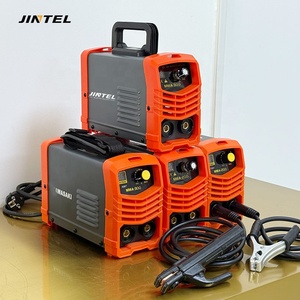
Compact inverter arc welder ideal for cross-country pipe root pass, structural cross-overs, and field maintenance.
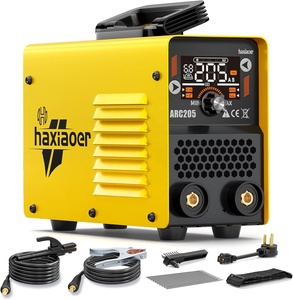
Synergic-controlled MIG/Lift-TIG/MMA welder for high-speed thin-wall pipe jointing and pressure line tacking.
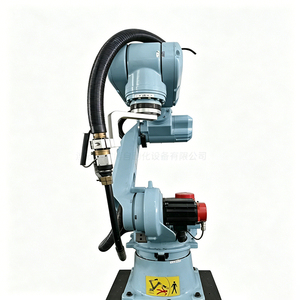
Precision 6-axis robotic welding arm designed for automated pipe spooling, flange joining, and shipbuilding yards.
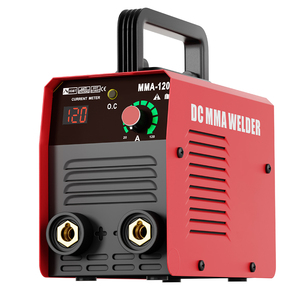
Ultra-lightweight hand-held arc welder for utility pipe repair, light agricultural tubing, and site touch-up.
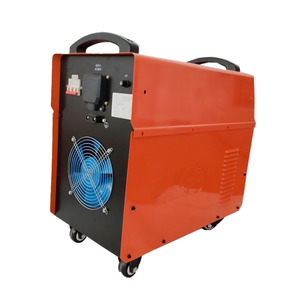
High-amperage industrial inverter arc power source for heavy wall thickness line pipes, gouging, and pressure vessels.
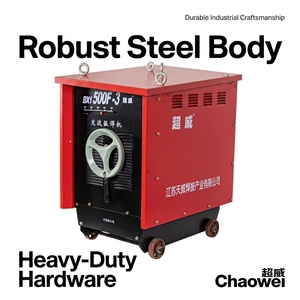
Transformer-based heavy AC welder designed for thick carbon steel pipe fabrication and foundry repair.
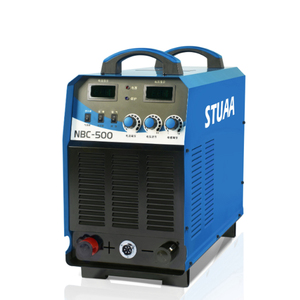
Modular IGBT-driven MIG welder optimized for continuous high-speed pipe spool production lines.
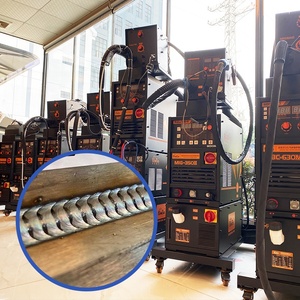
Separate wire feeder unit built for alloy steel and stainless pipe fabrication with 0.8mm-1.6mm wires.
Pipe welding represents one of the most critical subsets of heavy industrial fabrication. Unlike flat plate welding, joining tubular sections—whether carbon steel API 5L line pipes, 316L stainless steel process lines, or P91 alloy power plant piping—requires precise control over thermal input, root bead geometry, and arc stability across 1G, 2G, 5G, and 6G positions. Securing top-tier pipe welder suppliers and exporters is paramount for EPC contractors, refinery operators, shipbuilding yards, and offshore structural fabricators seeking to achieve zero-defect radiographic inspection (NDT/UT) records.
"In critical cross-country pipeline and petrochemical piping, over 85% of joint failures stem from improper root penetration or heat-affected zone (HAZ) hydrogen embrittlement. Modern IGBT inverter arc control mitigates thermal distortion while optimizing arc-force dynamically."
When selecting a pipe welding machine supplier, engineering teams must evaluate power source response time, duty cycle resilience under tropical ambient temperatures, and pulse arc modulation capabilities. In oil and gas transport pipelines, welds must conform to API Standard 1104 (Welding of Pipelines and Related Facilities) and ASME Section IX (Qualifying Welding Procedures and Welders). Machine stability directly affects the key physical phenomena of pipe joining:
To assist B2B procurement managers in selecting the optimal welding machinery for pipe projects, the table below breaks down operating parameters, deposition rates, and code compliance suitability:
| Welding Process | Typical Pipe Application | Deposition Rate | NDT Pass Rate | Recommended Power Source |
|---|---|---|---|---|
| SMAW (Stick) | Field Cross-Country Pipelines, Repair | 1.0 - 2.5 kg/hr | 94% - 97% | MMA 300A Inverter / ZX7-630G MMA Welder |
| GTAW (TIG) | High-Purity Stainless, Alloy Root Pass | 0.5 - 1.5 kg/hr | 99.2% + | Synergy 2-in-1 Lift TIG / Inverter TIG Units |
| GMAW / FCAW | Pipe Spool Shops, Offshore Rigs | 3.5 - 7.0 kg/hr | 98.5% | NBC-350 IGBT MIG / BINGO 380V MIG/MAG |
| Automated Robotic | Mass Pipe Flange & Heavy Tubular Spools | 6.0 - 12.0 kg/hr | 99.8% | Heavy Duty 6-Axis Industrial Robot Cell |
| Submerged ARC (SAW) | Large Diameter Longitudinal & Spiral Pipes | 10.0 - 25.0 kg/hr | 99.9% | Automatic SAW Heavy Power Source Systems |
The global pipe welding equipment market is undergoing a structural transition driven by automated infrastructure demands, welder skill shortages, energy efficiency mandates, and real-time digital quality audit requirements. B2B buyers and EPC procurement directors must align their capital expenditure with next-generation technological shifts.
Traditional heavy transformer power sources are being replaced by high-frequency IGBT and SiC module inverters. These units reduce power consumption by up to 35%, improve power factor (PF > 0.93), and offer instantaneous arc correction under fluctuating generator voltages in remote field sites.
Modern pipe welders now feature integrated ethernet and wireless telemetry. Procurement teams increasingly demand real-time logging of arc voltage, current, wire feed speed, and heat input per joint to automatically verify compliance against Welding Procedure Specifications (WPS).
To overcome global shortages of certified 6G pipe welders, fabrication yards are standardizing on 6-axis robot arms and orbital TIG/MIG Bug-and-Band systems. Robotic cells guarantee consistent bead appearance, minimal spatter, and cycle time reductions exceeding 60%.
Safety regulations on offshore platforms and wet site conditions require lower Open Circuit Voltage (OCV). Future-ready pipe welders come standard with Voltage Reduction Devices (VRD) that lower OCV to under 24V when idling, ensuring zero electric shock hazard.
As chemical processing plants adopt Duplex 2205, Super Duplex, and Hastelloy piping, welders must provide pre-programmed synergic curves. This enables operators to select wire diameter and gas mix, while the digital DSP automatically adjusts pulse frequency and background current.
Global supply chain resilience dictates sourcing equipment with standardized, off-the-shelf internal componentry. Buyers prefer trusted OEM exporters offering quick replacement of IGBT modules, printed circuit boards (PCBs), and heavy-duty Euro-connectors.
Rooted in four decades of engineering domain expertise, Parag Electrodes Agencies Pvt. Ltd. (Paragweld) has established itself as an authoritative manufacturer, supplier, and global exporter of heavy-duty industrial welding machinery, welding electrodes, and automated pipe joining accessories. Founded in 1980 by Mr. Parag Mashruwala in the industrial hub of GIDC Vatva, Ahmedabad, Gujarat, India, our enterprise has expanded to support over 5,000 satisfied B2B clients across 30+ countries.
When sourcing pipe welders for critical infrastructure projects, reliability and direct factory support are non-negotiable. Our manufacturing facility combines robust engineering with strict quality control processes:
Here are detailed answers to key technical, commercial, and operational questions frequently raised by B2B buyers, welding engineers, and international procurement managers.
For high-pressure carbon steel line pipes and alloy process piping, GTAW (TIG) or specialized Synergic MIG/STT (Surface Tension Transfer) processes are ideal for the root pass due to their precise heat control and smooth internal contour. For field cross-country pipelines where speed and portability are key, SMAW (MMA) with E6010/E7018 cellulose or low-hydrogen electrodes powered by robust inverter arc welders (like our MMA300A or ZX7-630G) remains the industry standard under API 1104 specifications.
Duty cycle indicates the percentage of a 10-minute period a welder can operate at rated amperage without overheating. In harsh field environments (e.g., 40°C ambient temperatures in desert oilfields), machines rated at 60% duty cycle at 25°C may trip thermally if overloaded. Our industrial units (e.g., ZX7-630G and BX1-500) are engineered with heavy aluminum/copper heat sinks, forced-air cooling tunnels, and high-margin IGBT components rated for continuous 60% to 100% heavy industrial duty cycles at elevated temperatures.
Yes. Field pipeline construction relies heavily on diesel generator sets where voltage fluctuations can exceed ±15%. Our inverter-based pipe welders incorporate dynamic voltage stabilization circuits (AVR compatibility) that absorb input voltage surges and dips, ensuring an unwavering arc cone and preventing porosity or tungsten inclusion during critical line joints.
We provide comprehensive OEM/ODM services for global B2B buyers and regional brand distributors. Custom options include customized chassis colors, brand labeling, custom input voltage configurations (e.g., 110V, 220V, 380V, 415V, or 440V dual/triple phase), digital meter calibrations, specialized Euro-connectors, and localized user manual printings.
Our pipe welding equipment is manufactured under strict ISO 9001:2015 Quality Management Guidelines. Units carry CE certification, IP21S or IP23 insulation ratings, and conform to IEC 60974-1 international electrical safety standards for arc welding equipment. Optional Voltage Reduction Devices (VRD) can be integrated for damp or high-hazard working environments.
Standard model orders are dispatched within 10 to 15 business days. For customized OEM production runs, lead times typically range from 20 to 30 days. Equipment is packaged in heavy-duty multi-layer corrugated cartons reinforced with internal shock-absorbing foam, or enclosed in export-grade ISPM-15 heat-treated wooden crates for heavy 380V units and robotic automation systems.
We supply complete spare parts kits (including control board PCBs, IGBT modules, wire feed rollers, torch consumables, and solenoid valves) along with equipment shipments. Additionally, our senior welding technical team provides 24/7 remote video diagnostic support, circuit schematics, and operator training modules to eliminate project downtime.