Industrial Welding Technology Blog & Knowledge Center — Paragweld

Knowledge Hub & Insights

Industrial Welding Blog & Guides

Explore expert technical articles, equipment operation manuals, maintenance guides, and industrial fabrication insights.

Top Trusted Gas Regulator Supplier & Exporter

Precision Engineering, Dual-Stage Pressure Stability & Global B2B Export Solutions Since 1980

Industrial Catalog Showcase

Precision Gas Regulation & Pressure Control Systems

Engineered for high-volume industrial fabrication, medical distribution, and laboratory gas manifold infrastructure.
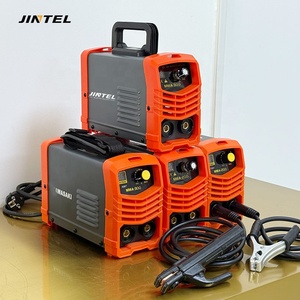
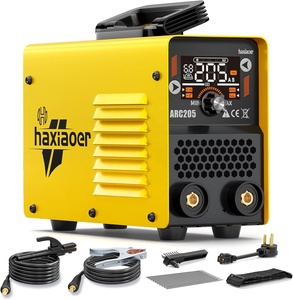
Heavy-Duty Single-Stage Oxygen Gas Pressure Regulator
Heavy-Duty Single-Stage Oxygen Pressure Regulator
Precision-forged brass body regulator designed for high-flow industrial oxygen cutting and heavy welding applications.
Inlet Max: 200 Bar | Outlet: 0-12 Bar
Diaphragm: Reinforced Neoprene / SS316
Dual-Stage High-Purity Argon & Shielding Gas Regulator
Dual-Stage High-Purity Argon Gas Regulator
Provides constant delivery pressure eliminating droop effect, optimized for MIG/TIG shield gas precision control.
Inlet Max: 230 Bar | Flow Rate: 0-35 L/min
Body: Chrome-Plated Brass Alloy
Industrial Automatic Changeover Gas Manifold Regulator System
Automatic Changeover Gas Manifold Regulator
Continuous supply dual-bank regulator system engineered for industrial centralized gas pipelines and steel mills.
Capacity: 100 m³/h | Switching: Auto Pneumatic
Certifications: ISO 2503 / CE Compliant
Compact Flame-Arrestor Integrated Acetylene Regulator
Compact Acetylene Safety Pressure Regulator
Features integrated anti-backfire flashback arrestor mechanisms for ultra-safe fuel gas control during oxy-fuel heating.
Inlet Max: 25 Bar | Outlet: 0-1.5 Bar
Safety: Internal Over-Pressure Relief Valve
Ultra-High Pressure Nitrogen Gas Cylinder Regulator 300 Bar
300-Bar High-Pressure Nitrogen Testing Regulator
Heavy-duty construction equipped with PCTFE valve seat, ideal for hydrostatic pressure testing and pipeline purging.
Inlet Max: 300 Bar | Outlet: 0-50 Bar
Seat Material: High-Creep PCTFE / Kel-F
Ultra-High Purity 316L Stainless Steel Line Regulator
Ultra-High Purity SS316L Specialty Gas Regulator
Electropolished internal surface roughness Ra < 0.25 µm, designed for toxic, corrosive, and grade 6.0 specialty gases.
Material: 316L VAR Stainless Steel
Leak Rate: 1x10⁻⁹ atm cc/sec Helium
Thermostatically Heated Carbon Dioxide CO2 Gas Regulator
Thermostatically Heated CO2 Gas Pressure Regulator
Integrated 190W electric heating module prevents gas freeze-up and dry ice blockage under high-volume flow conditions.
Power: 110V/220V Electric Heating | Flow: 25 m³/h
Thermostat: Auto-Shutdown at 60°C
High-Capacity Low-Pressure LPG & Natural Gas Line Regulator
High-Capacity Low-Pressure LPG & Natural Gas Regulator
Large-diameter diaphragm construction providing precise low-pressure delivery for industrial boilers and burners.
Inlet Max: 16 Bar | Outlet: 20-500 mbar
Connection: Flanged / NPT Threaded
Proven Industrial Legacy

44+ Years of Precision Fluid & Gas Regulation Engineering

Founded in 1980 at the heart of GIDC Vatva, Ahmedabad, India, Parag Electrodes Agencies Pvt. Ltd. (Paragweld) has established itself as an authoritative global manufacturer and exporter of heavy-duty gas pressure regulators, gas manifolds, and welding infrastructure equipment.

Our state-of-the-art manufacturing facility combines advanced CNC machining centers, automated thread-rolling systems, and multi-stage cleanroom assembly bays. Every gas regulator leaving our plant undergoes 100% helium mass spectrometer leak detection, high-pressure hydrostatic burst testing, and flow calibration in compliance with global standards including ISO 2503, EN ISO 7291, UL 252, and CGA specifications.

Serving over 5,000 corporate clients across 30+ countries in the Middle East, Europe, Southeast Asia, and the Americas, we provide robust B2B OEM/ODM manufacturing partnerships, guaranteed spare part availability, and specialized engineering advisory for high-pressure gas control.

1980
Established Year
44+
Years Industry Authority
30+
Global Export Nations
100%
Helium Leak Tested
Technical Whitepaper & Selection Guide

Engineering Fundamentals of Industrial Gas Pressure Regulation

A comprehensive technical guide for procurement directors, mechanical engineers, and plant operations executives.

1. Force-Balance Mechanics & Diaphragm Dynamics

A gas pressure regulator is a self-operating mechanical control valve that automatically maintains a constant outlet pressure despite fluctuations in inlet pressure or downstream flow demand. The governing physical principle relies on a dynamic balance of opposing forces across the regulator's internal diaphragm:

F_spring = (P_outlet × A_diaphragm) + (P_inlet × A_poppet) + F_poppet_spring

Where F_spring represents the mechanical force exerted by the adjustable range spring, P_outlet is the delivery pressure acting on the flexible diaphragm area (A_diaphragm), and P_inlet represents supply cylinder pressure acting on the valve seat orifice. When downstream demand increases, delivery pressure drops slightly, allowing the range spring to push the poppet stem downward, opening the orifice to restore equilibrium.

2. Single-Stage vs. Two-Stage Pressure Regulators: Architecture Trade-Offs

Selecting between single-stage and dual-stage pressure regulators depends directly on the duration of operation, flow stability requirements, and allowable delivery pressure creep (Supply Pressure Effect).

Technical Parameter Single-Stage Regulators Two-Stage Regulators
Pressure Reduction Mechanism Reduces cylinder pressure to delivery pressure in a single mechanical step. Reduces pressure in two distinct chambers (1st stage fixed ~30 bar; 2nd stage adjustable).
Supply Pressure Effect (SPE) / Droop High SPE: Delivery pressure rises as cylinder pressure depletes (decaying inlet). Zero SPE: Delivery pressure remains 100% constant throughout cylinder depletion.
Recommended Applications Short-cycle manual welding, temporary purge lines, secondary pipeline regulation. Continuous high-precision laser cutting, laboratory chromatography, central manifolds.
Cost & Maintenance Profile Lower capital cost; simplified internal seal replacement. Higher initial capital investment; maximum operational safety and gas savings.
Flow Coefficient (Cv Range) 0.05 to 1.5 standard Cv. 0.06 to 0.5 precision steady Cv.

3. Metallurgy & Elastomer Compatibility Matrix for Gas Regulation

Selecting incorrect metallic bodies or seat elastomers causes immediate seal degradation, mechanical galling, or catastrophic gas fires (specifically under high-pressure oxygen surge conditions). The table below outlines our standardized alloy and polymer selection guidelines:

Gas Media Recommended Body Alloy Diaphragm Spec Seat Elastomer Inlet Connection Standard
Industrial Oxygen (O₂) Forged HPb59-1 / Brass CW617N Neoprene / SS316L PTFE / PCTFE (BAM Tested) CGA 540 / BS 341 No. 3 / DIN 477 No. 9
Argon, Helium, Nitrogen (Inert) Forged Brass or Chrome Brass Stainless Steel 316L PCTFE / Kel-F CGA 580 / BS 341 No. 6 / DIN 477 No. 10
Fuel Gas (Acetylene, LPG, CNG) Heavy Cast Bronze / Forged Brass NBR Nitrile Rubber PTFE / Nylon 66 CGA 510 / BS 341 No. 4 (LH Threads)
Corrosive Gases (H₂S, Cl₂, NH₃) 316L SS / Hastelloy C-276 Elgiloy / SS316L Metal Viton® / Kalrez® CGA 330 / CGA 660 / DIN 477 No. 8
Ultra-High Purity (UHP 6.0 Gas) 316L VAR Electropolished SS Tied SS316L Diaphragm PCTFE / PEEK VCR® Face Seal / Swagelok® Tube Fittings

BAM Oxygen Surge Testing

Our oxygen regulators undergo strict pneumatic pressure shock testing to prevent adiabatic compression ignition within internal valve passages.

Helium Leak Tightness

Integrated metallic diaphragm seals ensure leak rates below 1x10⁻⁸ mbar l/s, eliminating fugitive emissions in toxic or noble gas lines.

Sintered Bronze Filters

Inlet ports feature 10-micron dual-stage sintered bronze or 316SS filters to capture particulate contamination and protect inner seat orifices.

Historical Evolution & Manufacturing Milestones in Pressure Control

The industrial gas regulator has evolved from primitive weight-loaded gasometer bell jars in the late 19th century into modern micro-machined precision force-balance systems. Key technological milestones include:

1890s – Early Mechanical Springs

Introduction of heavy cast-iron bodies utilizing vulcanized natural rubber diaphragms and uncalibrated hand-screwed tension springs for city coal gas control.

1950s – Standardization & Forging

Emergence of hot forged brass (CW617N) and standardized thread connections (CGA, BS 341, DIN 477), allowing safe handling of 200-bar compressed gas cylinders.

2000s – Ultra-High Purity & SS Diaphragms

Development of tied-diaphragm metal-to-metal seal architectures, electropolished 316L VAR stainless steel bodies, and zero-dead-volume internal cavities for semiconductors.

Knowledge Base & FAQ

Frequently Asked Questions for B2B Sourcing & Technical Specifiers

Expert answers addressing pressure ratings, certification standards, flow capacity calculations, and custom OEM manufacturing.

Q1: How do I calculate the correct Flow Coefficient (Cv) when selecting an industrial gas regulator?
The Flow Coefficient (Cv) quantifies a regulator's flow capacity and is defined as the volume of 60°F water in US GPM that flows through the valve at a 1 psi pressure drop. For compressible gas media, the standard volumetric gas flow formula is applied:
Q = 1360 × Cv × P1 × sqrt(1 / (Sg × T)) (under choked flow conditions). Our engineering desk assists buyers by sizing regulators based on inlet pressure (P1), required outlet pressure (P2), volumetric flow rate (Q in SCFH or m³/h), and gas specific gravity (Sg).
Q2: What is the main operational difference between Single-Stage and Two-Stage regulators?
A single-stage regulator reduces cylinder pressure to delivery pressure in one step. As the supply cylinder empties and inlet pressure decreases, the delivery pressure will slowly rise (Supply Pressure Effect). A two-stage regulator reduces inlet pressure in two sequential steps: the first stage drops cylinder pressure to an internal intermediate pressure (~30 Bar), while the second stage regulates it to the final set point. This guarantees 100% stable delivery pressure throughout the life of the cylinder.
Q3: Which international cylinder connection standards do your regulators comply with for global export?
We manufacture regulators customized to all international cylinder valve specifications:
  • North America: Compressed Gas Association (CGA 540 for O₂, CGA 580 for Inert, CGA 510 for Fuel Gas).
  • United Kingdom & Commonwealth: British Standard (BS 341 No. 3, No. 4, No. 6).
  • Europe / Germany: Deutsches Institut für Normung (DIN 477 No. 1, No. 6, No. 9, No. 10).
  • International ISO: ISO 5145 gas cylinder valve outlets.
Q4: How does your factory handle quality control and leak testing for bulk OEM orders?
Every regulator undergoes a 3-tier inspection protocol: 1) 100% hydrostatic shell burst testing at 1.5 times maximum working pressure; 2) Dynamic seat leak testing with dry nitrogen; 3) High-sensitivity Helium Mass Spectrometer leak detection to verify external seal integrity to < 1x10⁻⁸ mbar l/s. Test certificates (EN 10204 3.1) are supplied with every shipment batch.
Q5: Why do heated CO2 regulators require electrical thermostat modules?
Carbon Dioxide (CO2) experiences extreme thermodynamic cooling (Joule-Thomson effect) when expanding rapidly across a regulator seat orifice. Without an electric heating element, the sudden temperature drop causes moisture in the gas to freeze, forming dry ice crystals that block internal passages. Our heated CO2 regulators feature enclosed 110V/220V 190W heating jackets with automatic thermostatic control at 60°C to guarantee continuous flow.
Q6: What materials are recommended for handling toxic or aggressive gases like Hydrogen Sulfide or Ammonia?
For corrosive or toxic gas service, brass regulators are strictly prohibited due to stress corrosion cracking and chemical attack. We mandate 316L Stainless Steel or Hastelloy C-276 forged bodies, tied metal diaphragms (Elgiloy/SS316L), and specialized Kalrez® (FFKM) or PCTFE valve seats to resist chemical degradation and prevent hazardous gas escape.
Q7: What safety certifications and standards compliance do your gas regulators hold?
Our products are engineered in compliance with ISO 2503 (Gas welding equipment - Pressure regulators for gas cylinders), EN ISO 7291 (Pipeline pressure regulators), CE Marking (Pressure Equipment Directive 2014/68/EU), BAM oxygen cleanliness clearance, and ROHS III hazardous substance restrictions.
Q8: What is the standard service life and recommended maintenance schedule for industrial regulators?
Under normal industrial operating conditions, our regulators offer a design lifespan of 5 to 7 years. We recommend annual visual seat inspections, diaphragm elasticity checks, and replacement of internal 10-micron inlet filter inserts every 12 months. Fully stocked factory seal repair kits are available for immediate global export dispatch.
Q9: Can standard industrial regulators be repurposed for high-purity medical oxygen lines?
No. Medical oxygen regulators require special cleanroom assembly (ISO Class 7), solvent degreasing to cleanroom standard ASTM G93, hydrocarbon-free lubricants (PFPE grease), and specialized pin-index safety connections (CGA 870). We supply dedicated medical gas regulator lines specifically certified for healthcare applications.
Q10: What are your typical Minimum Order Quantities (MOQ) and lead times for OEM branding?
We support B2B importers, distributors, and original equipment manufacturers with flexible procurement terms. Standard stock catalog items carry an MOQ of 20 units with dispatch within 5 business days. Custom OEM branding (laser-etched logos, specialized pressure gauge dials, custom thread connections) carries an MOQ of 100 units with a manufacturing lead time of 15 to 25 calendar days.

Partner with a World-Class Gas Regulator Supplier & Exporter

Consult with our technical engineering team today for factory-direct bulk pricing, custom OEM configurations, or urgent export delivery schedules. Rapid response guaranteed within 12 hours.

Chat on WhatsApp