Knowledge Hub & Insights
Knowledge Hub & Insights
Explore our engineered lineup of industrial arc welders, robotic automation arms, and inverter MIG/MAG/TIG units designed for heavy tank fabrication and structural metalworking.
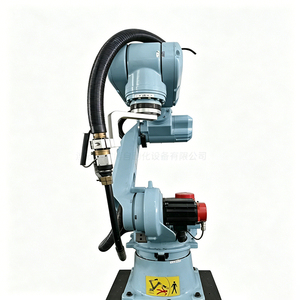
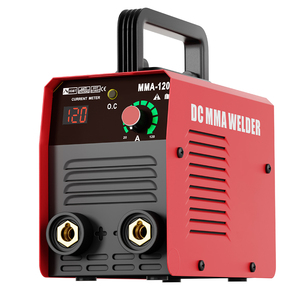
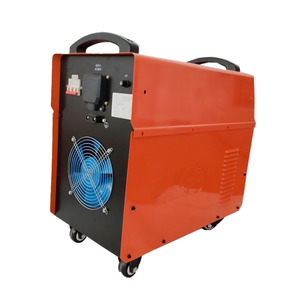
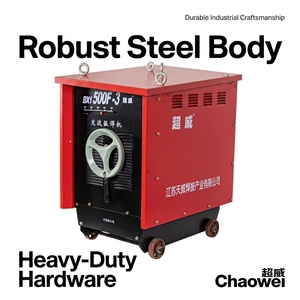
In global heavy manufacturing, pressure vessel fabrication, wind tower production, and petrochemical tank construction, mechanical turning accuracy dictates joint integrity and X-ray pass rates. As international fabricators transition toward automated submerged arc welding (SAW) and multi-axis robotic cell integration, the procurement of high-stability welding rotators (turning rolls) has shifted from basic equipment purchasing to critical engineering optimization.
China commands over 65% of the global export market for heavy-duty welding rotators, ranging from 5-ton self-aligning turning rolls to 1,000-ton anti-drift fit-up growing line systems. However, navigating the vendor matrix requires deep analysis of drive mechanics, roller durometer calibration, VFD inverter vector response, and frame stress-relief protocols. This whitepaper establishes technical benchmarks for procurement specialists, industrial project engineers, and machinery importers looking to establish long-term partnerships with leading Chinese manufacturers.
Selecting the optimal rotator configuration depends directly on workpiece geometry, shell thickness variations, center-of-gravity offsets, and batch turnover speed. Chinese export manufacturers primarily build four structural classes:
Self-aligning turning rolls feature four wheel assemblies per unit mounted on pivoting cross-swivel arms. When a cylindrical shell is lowered onto the bed, the wheel pairs automatically adjust their center-to-center distance to fit diameters ranging from small-bore piping to large storage tanks without manual bolt repositioning.
Conventional rotators utilize fixed roller axles where center-distance adjustments are executed manually via pre-drilled bolt slots, motor-driven lead screws, or rack-and-pinion slides.
Designed for joining shell-to-shell sections in wind tower manufacturing and shipyard pipe shops. These beds integrate multi-axis hydraulic cylinders that perform 4-way vertical, horizontal, and axial shifting to align vessel seams prior to circumferential seam welding.
During prolonged automatic SAW operations, longitudinal vessel "walking" or drifting occurs due to shell ovality or uneven wheel alignment. Anti-drift rotators incorporate photoelectric or laser sensor feedback coupled with hydraulic roller tilting mechanisms to maintain axial drift under $\pm 0.5\text{ mm}$.
The table below outlines technical metrics across standardized Chinese industrial export models, aiding procurement teams in matching operational requirements with manufacturing specifications:
| Model Class | Capacity (Drive + Idler) | Diameter Range | Wheel Material Standard | Motor Drive Configuration | Linear Speed Range | Drift Tolerance |
|---|---|---|---|---|---|---|
| HGK-5 | 5 Tons | $\varnothing 250 - 2,300\text{ mm}$ | Vulcanized PU (Shore A 88-92) | Single AC VFD Inverter Motor | $100 - 1,000\text{ mm/min}$ | $\le \pm 2.0\text{ mm}$ |
| HGK-20 | 20 Tons | $\varnothing 500 - 3,500\text{ mm}$ | Heavy Duty Polyurethane / Steel Core | Dual Synchronous AC Motors | $100 - 1,000\text{ mm/min}$ | $\le \pm 1.5\text{ mm}$ |
| HGK-60 | 60 Tons | $\varnothing 750 - 4,800\text{ mm}$ | Forged Alloy Steel (42CrMo) | Dual Vector Gearmotors + Encoder | $100 - 1,000\text{ mm/min}$ | $\le \pm 1.0\text{ mm}$ |
| HGK-150 | 150 Tons | $\varnothing 1,000 - 6,500\text{ mm}$ | Heavy Forged Steel / Hardened Rim | Dual Servo Synchronized Drives | $80 - 800\text{ mm/min}$ | $\le \pm 0.5\text{ mm}$ (Hydraulic) |
| HGK-500+ | 500-1000 Tons | $\varnothing 1,500 - 9,000\text{ mm}$ | Full Forged Alloy 35CrMo Heat Treated | Multi-Axis Synchronized Servo System | $50 - 500\text{ mm/min}$ | $\le \pm 0.3\text{ mm}$ (Active Anti-Drift) |
Procurement strategy must account for evolving automation standards over a 10-year lifespan. China's top-tier manufacturers are driving major engineering innovations across their export platforms:
Legacy turning rolls utilized basic open-loop frequency controllers, resulting in speed drop under uneven weight distribution. Modern export units feature closed-loop vector drives with optical encoders. Dual-drive motor configurations utilize master-slave VFD architecture to eliminate gear backlash and ensure both driving wheels rotate with micro-second synchronization.
Standalone rotators are increasingly replaced by integrated welding automation cells. Modern rotators feature standardized fieldbus interfaces (Profinet, EtherCAT, Modbus-TCP) allowing seamless handshake with 6-axis welding robots, SAW Column-and-Boom seam tracking computers, and automated flux delivery/recovery units.
Wheel delamination under high pre-heat welding environments (e.g., $250^\circ\text{C}$ pre-heated alloy steel pressure vessels) has historically caused machine downtime. Advanced factories employ specialized high-temperature polyurethane formulations enriched with nano-silicates, maintaining Shore A hardness and tear resistance up to $180^\circ\text{C}$ continuous contact.
Sensors embedded directly into primary worm gear reducers and wheel bearing hubs measure vibration spectrums, oil temperature, and axial strain. Early diagnostic telemetry alerts maintenance teams before bearing seizure occurs during crucial long-seam welds.
Leveraging 44+ years of combined manufacturing heritage, robust ISO quality controls, and international logistical reach.
All fabricated rotator bed frames undergo full thermal stress-relieving annealing in electric furnaces to eliminate weld residual stress, guaranteeing long-term frame precision without structural twisting under heavy loads.
Bearing housings and wheel shaft seats are line-bored on heavy floor-type CNC boring machines in a single setup, ensuring 100% parallelism between drive and idler roller shafts.
Full compliance with CE safety Directives, ISO 9001 quality management, and international packaging standards (vacuum foil wrapping, heavy steel export crating) serving over 30 countries.
Standard export configurations feature premium international componentry: Schneider electricals, ABB/Siemens VFD inverters, NSK heavy-duty bearings, and double-worm heavy gearboxes.
Every rotator set undergoes a mandatory 120% dynamic load test and continuous 24-hour burn-in trial before dispatch, with full NDT weld inspection certificates provided to the buyer.
Complete OEM/ODM customization capabilities: specialized base rail travel bogies, motorized hydraulic fit-up systems, anti-magnetic designs for plasma cutting, and custom frame colors.
Essential technical and commercial insights for engineers, quality auditors, and sourcing managers.
Speak directly with our senior application engineers to obtain technical drawings, custom load calculations, and competitive factory-direct pricing for your project requirements.