
Knowledge Hub & Insights
Knowledge Hub & Insights
Direct-from-factory personal protective equipment (PPE) optimized for heavy fabrication, automotive welding, shipbuilding, and precision TIG work environments.
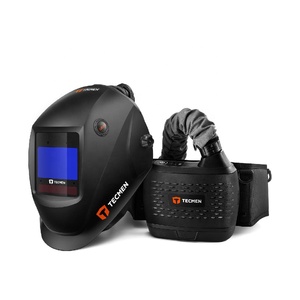
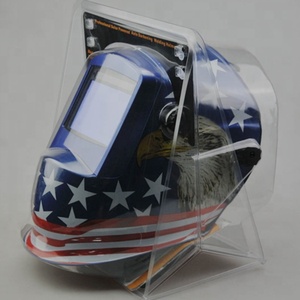
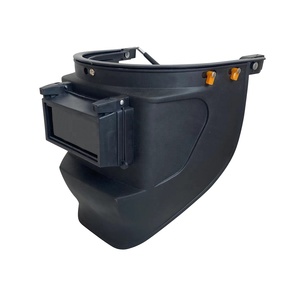
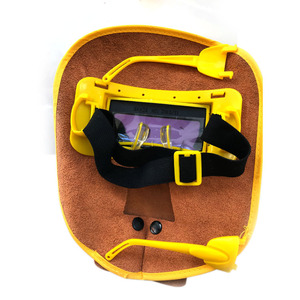
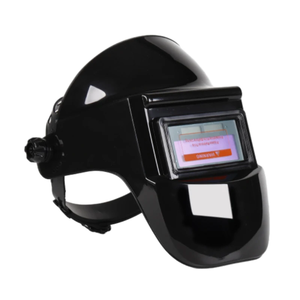
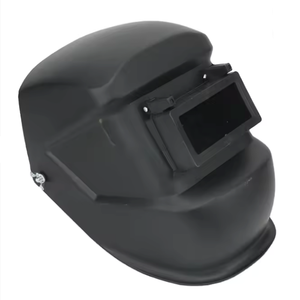
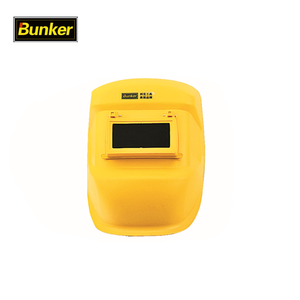
As industrial automation, pressure vessel fabrication, and shipbuilding expand globally, procurement requirements for Personal Protective Equipment (PPE)—specifically welding helmets and powered air systems—have transitioned from passive eye shading to sophisticated electro-optical safety systems. Leading Chinese OEMs and exporters now dominate the global market by integrating True Color Liquid Crystal Auto-Darkening Filters (ADF), biomorphically balanced headgear, and integrated HEPA air-filtration systems compliant with European Union (CE) and North American (ANSI) regulatory standards.
When evaluating top-tier China welding helmet manufacturers, industrial procurement directors must scrutinize the EN 379 European Standard rating. An Auto-Darkening Filter is evaluated across four distinct optical parameters, rated on a scale from 1 (highest optical quality) to 3 (lowest quality):
| Feature Parameter | Standard Entry-Level Helmet | Mid-Tier Industrial Helmet | Premium PAPR Auto-Darkening System |
|---|---|---|---|
| Optical Class (EN 379) | 1/2/1/2 | 1/1/1/2 | 1/1/1/1 (True Color) |
| Arc Sensor Count | 2 Independent Sensors | 4 Independent Sensors | 4 + Electromagnetic Sensor Array |
| Switching Reaction Time | 1/10,000 Sec | 1/20,000 Sec | 1/25,000 Sec (Fast response) |
| Low TIG Amperage Rating | ≥ 15 Amps | ≥ 5 Amps | ≥ 2 Amps (Micro-TIG Capable) |
| Respiratory Protection | Passive / Dust Mask Compatible | Optional Face Seal | PAPR TH3 P R SL (99.97% Efficiency) |
Traditional Auto-Darkening Filters relied on rudimentary green-tinted polarized coatings that restricted the visible light spectrum. Modern Chinese manufacturing leaders employ multi-layered broadband anti-reflective optics, widely designated as True Color Optical Technology. By allowing a broader spectrum of natural colors to pass through the un-darkened state (DIN 3 or DIN 3.5), welders gain precise visibility of the weld puddle, heat-affected zone (HAZ), and joint lines without lifting the helmet visor between passes. This dramatically reduces operator fatigue, improves root-pass accuracy, and mitigates arc-striking errors.
A persistent challenge in structural steel and aerospace welding is sensor occlusion—where an arm, pipe fitting, or clamp blocks optical arc sensors, causing the lens to unexpectedly un-darken while an arc is active. Advanced Chinese manufacturing lines resolve this by incorporating magnetic wave sensors alongside optical photocells. By detecting the electromagnetic field generated during high-frequency arc initiation, these hybrid systems maintain dark state lock even when optical line-of-sight is physically obstructed, operating reliably down to low-amperage TIG currents of 2 Amps.
Driven by strict workplace occupational safety regulations (such as OSHA hexavalent chromium limits and EU Directive 2004/37/EC), industrial demand for Powered Air Purifying Respirator (PAPR) Welding Helmets has grown exponentially. Premium Chinese manufacturers provide complete blower systems equipped with brushless DC motors, smart airflow sensors, audible/vibratory alarms, and dual HEPA (TH3 P R SL) filters capable of capturing 99.97% of airborne particulates down to 0.3 microns.
Unmatched OEM capabilities, rigorous laboratory quality testing, and international supply chain integration.
Every product batch is fully certified under ISO 9001 quality assurance standards, carrying CE EN 175 / EN 379, ANSI Z87.1, CSA Z94.3, and AS/NZS 1338.1 international safety marks for global market distribution.
From custom hydro-dipped shell graphics and branded headband adjustment knobs to proprietary retail packaging and localized user manuals, we deliver fully customized private-label solutions.
In-house spectrophotometer and laser flash testing rigs ensure every ADF lens meets sub-millisecond darkness switching speeds, uniform optical shading, and 100% UV/IR radiation deflection.
The industrial head protection market is experiencing rapid technological evolution. Importers, safety distributors, and procurement managers must align their product roadmaps with key emerging innovations coming out of top Chinese manufacturing hubs:
Next-generation industrial helmets are integrating embedded wireless microprocessors and miniaturized OLED transparent displays inside the ADF lens. These smart helmets deliver real-time arc-on time metrics, wire feed speed readings, gas flow rates, and ambient fume monitoring directly into the welder's field of vision, enhancing quality control for nuclear and aerospace welding applications.
Occupational strain on neck vertebrae is a leading cause of welder absenteeism. Modern Chinese production lines are migrating from traditional high-density polypropylene (PP) to high-tensile polyamide (PA) composites and ultralight carbon-fiber reinforced shells. When paired with 5-point dynamic pivot harnesses, these headgears rebalance center-of-gravity vectoring, reducing perceived strain by up to 35% during 8-hour work shifts.
Advanced power management systems now utilize dual solar cell arrays combined with rechargeable lithium-polymer secondary cells. Newer dual-layer LCD filter stacks deliver an ultra-clear DIN 2.0 light state alongside a dynamic shade range of DIN 4-14, ensuring seamless transition between micro-plasma cutting, high-amperage MIG pulse welding, and post-weld inspection.
Key technical and logistics inquiries answered by senior safety equipment export specialists.
For industrial B2B markets in North America and Europe, we strongly recommend specifying EN 379 1/1/1/1 optical class with True Color technology. This guarantees zero visual distortion, maximum eye safety, and high operator productivity during intensive TIG and MIG welding tasks.
Solar-powered hybrid systems utilize solar panels as their primary energy harvester during arc ignition, backed by replaceable CR2032 or CR2450 lithium coin cells. This dual-power topology ensures reliable arc sensing even after long storage periods and extends operating battery life up to 5,000 operational hours.
For North America, helmets must meet ANSI Z87.1-2020 high-impact testing (marked with Z87+ on shell and lens). For European Union member countries, CE certification according to EN 175 (shell impact) and EN 379 (ADF optical safety) is mandatory. Accessories with respiratory systems require EN 12941 PAPR compliance.
Standard OEM private-label production (custom logo print, branded box packaging, localized manual) typically starts at 300 to 500 units per model. For standard factory-brand packaging or unbranded bulk orders, MOQs can be negotiated down to 50 units for trial shipments.
Welding helmets with auto-darkening filters are typically classified under HS Code 6506.10.00 (Safety headgear) or HS Code 9002.20.00 (Optical filters). Respiratory PAPR systems may be declared under HS Code 8421.39 (Filtering/purifying machinery for gases).
Every auto-darkening filter cartridge undergoes a 100% automated optical sensor calibration test, thermal shock chamber cycle (-10°C to +60°C), and drop impact test prior to final assembly. Export containers are packed with moisture-resistant desiccants and reinforced double-wall corrugated cartons.
Connect with our export engineering team to receive customized pricing, factory compliance documentation, and sample evaluation units.