Knowledge Hub & Insights
Knowledge Hub & Insights
Engineered for seamless compatibility with high-current welding cables, automated robotic cells, and portable manual arc units across global job sites.
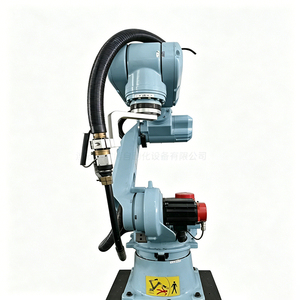
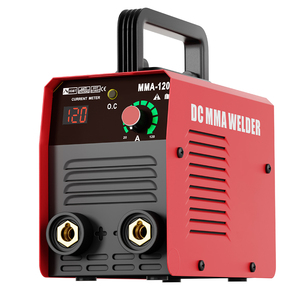
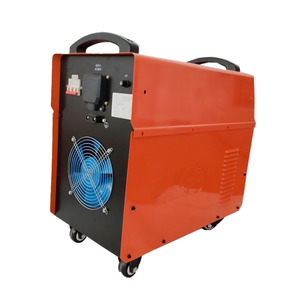
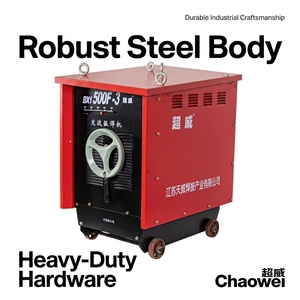
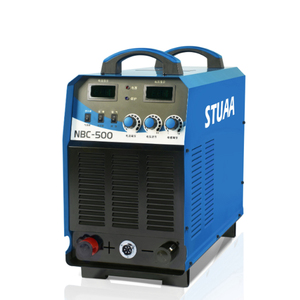
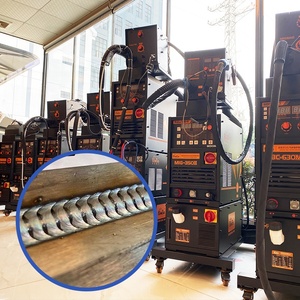
Leading China manufacturing infrastructure integrated with strict international compliance, ensuring long-lasting electrical conductivity and mechanical ruggedness.
Utilizing 0.15mm to 0.20mm high-purity oxygen-free bare copper strands, our cables achieve optimal flexibility, eliminating wrist fatigue during manual arc welding and resisting continuous robotic flex torsion.
Formulated with EPDM and Chloroprene Rubber (Neoprene) jackets certified to withstand operational temperatures from -40°C freeze environments up to +105°C continuous heat, resisting slag spatter and hot metal sparks.
Full compliance with H01N2-D, H07RN-F, IEC 60245-6, CE, RoHS, and ISO 9001:2015 standards. Every master reel undergoes 100% spark testing, elongation verification, and conductor resistance measurement prior to export shipment.
In heavy industrial fabrication, shipbuilding, pipeline installation, and automated structural steel engineering, the welding cable serves as the primary artery of electrical energy transmission. While the welding power source (whether an IGBT Inverter MMA, MIG/MAG unit, or 6-axis industrial robot) dictates voltage regulation and arc characteristics, the quality of the secondary output cable directly impacts arc stability, overall electrical efficiency, total thermal loss, and welder safety. As a top China welding cable supplier and exporter, our engineering focus revolves around minimizing line impedance, extending flexural fatigue life, and maintaining physical jacket integrity under abrasive field conditions.
Technical Insight (Information Gain): Copper purity directly impacts the electrical conductivity matrix. Using Grade-A Electrolytic Tough Pitch (ETP) Copper with minimum 99.99% purity guarantees an electrical conductivity rating of 100% IACS (International Annealed Copper Standard), resulting in up to 14% less resistance heating compared to recycled secondary copper cables commonly found in budget markets.
The internal architecture of a premium flexible welding cable relies on thousands of microscopic annealed copper wires woven together. According to IEC 60228 standards, flexible conductors are classified into Class 5 (flexible) and Class 6 (extra flexible). Standard power transmission cables utilize rigid Class 1 or Class 2 solid/stranded wires, which are completely unsuitable for welding due to stiff bending radii and rapid mechanical work-hardening.
Our industrial-grade H01N2-D and H01N2-E welding cables utilize Class 6 fine-wire stranding. For instance, a 70mm² heavy-duty welding cable constructed to Class 6 specifications incorporates over 2,200 individual 0.20mm strands bundled in counter-directional concentric lays. This specific geometric lay prevents internal wire binding during tight bending, drastically reduces skin-effect resistance during high-frequency AC pulse welding, and maximizes operational lifetime in demanding shipyard environments.
| Nominal Cross-Section (mm²) | Conductor Structure (Strands / mm) | Max Outer Diameter (mm) | Max Resistance at 20°C (Ω/km) | Continuous Duty Cycle (100%) Current Rating | Intermittent Duty Cycle (60%) Current Rating |
|---|---|---|---|---|---|
| 16 mm² | 513 / 0.20 | 9.5 mm | 1.21 Ω/km | 135 Amps | 175 Amps |
| 25 mm² | 798 / 0.20 | 11.0 mm | 0.780 Ω/km | 180 Amps | 230 Amps |
| 35 mm² | 1121 / 0.20 | 12.5 mm | 0.554 Ω/km | 225 Amps | 290 Amps |
| 50 mm² | 1596 / 0.20 | 14.5 mm | 0.386 Ω/km | 285 Amps | 370 Amps |
| 70 mm² | 2211 / 0.20 | 17.0 mm | 0.272 Ω/km | 355 Amps | 460 Amps |
| 95 mm² | 2997 / 0.20 | 19.5 mm | 0.206 Ω/km | 430 Amps | 560 Amps |
| 120 mm² | 3800 / 0.20 | 22.0 mm | 0.161 Ω/km | 500 Amps | 650 Amps |
The protective jacket of an industrial welding cable must endure constant physical drag against rough steel plates, exposure to mineral oils, hydraulic fluids, ozone, direct ultraviolet radiation, and incandescent weld spatter droplets exceeding 1,000°C. Standard PVC (Polyvinyl Chloride) insulation, while economical, exhibits severe drawbacks: it stiffens and cracks at freezing temperatures, melts easily when exposed to welding slag, and releases toxic chlorine gas under thermal decomposition.
To guarantee peak reliability, our factory formulates two specialized elastomeric compounds for export markets:
One of the most frequent causes of poor penetration, excessive spatter, and premature IGBT module failure in industrial inverter arc welders is excessive voltage drop along extended cable runs. The direct current voltage drop ($\Delta V$) across a two-way welding circuit (electrode holder cable plus work piece return clamp cable) can be precisely calculated using the following engineering formula:
Voltage Drop Formula: ΔV = (2 × L × I × ρ) / A
Where: L = One-way circuit distance (meters) | I = Welding Current (Amperes) | ρ = Resistivity of Copper (~0.0178 Ω·mm²/m at 20°C) | A = Conductor Cross-Sectional Area (mm²).
When operating high-amperage equipment such as an Industrial ZX7-630G 630A Manual Arc Welder or an NBC-350 IGBT MIG unit at distances exceeding 30 meters, failing to scale up the cross-sectional area (e.g., using 35mm² instead of 70mm² or 95mm²) can cause a voltage drop exceeding 5.0 Volts. This loss starves the arc plasma cone, causes voltage fluctuation during molten droplet transfer, and generates excessive internal resistance heating ($P = I^2 R$) that degrades the rubber insulation over time.
Strategic insights for B2B purchasing agents, OEM importers, and project engineers navigating material shifts, sustainability mandates, and automation growth.
With the rapid adoption of 6-axis industrial robot arms in automotive and shipbuilding workshops, traditional secondary power cables are evolving. Next-generation robotic welding cables feature integrated signal coax cables, anti-torsional textile braids, and high-frequency EMI shielding to prevent control signal interference between the robot arm cabinet and the welding power source.
Strict European and North American environmental directives (RoHS 3, REACH, and EN 50525 series) are driving global demand for eco-friendly, zero-halogen elastomeric jacketing. Modern infrastructure projects (underground tunnels, metro rail construction, nuclear plant fabrication) require LSZH welding cables that emit zero corrosive acid gases and non-opaque smoke during accidental fires.
While Copper-Clad Aluminum (CCA) cables offer low initial purchase costs, international EPC standards strictly prohibit CCA in heavy-duty industrial applications due to high DC resistance, thermal fatigue oxidation, and lower flex tolerance. Global buyers are consolidating orders with direct China manufacturers capable of supplying 100% certified oxygen-free pure copper with verifiable mill test reports.
Clear, authoritative technical answers addressing common procurement, specification, and installation queries.
Whether you require bulk master reels, pre-cut assemblies, or customized OEM welding cables, our engineering team is ready to deliver competitive factory-direct pricing, fast export dispatch, and technical support.
Send an Inquiry