


1. Executive Summary & Market Trajectory of Multiprocess Welders
In the contemporary industrial fabrication landscape, procurement managers and plant operations directors face mounting pressure to optimize capital expenditure (CapEx) while maximizing operational flexibility. The global shift toward Multiprocess Inverter Welding Systems represents a technical inflection point. By consolidating Shielded Metal Arc Welding (SMAW/MMA), Gas Metal Arc Welding (GMAW/MIG/MAG), Gas Tungsten Arc Welding (GTAW/TIG), and Air Plasma Cutting/Submerged Arc (SAW) capabilities into unified power sources, industrial plants achieve significant reductions in equipment footprint, maintenance overhead, and operator training duration.
China has firmly established itself as the global epicenter for advanced power electronics and inverter-based welding machine manufacturing. Driven by heavy R&D investment in high-frequency insulated-gate bipolar transistors (IGBTs), synergic digital signal processors (DSPs), and intelligent wire-feed kinematics, top Chinese OEM and ODM manufacturers deliver equipment that rivals Western European and North American benchmarks at a fraction of the total cost of ownership (TCO). This technical procurement whitepaper evaluates the engineering parameters, quality verification protocols, and global supply chain strategies necessary to select and partner with tier-1 China multiprocess welder manufacturers.
2. Technological Architecture of Industrial Multiprocess Welders
To establish meaningful supplier evaluation frameworks, engineering procurement teams must understand the internal topology of high-performance multiprocess welding power sources. Modern units have evolved beyond primitive transformer-rectifier circuits into sophisticated digital power convertors.
2.1 High-Frequency IGBT Inverter Topology
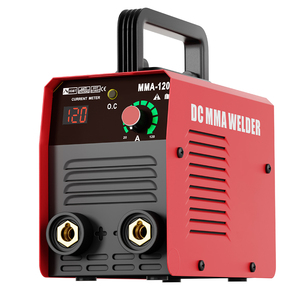
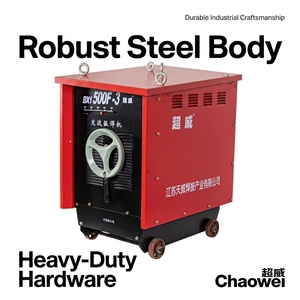
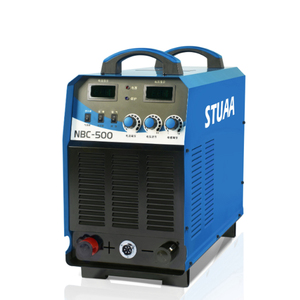
Unlike legacy 50/60 Hz transformer machines that rely on massive iron cores, modern multiprocess machines utilize high-speed IGBT switching networks operating at frequencies ranging from 20 kHz to over 100 kHz. This high switching frequency dramatically reduces the physical volume and weight of the main transformer while enhancing power conversion efficiency (typically exceeding 85% to 92%). Furthermore, high-frequency switching enables microsecond-level response times to dynamic arc fluctuations, resulting in virtually spatter-free metal transfer during short-circuit GMAW and instantaneous arc restoration during MMA operations.
2.2 Synergic Waveform Control & Digital Microprocessor Control
The defining operational feature of premium Chinese multiprocess welders is digital Synergic Control. In a synergic system, the operator selects the fundamental material variables—such as base metal alloy type, shielding gas composition, and wire diameter—and the internal digital signal processor automatically recalculates the optimal voltage, wire feed speed, peak pulse current, and background current in real time. This eliminates the trial-and-error setup time associated with analog machines, reducing weld defect rates (such as burn-through, lack of fusion, and porosity) across multi-shift factory floors.
2.3 Thermal Management & Duty Cycle Integrity Standard
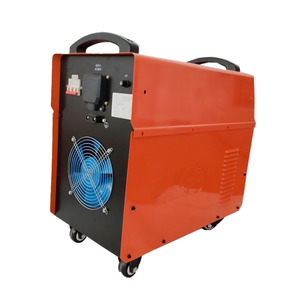
Industrial duty cycle ratings dictate the operational capacity of a welding power source under continuous factory workload conditions. International standards (such as IEC 60974-1 and EN 60974-1) evaluate duty cycle over a 10-minute testing cycle at an elevated ambient temperature of 40°C. Tier-1 China manufacturers design robust thermal dissipation tunnels equipped with forced-air cooling, heavy aluminum heat sinks, and intelligent thermal overload protection sensors embedded directly on the IGBT heat sinks and secondary rectifiers. B2B buyers must audit supplier test sheets to ensure duty cycles are true ratings certified at 40°C rather than inflated room-temperature (20°C) figures.
2.4 Engineering Matrix: Comparative Analysis of Welding Processes
The following technical data visualizer outlines the key operating parameters across primary industrial processes integrated into modern multiprocess machinery:
| Welding Process | Current Range (A) | Standard Duty Cycle @ 40°C | Compatible Materials | Primary Advantage in Multiprocess Units |
|---|---|---|---|---|
| GMAW (MIG/MAG) | 30A - 500A | 60% - 100% | Carbon Steel, Stainless, Aluminum Alloys | High deposition rate; continuous wire feeding; pulse mode for thin sheet metals. |
| GTAW (Lift TIG / HF TIG) | 10A - 400A | 60% - 100% | Exotic Alloys, Stainless, Copper, Titanium | High aesthetic finish; precise heat input control; root-pass pipe welding. |
| SMAW (Stick / MMA) | 20A - 630A | 60% - 100% | Heavy Carbon Steel, Structural Steel, Cast Iron | All-weather field operations; heavy electrode capacity (up to 6.0mm); arc gouging. |
| SAW (Submerged Arc) | 400A - 1250A | 100% Continuous | Heavy Plate Fabrication, Pressure Vessels | Extreme penetration depth; automated tractor integration; zero arc light exposure. |
| PAC (Air Plasma Cut) | 40A - 200A | 60% - 100% | All Conductive Metals (Steel, SS, Al, Brass) | Integrated cutting capability without changing primary power supply infrastructure. |
3. Key Technological Trends Shaping Sourcing (2025–2030)
Global procurement strategies must account for rapid technical evolution within the welding equipment sector. B2B buyers seeking multi-year manufacturing partnerships should prioritize China suppliers investing in the following four core technology trajectories:
IoT & Remote Weld Telemetry
Next-generation multiprocess units integrate Wi-Fi/Bluetooth modules to transmit real-time voltage, current, wire consumption, and arc-on duration directly to factory MES (Manufacturing Execution Systems) for quality assurance and cost tracking.
Active Power Factor Correction (PFC)
Advanced PFC modules enable wide input voltage tolerance (90V to 275V single phase / 320V to 525V three phase) while maintaining power factors above 0.99, reducing utility energy costs by up to 30% compared to non-PFC inverters.
Robotic Automation Interfaces
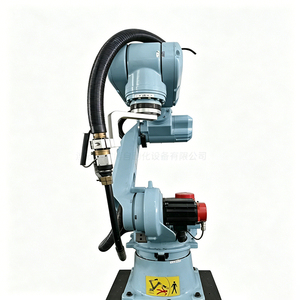
Standardized digital communication protocols (EtherCAT, CANopen, DeviceNet) integrated directly into the multiprocess power source allow plug-and-play synchronization with 6-axis industrial robot arms and automated wire feeders.
Double-Pulse MIG Technology
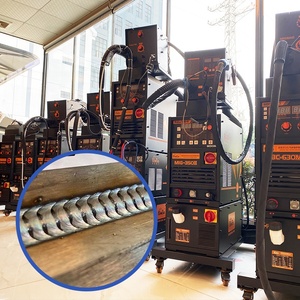
Double-pulsed arc waveforms control heat input to produce TIG-like ripple bead aesthetics at high MIG deposition speeds, dramatically reducing distortion on thin aluminum and stainless steel sheet structures.
VRD Voltage Safety Devices
Automatic Voltage Reduction Devices (VRD) lower open-circuit voltage (OCV) to safe levels (below 15V-24V) when the machine is idle, complying with strict international site safety mandates in mining and shipbuilding.
Modular Hardware Architectures
Plug-and-play modular design allows fast field installation of auxiliary water cooling units, extended wire feeders, and specialized torch connectors, reducing factory repair downtime.
4. Total Cost of Ownership (TCO) & Supplier Risk Mitigation Protocol
While the purchase price (CapEx) of Chinese multiprocess machinery is highly competitive, experienced procurement professionals evaluate suppliers based on Total Cost of Ownership. TCO incorporates initial unit price, freight logistics, energy efficiency ratings, consumables longevity, spare parts availability, and warranty response speed.
4.1 Auditing Supplier Manufacturing Standards
To eliminate quality variance, B2B buyers must audit candidate Chinese manufacturers across three vital operational pillars:
- Component Traceability: Ensure the manufacturer utilizes genuine, name-brand power semiconductors (such as Infineon IGBT modules or Fuji rectifiers) and high-grade copper windings rather than copper-clad aluminum (CCA).
- Printed Circuit Board (PCB) Protection: Inverter PCBs must undergo dual or triple conformal coating (anti-moisture, anti-dust, anti-corrosion) to withstand harsh shipyard, forging, and humid tropical climates.
- Factory Aging & Load Testing: Request verification that 100% of finished power sources undergo full-load burn-in testing for a minimum of 2 to 4 hours prior to export packaging.
4.2 Supply Chain Logistics & Compliance Certification
Navigating global compliance requires verifiable documentation. Ensure your selected OEM supplier provides authenticated test reports for CE (EN 60974-1), ISO 9001:2015 Quality Management Systems, CSA, CCC, and RoHS compliance. Furthermore, verify that the manufacturer maintains dedicated spare parts inventory (control boards, drive rolls, solenoid valves, dynamic IGBT modules) guaranteed for a minimum 10-year post-production lifecycle.
5. Frequently Asked Questions (FAQ) for B2B Sourcing
What is the primary operational advantage of a Multiprocess Welder over single-process machines?
Multiprocess welders consolidate MIG, TIG, Stick, and sometimes plasma cutting into a single power source. This reduces capital equipment investments, minimizes floor space requirements in shops, simplifies fleet maintenance, and allows operators to switch between root-pass TIG and fill-pass MIG without swapping power supplies.
How do I verify the authenticity of a Chinese manufacturer's duty cycle rating?
Request an official factory test report conducted strictly under IEC/EN 60974-1 guidelines at a standardized ambient temperature of 40°C. Reputable manufacturers will provide detailed thermal imaging and continuous load-bank test logs rather than room-temperature estimates.
What is Synergic Control, and why is it critical for high-volume B2B manufacturing?
Synergic control uses digital microprocessors to automatically adjust voltage and arc characteristics based on selected wire feed speed, wire diameter, and gas type. It speeds up setup time, reduces operator skill dependency, and ensures consistent weld bead quality across large assembly lines.
What are the standard Minimum Order Quantities (MOQs) for OEM/ODM orders?
Standard industrial multiprocess welders typically have low MOQs (often 5 to 10 units for heavy industrial series). Customized OEM branding, custom housing colors, and specialized software synergic curves generally require an MOQ of 50 to 100 units depending on the model.
How does an IGBT inverter compare to legacy transformer-based welding equipment?
IGBT inverters operate at high switching frequencies, resulting in up to 80% reduction in weight and footprint, 30% lower energy consumption, superior dynamic arc control, and reduced spatter compared to heavy, traditional 50Hz transformer units.
What after-sales technical support and spare parts availability can B2B buyers expect?
Leading tier-1 suppliers provide comprehensive technical documentation, PCB replacement modules, wire feeder wear parts, complete schematic diagrams, and dedicated remote engineering support via direct video diagnostic sessions.