Knowledge Hub & Insights
Knowledge Hub & Insights
Engineered for high-duty industrial automation, structural steel fabrications, shipbuilding, and precision B2B robotic cell integration.
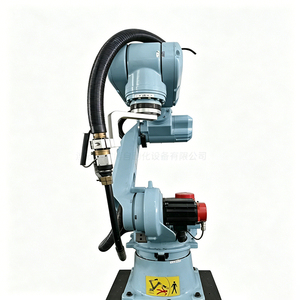
Precision 6-axis robotic manipulator engineered for heavy steel workshop fabrication, shipbuilding seams, and continuous automated multi-pass MIG/MAG arc welding.
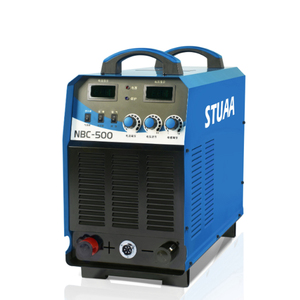
Industrial-grade 350A IGBT module inverter power source featuring analog/digital I/O communication interfaces for effortless integration with automated robotic controllers.
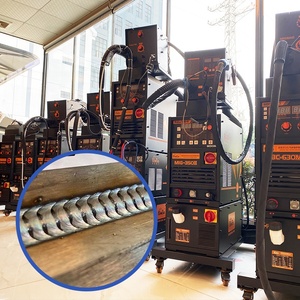
Heavy-duty 380V welding system designed for stainless steel, mild steel, and alloy fabrication, featuring dynamic wire drive response for robotic automatic feeders.
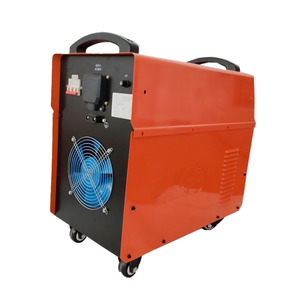
Ultra-high capacity 630A inverter welding generator designed for carbon arc gouging, thick-plate automatic stick welding, and severe industrial duty environments.
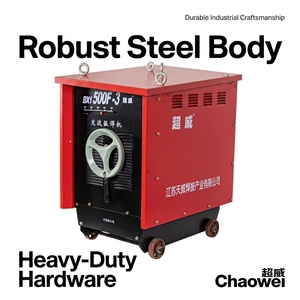
Traditional heavy-transformer AC arc welder delivering robust 36kVA power output for heavy low-carbon steel fabrication and rugged workshop environments.
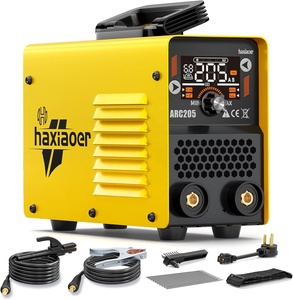
Compact micro-processor controlled dual-voltage synergy welder providing precise digital wave shaping, ideal for light industrial robotic cells and maintenance.
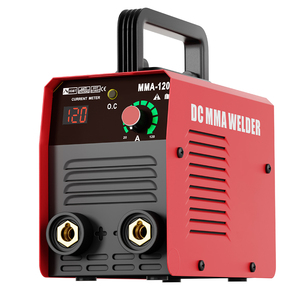
Ultra-lightweight energy-efficient inverter arc welder certified with CE standards, suitable for quick auxiliary tacking, light repairs, and site maintenance.
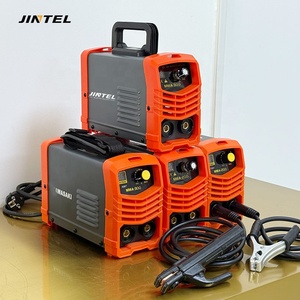
High-demand B2B OEM portable stick welder utilizing advanced IGBT single-board arc force dynamics for seamless operation across structural repair jobs.
The global manufacturing ecosystem is undergoing an unprecedented structural transition toward full automated fabrication. Industrial welding robots—comprising multi-axis articulated arms, collaborative robots (Cobots), intelligent laser seam-tracking vision sensors, and high-frequency inverter power sources—have shifted from high-capital automotive luxuries to essential operational infrastructure across global B2B supply chains.
According to recent industrial automation benchmarks, factories integrating 6-axis robotic welding cells experience an average 310% increase in hourly joint deposition rates alongside a 84% decrease in post-weld grinding and defect remediation. As global labor markets face severe shortages of skilled AWS-certified welders, procurement executives must critically evaluate potential OEM manufacturing partners not merely by initial hardware cost, but by total cost of ownership (TCO), fieldbus interface modularity, TCP (Tool Center Point) motion repeatability, and long-term supply chain reliability.
When evaluating global exporters, procurement officers must verify that power sources feature digital communications (Profinet, EtherNet/IP, or CANopen) natively compatible with robot controllers to enable real-time arc voltage sensing (AVS) and dynamic wave-shaping algorithms.
The following benchmark matrix compares leading global robot OEM manufacturers and premier integration exporters based on payload capacities, TCP repeatability standards, software integration ecosystems, and suitability for heavy fabrication environments.
| Manufacturer / Exporter Category | Primary Robotic Architecture | TCP Repeatability | Primary Industrial Use Case | OEM Customization & Export Grade |
|---|---|---|---|---|
| 1. Heavy-Duty Articulated OEM Exporters | 6-Axis Articulated Arms (6kg-50kg) | ±0.03 mm to ±0.05 mm | Heavy Steel Fabrication, Pressure Vessels | |
| 2. Collaborative Robot (Cobot) Innovators | 6-Axis Direct-Drive Cobots | ±0.05 mm to ±0.08 mm | Small-Batch High-Mix Workshops | |
| 3. High-Speed Automotive OEM Giants | Hollow-Arm Articulated Systems | ±0.02 mm to ±0.04 mm | High-Speed Spot & Laser Seam Welding | |
| 4. Integrated Power-Source Exporters | Synergic Inverter Power + Manipulator | ±0.04 mm | Shipbuilding, Heavy Earthmoving Machinery | |
| 5. Gantry & Cartesian Heavy Weld Exporters | 3-Axis to 5-Axis Overhead Gantry | ±0.10 mm | Long Pipeline, Structural Beam Welding | |
| 6. Specialized TIG Precision Exporters | Ultra-Fine Motion Micro-TIG Arms | ±0.02 mm | Aerospace Alloys, Thin-Gauge Stainless | |
| 7. Compact Workshop Automation Suppliers | Miniature Desktop / Benchtop Robots | ±0.05 mm | Electronics, Small Hardware Components | |
| 8. Submerged Arc (SAW) Tractor Exporters | Self-Propelled Automated Tractors | ±0.20 mm | Thick Plate Bridge Beams, Tank Fabrication | |
| 9. Dual-Arm Synchronized Robot Exporters | 12-Axis Dual Manipulator Cells | ±0.04 mm | Complex Tubular Framing & Chassis | |
| 10. Modular Robotic Retrofit Suppliers | Universal Robot Interface Modules | Varies by Arm | Upgrading Legacy Manual Power Sources |
Building upon over four decades of engineering heritage—exemplified by trusted global brands like Paragweld (Parag Electrodes Agencies Pvt. Ltd., established in 1980 in GIDC Vatva, Ahmedabad, India)—top-tier industrial exporters deliver robust hardware capabilities engineered to withstand harsh factory floors. High-end automated systems must combine heavy-duty structural integrity with advanced electrical protection (IP23 enclosure ratings, Class H insulation, and solid-state IGBT inverter topologies).
Every power source and robotic cell interface undergoes full thermal cycle stress testing, insulation dielectric verification, and prolonged duty-cycle burn-in prior to global export shipping.
Microsecond IGBT switching frequencies minimize weld spatter by up to 92%, delivering ultra-clean bead appearances on stainless steel, mild steel, and exotic alloys without manual cleaning.
Comprehensive export documentation, international voltage compliance (380V/415V/460V 3-Phase), and pre-configured international freight handling across 30+ countries worldwide.
As industrial enterprises accelerate smart factory integration under Industry 4.0 standards, B2B procurement strategies for welding robotics are rapidly evolving beyond simple hardware purchasing. Buyers must align their multi-year capital expenditure (CapEx) strategies with four pivotal technology trajectories:
Traditional fixed-path programming is being superseded by 2D/3D laser vision profile sensors that recalculate welding torch trajectories dynamically, compensating for joint thermal distortion and part fit-up variances in real time.
Modern production facilities require zero-downtime robot cell setup. Advanced exporters provide fully calibrated digital twin CAD software environments, allowing engineers to program, simulate, and validate complex multi-axis welds offline.
Quality assurance standards (ISO 3834 / AWS D1.1) increasingly require granular parameter tracking. Next-generation power sources automatically stream current, arc voltage, wire feed speed, and heat input parameters directly to cloud MES systems.
Addressing the technical, operational, and commercial queries most frequently analyzed by industrial equipment buyers and sourcing engineers.
For two-shift manufacturing operations, typical CapEx payback ranges between 8 to 14 months. Savings stem from a 300% throughput expansion, 95% reduction in consumable wire waste, lower shield gas usage, and eliminating costly post-weld joint rework and grinding labor.
Choose a traditional 6-Axis Articulated Robot for high-volume, continuous production where safety enclosures exist and maximum speed/payload is required. Opt for a Collaborative Robot (Cobot) if your facility processes low-volume/high-mix short runs, requires rapid torch re-programming, or operates in shared operator workspaces without safety fencing.
Enterprise integrations utilize real-time industrial Ethernet fieldbus protocols such as Profinet, EtherNet/IP, CANopen, or EtherCAT. For basic automation, digital 24V I/O signals (Arc Start, Arc Established, Gas Test, Wire Inch) combined with analog 0-10V reference inputs control output current and wire feed speed.
Robotic arms do not stop for operator fatigue. A 60% duty cycle machine rated at 350A can only weld continuously for 6 out of every 10 minutes at full output. For automated cells, procurement managers should specify continuous 100% Duty Cycle rated power sources (or properly de-rated 500A/630A units) to ensure non-stop multi-shift factory operation.
Exported heavy industrial machinery must feature CE compliance marking, ISO 9001 quality management, ISO 3834 welding technical compliance, and IP23 moisture/dust protection. International freight shipments must be packed in IPPC ISPM-15 compliant fumigated wooden crates with internal vapor corrosion inhibitor (VCI) shrink wrapping.