Knowledge Hub & Insights
Knowledge Hub & Insights
Explore heavy-duty, factory-direct positioning machinery designed to optimize weld deposition efficiency, ergonomic workpiece orientation, and automated robotic synchronization.
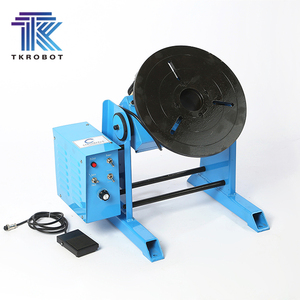
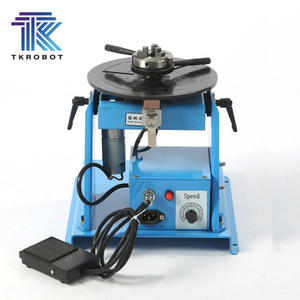
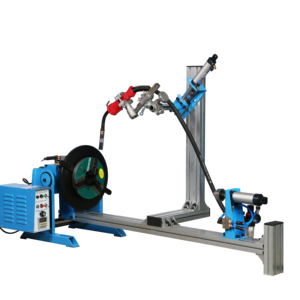
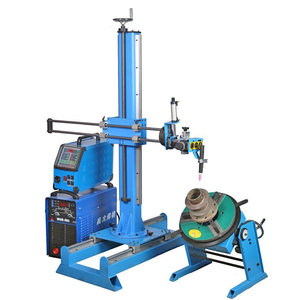
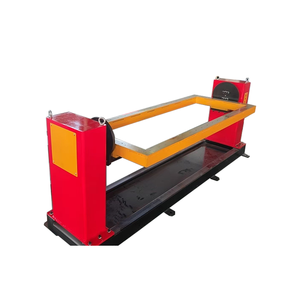
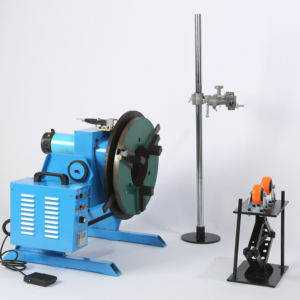
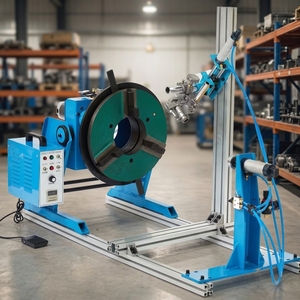
In modern industrial fabrication, metal casting repair, pressure vessel manufacturing, and heavy structural engineering, welding positioners have evolved from simple passive turntables into highly sophisticated, multi-axis kinematic systems. The fundamental objective of installing an automated rotary welding positioner is to ensure that every weld seam is presented in the flat (1G/1F) or horizontal (2F) position. By maintaining downhand welding positions, manufacturing facilities achieve up to 35-50% higher weld metal deposition rates, eliminate dangerous overhead (4G) maneuvers, and significantly reduce thermal distortion.
Global procurement teams navigating the sourcing landscape must evaluate factories not merely based on initial equipment purchase price, but on dynamic center-of-gravity (COG) handling, backlash tolerances, high-amperage grounding integrity, and controller interconnectivity for Industry 4.0 automated cells. This whitepaper systematically evaluates the global manufacturing ecosystem, outlining critical technical criteria, technological roadmaps, and factory evaluation matrices.
Selecting the appropriate positioner requires a rigorous analysis of both statics and dynamics. A common engineering error during B2B procurement is underestimating the combined effect of workpiece center-of-gravity distance and eccentric offset:
T_tilt = W × (CG_distance + Table_thickness)
Where W represents total payload weight and CG_distance is the perpendicular distance from the table surface to the payload's center of gravity.
T_rot = W × Eccentricity_distance
Where Eccentricity_distance measures the radial distance from the rotational center axis to the workpiece's actual mass center.
Industrial positioner suppliers must provide verified torque-load curves detailing safe operating envelopes across 100mm to 1500mm COG offsets. Premium manufacturers build in a minimum safety factory factor of 1.5x to absorb dynamic shock loads caused by heavy structural components during loading and unloading.
When shortlisting positioner manufacturers across global manufacturing hubs (including specialized facilities in India, China, Europe, and North America), engineering audit teams should rank suppliers against the following ten technical criteria:
Structural frames engineered with high-tensile steel plates, validated via Finite Element Analysis (FEA) to eliminate elastic deflection under full load.
Low-backlash worm gear reducers or planetary gearboxes (< 2.0 arcmin) essential for high-precision TIG and robotic seam tracking.
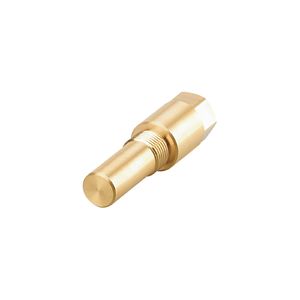
Heavy-duty brass/copper contact shoes rated for continuous 300A, 600A, or 1000A welding currents to prevent arcing through support bearings.
Variable Frequency Drives (VFD) with vector torque control or closed-loop AC Servo systems providing smooth stepless speed regulation.
Electromechanical self-locking worm gears or hydraulic brakes that prevent unintended tilt or rotation drift during sudden power outages.
Support for digital I/O, Modbus, Profinet, or EtherCAT protocols allowing master control via external robotic systems or column-and-boom manipulators.
Verification of mandatory safety compliance, including emergency stop circuits, limit switches, and international quality management standards.
Factory capacity to custom-engineer hollow-spindle bore sizes, specialized chuck fixtures, and extended height-adjustment mechanisms.
Established export channels ensuring standard industrial components (Schneider Electric, Siemens, Omron) are easily replaceable locally.
Evaluating long-term serviceability, spare part availability, and energy consumption over a 10-to-15 year machinery operational lifecycle.
Selecting the incorrect positioner architecture can lead to structural overload or excessive equipment footprint. Below is an engineering selection guide based on workpiece geometry and process demands:
| Positioner Configuration | Typical Payload Range | Tilt Range | Optimal Workpiece Geometry | Compatible Welding Processes |
|---|---|---|---|---|
| 1-Axis Benchtop Turntable | 10kg - 100kg | 0° - 90° (Manual) | Small flanges, valves, exhaust pipes, fittings | TIG, Micro-MIG, Plasma Welding |
| 2-Axis Variable Tilt Turntable | 100kg - 5,000kg | 0° - 120° (Motorized) | Dished heads, pump casings, structural elbows | MIG/MAG, FCAW, TIG Automatic |
| Headstock & Tailstock System | 1,000kg - 50,000kg | 360° Rotation Only | Long structural beams, pressure vessels, chassis | SAW (Submerged Arc), Heavy FCAW |
| 3-Axis Hydraulic Elevation Positioner | 500kg - 10,000kg | 0° - 135° + Vertical Lift | Complex asymmetrical weldments, excavator arms | Robotic MIG, Multi-Pass SAW |
| L-Type / Skyhook Positioner | 250kg - 3,000kg | Continuous 360° / 360° | Box frames, cabinets, complex assemblies | Robotic Automation Cells |
As smart manufacturing initiatives scale globally under Industry 4.0 paradigms, the demand for standalone positioning tables is shifting toward integrated, intelligent motion axes. Buyers should anticipate the following technological shifts when finalizing procurement contracts:
Next-generation positioners incorporate absolute encoders synchronized directly with 6-axis collaborative robots (Cobots). Rather than index-and-stop positioning, the table rotates in interpolated real-time harmony with the robot torch, keeping travel speed constant across irregular profiles.
Modern suppliers are integrating vibration sensors, motor thermal monitoring, and real-time strain gauges. These smart sensors transmit diagnostic telemetry over MQTT or OPC UA protocols to warn maintenance teams of gear wear or over-torque conditions before catastrophic mechanical failure.
Replacing traditional worm gear reducers, direct-drive permanent magnet torque motors eliminate mechanical backlash entirely. This technology provides zero-maintenance rotation and sub-arcsecond positioning repeatability for ultra-critical aerospace and nuclear vessel welding.
For high-capacity positioners (over 10 Tons) undergoing frequent tilting cycles, energy-recovery drives capture potential energy during table lowering, converting kinetic force back into clean electrical energy fed into the plant grid.
Established in 1980 in GIDC Vatva, Ahmedabad, India, Parag Electrodes Agencies Pvt. Ltd. (Paragweld) has grown into a globally recognized manufacturer and exporter of heavy-duty welding machines, positioning equipment, air plasma cutters, and specialized electrodes. Serving heavy fabrication, forging shops, foundry casting repair, and structural steel plants across 30+ countries, Paragweld combines four decades of metallurgical mastery with modern kinematic engineering.
Below are essential technical responses compiled by our senior welding automation specialists to assist procurement officers and plant engineers during equipment specification:
Contact our Senior Engineering Advisory Team today for payload calculations, custom fixture design, and competitive factory-direct quotations.
Send an Inquiry