Knowledge Hub & Insights
Knowledge Hub & Insights
High-reliability MIG, TIG, MMA Arc, Submerged Arc Welders, and Automated Robotic Solutions for Global Heavy Fabrication
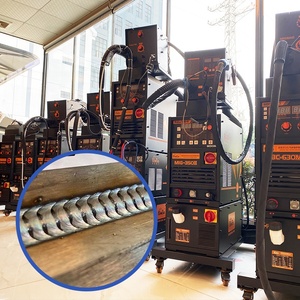
Four Decades of Engineering Excellence & Global Export Leadership
When procurement managers, structural engineers, and international equipment dealers evaluate a top welding machine exporter, technical capability, post-purchase reliability, and compliance with international standards take precedence over raw purchase price. Established in 1980 by founder Mr. Parag Mashruwala, Parag Electrodes Agencies Pvt. Ltd. (Paragweld) has grown from an industrial pioneer in GIDC Vatva, Ahmedabad, into a globally respected manufacturer and exporter of heavy-duty arc welding power sources, submerged arc systems, air plasma cutters, and specialized flux-coated electrodes.
In modern industrial fabrication—spanning shipbuilding yards, heavy pressure vessel engineering, cross-country oil & gas pipelines, and forging die repairs—the structural integrity of every weld joint is directly governed by arc stability, inverter control response, and duty cycle endurance. As global manufacturing transitions into high-efficiency inverter topologies and automated robotic welding cells, understanding the key performance metrics of leading exporters becomes essential for maintaining operational productivity and low Total Cost of Ownership (TCO).
Core Enterprise Mandate: Delivering zero-defect welding power sources engineered with high-tier IGBT modules, superior thermal insulation (Class H), and dynamic arc force controls that withstand severe industrial power fluctuations and continuous duty cycles.
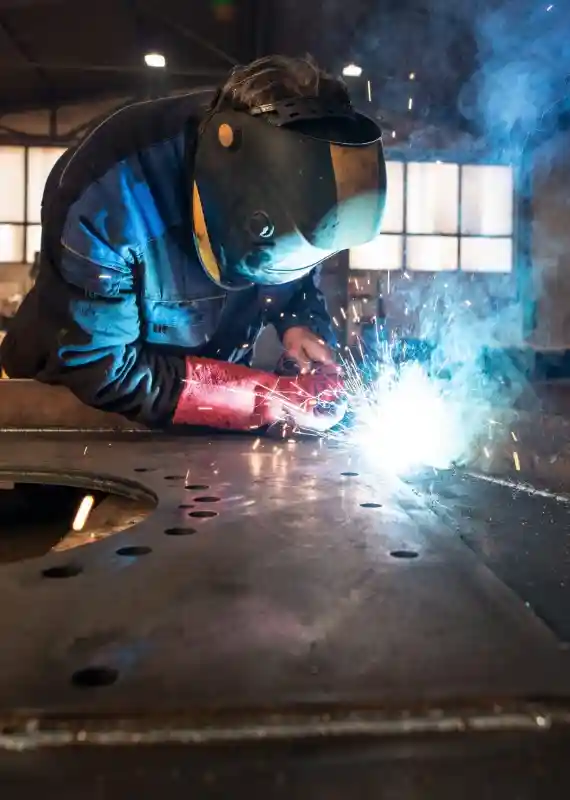




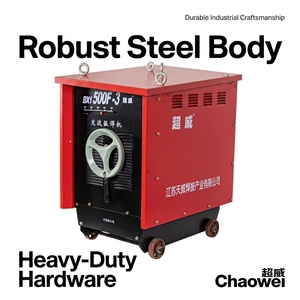
The industrial welding landscape has experienced a generational shift. Legacy AC transformer machines (such as the classic BX1 series), while indestructible under severe mechanical abuse, suffer from high electrical idle losses, poor power factors (<0.65), and massive physical footprints. Modern global exporters focus heavily on advanced Insulated Gate Bipolar Transistors (IGBT) and Metal-Oxide-Semiconductor Field-Effect Transistors (MOSFET) inverter circuits operating at frequencies between 20 kHz and 100 kHz.
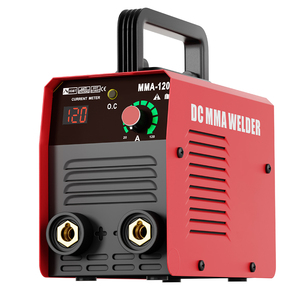
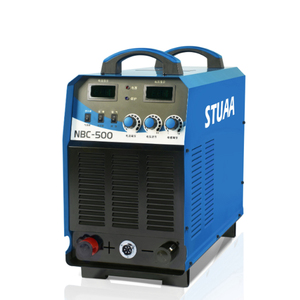
High-frequency switching reduces the internal transformer core size exponentially, yielding lightweight, highly energy-efficient machines (power factor >0.93) capable of instant closed-loop feedback. For instance, in ZX7 series manual metal arc (MMA) and NBC series MIG/MAG systems, microcontrollers sample arc voltage and current thousands of times per second. This eliminates spatter, prevents electrode freezing, and guarantees constant current output even during supply voltage fluctuations of ±15%.
Sourcing strategies among multinational engineering EPCs and manufacturing hubs are undergoing rapid realignment. When procuring from top welding machine exporters, B2B buyers must evaluate four foundational trends driving next-generation fabrication lines:
For structural steel fabrication, wind turbine towers, and thick-walled pressure vessel longitudinal seams, manual welding presents significant bottleneck risks. Exporters offering heavy-duty Submerged Arc Auto Welders (such as 1250A tractor-driven SAW units) enable continuous deposition rates exceeding 8 to 12 kg/h. The deep flux coverage protects the molten puddle from atmospheric oxidation, producing X-ray clear joints with high impact toughness at sub-zero temperatures.
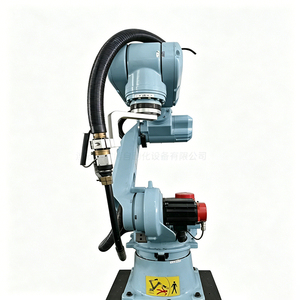
Skilled welder shortages across Europe, North America, and parts of Asia have accelerated the adoption of 6-axis articulated robot arms paired with digital high-speed pulse MIG power sources. Modern OEM/ODM exporters now supply turnkey robotic cells pre-configured with seam tracking sensors, anti-collision torches, and synergic welding libraries tailored for mild steel, structural aluminum, and stainless assemblies.
Procurement departments are increasingly consolidating equipment fleet inventories by purchasing multi-process dual-voltage machines. A single 2-in-1 or 3-in-1 synergic welding machine capable of switching between Gas Metal Arc Welding (GMAW), Flux-Cored Arc Welding (FCAW), Shielded Metal Arc Welding (SMAW), and Gas Tungsten Arc Welding (GTAW) reduces equipment acquisition costs while ensuring field versatility for site maintenance crews.
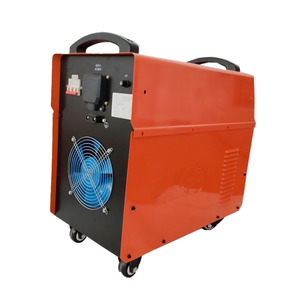
With industrial energy tariffs escalating globally, energy efficiency has become a critical procurement matrix item. Inverter welding power sources reduce no-load power consumption by up to 80% compared to legacy motor-generator sets or standard step-down transformers. Furthermore, smart fan-on-demand thermal management decreases internal dust ingress, extending component lifespans in dusty forge shops and steel mills.
To assist technical buyers in identifying the appropriate machine topology, the following matrix compares core engineering parameters across key industrial welding machine categories exported worldwide:
| Welding Process | Core Power Architecture | Typical Duty Cycle @ 40°C | Primary Industrial Applications | Key Sourcing Benefit |
|---|---|---|---|---|
| MMA / Stick (ZX7 / ARC Series) | IGBT Inverter / Soft Switching | 60% - 100% @ 300A - 630A | Field construction, forge shops, maintenance, structural steel | High portability, extreme ruggedness, low capital cost |
| MIG / MAG (NBC / BINGO Series) | Module IGBT Inverter with Synergic Wave Control | 60% - 100% @ 250A - 500A | Automotive manufacturing, sheet metal, shipbuilding, pressure vessels | High deposition speed, minimal spatter, continuous wire feeding |
| Submerged ARC (MZ-1250 Auto) | Thyristor / Heavy Inverter Tractor Unit | 100% Continuous @ 1000A - 1250A | Wind towers, shipbuilding, heavy boilers, girder fabrication | Deep joint penetration, X-ray quality welds, maximum deposition |
| 6-Axis Robotic Arc Arm | Digital High-Speed Pulse Interface + Articulated Arm | 100% Automated Duty Cycle | Mass production automotive parts, OEM equipment frames | Eliminates operator error, ultra-repeatable bead geometry |
| AC Arc Welder (BX1 Series) | Step-Down Copper / Aluminum Transformer | 50% - 60% @ 300A - 500A | Basic repair shop, rough structural ironwork, foundry casting repair | Indestructible electrical design, low technical complexity |
Procuring heavy industrial machinery across international borders requires stringent quality assurance frameworks to mitigate risk. Leading exporters like Paragweld establish multi-stage factory acceptance testing (FAT) before export dispatch. When evaluating global vendors, B2B buyers should inspect the following technical aspects:
A major discrepancy in low-cost export equipment involves ambient temperature ratings for duty cycle declarations. Standard industrial duty cycles must be rated at 40°C ambient temperature according to IEC 60974-1 standards. A machine advertised at "80% duty cycle" tested only at 20°C ambient will rapidly overheat and trip thermal protection relays when deployed in tropical or high-temperature shop floors in the Middle East, Southeast Asia, or Africa. High-grade industrial welders utilize Class H electrical insulation (rated to 180°C) on internal transformers and inductors.
Welding workshops are hostile operating environments containing conductive metal dust, grinding debris, moisture, and chemical fumes. Superior exporters apply conformal coating (anti-corrosive, dust-proof varnish) to all Printed Circuit Board Assemblies (PCBAs) and engineer isolated wind-tunnel cooling structures. This ensures cooling airflow passes strictly over aluminum heat sinks without blowing metal particles directly across sensitive digital control electronics, preventing catastrophic short-circuits.
Expert Answers to Critical Questions Regarding International Welding Equipment Sourcing & Operations
Duty cycle is defined as the percentage of a 10-minute period that a welding machine can operate at its maximum rated output without overheating. For continuous heavy industrial fabrication, tank building, or automated seam welding, choose power sources with a 60% to 100% duty cycle at your intended operating amperage (e.g., 500A @ 60% or 1000A @ 100% for SAW). For light maintenance or intermittent manual stick welding, a 30% to 50% duty cycle rating is generally sufficient.
IGBT inverter welders convert line power to high-frequency AC before stepping it down, resulting in a transformer that is up to 80% lighter and smaller. Key benefits include dramatically reduced electrical power consumption, superior arc stability with dynamic arc-force adjustment, fine digital parameter control, higher open-circuit voltage for easy arc ignition, and multi-process capability within a single compact housing.
Global buyers should verify compliance with ISO 9001:2015 Quality Management Systems, CE certification for European electrical safety directives, IEC 60974-1 (Arc Welding Equipment Safety and Performance), and RoHS compliance for hazardous materials. Additionally, verifying IP enclosure ratings (such as IP21S or IP23) ensures adequate protection against solid object ingress and falling water drops in outdoor construction sites.
Separate (external) wire feeders connected via extended heavy-duty cable assemblies (typically 5 to 15 meters) allow welders to move freely around large structural weldments, ship hulls, or crane girders without lugging the heavy main power source. External feeders equipped with 4-drive roll mechanisms also ensure consistent, non-slip wire feeding for thick flux-cored or aluminum wires.
Paragweld maintains a comprehensive inventory of modular replacement parts, including main IGBT modules, control PCB boards, drive rolls, high-frequency arc initiators, and torch consumables. International export orders include comprehensive technical documentation, schematic wiring diagrams, and optional spare part kits. Technical support is backed by direct video assistance from factory engineers, ensuring minimal operational downtime.
For high-volume production workshops, a 6-axis robotic arc welding cell typically yields full Return on Investment (ROI) within 12 to 18 months. Robotics increase weld travel speeds by 200%–300%, eliminate over-welding and weld bead inconsistency, reduce post-weld grinding labor, and operate continuously across multiple work shifts with minimal human intervention.
Partner with Paragweld—India's Trusted Manufacturer & Exporter of High-Performance Industrial Welding Equipment Since 1980.