Knowledge Hub & Insights
Knowledge Hub & Insights
Rigorously tested stick electrodes customized with low-spatter chemistry, high deposition rates, and moisture-resistant flux packaging.
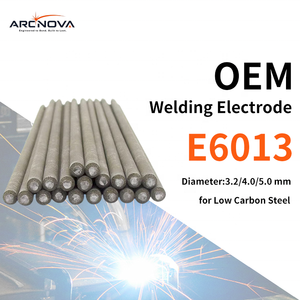
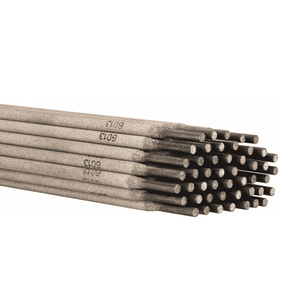
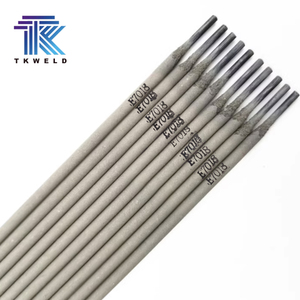
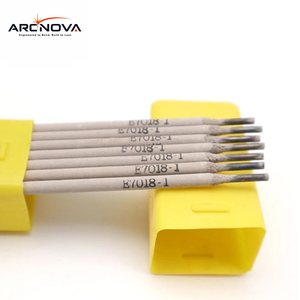
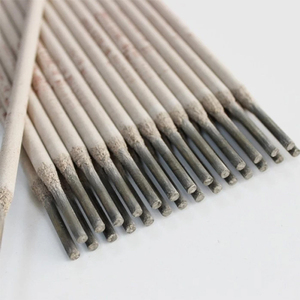
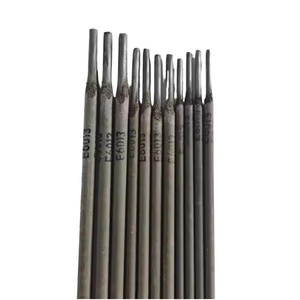
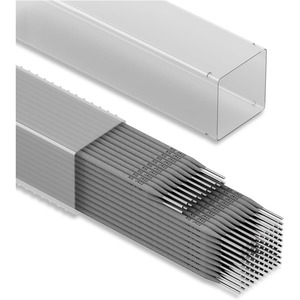
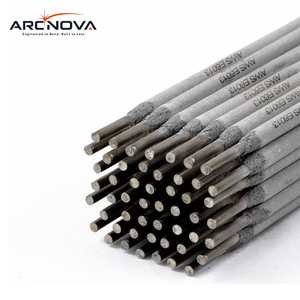
Comprehensive chemical composition and mechanical properties breakdown for structural welding design engineers and procurement officers.
| AWS Classification | Flux Coating Type | Yield Strength (MPa) | Tensile Strength (MPa) | Elongation (%) | Charpy V-Notch Impact | Welding Position | Recommended Current |
|---|---|---|---|---|---|---|---|
| AWS A5.1 E6013 (J421) | High Rutile-Titanium | ≥ 330 MPa | 420 - 540 MPa | ≥ 17% | ≥ 47 J (0°C) | All Positions (PA, PB, PC, PF, PE) | AC / DC- / DC+ |
| AWS A5.1 E7018 | Iron Powder Low-Hydrogen | ≥ 400 MPa | 490 - 660 MPa | ≥ 22% | ≥ 27 J (-30°C) | All Positions (Except Vertical-Down) | AC / DC+ |
| AWS A5.1 E7018-1 | Low-Hydrogen High-Toughness | ≥ 400 MPa | 490 - 660 MPa | ≥ 22% | ≥ 27 J (-45°C) | All Positions (Low-Temp Critical) | AC / DC+ |
| AWS A5.1 E4303 | Titanium-Potassium Type | ≥ 330 MPa | 420 - 540 MPa | ≥ 22% | ≥ 47 J (0°C) | All Positions (Sheet Metal & Steel) | AC / DC |
| AWS A5.5 E8018-B2 | Low-Alloy Cr-Mo Type | ≥ 460 MPa | 550 - 690 MPa | ≥ 19% | High Temp Creep Resistant | Boiler & Pressure Piping | DC+ |
Strategic supply chain insights for industrial buyers adapting to automated fabrication, environmental regulations, and advanced material science.
Global environmental standards (ISO 14001) are driving demand for low-hexavalent chromium and reduced particulate fume flux coatings, safeguarding welder health in enclosed shipyards and pressure vessel cells.
High-strength offshore steel grades require electrodes guaranteed to deposit less than 4ml of diffusible hydrogen per 100g of weld metal (H4R), eliminating hydrogen-induced cold cracking in Arctic structures.
Procurement teams are shifting away from traditional paper boxes toward hermetically sealed aluminum vacuum tins. This eliminates re-baking procedures onsite and ensures immediate out-of-box welding compliance.
Global distributors are increasingly partnering with integrated OEM manufacturers capable of producing custom core wire chemistry, customized flux coloring, and localized multilingual retail packaging under private brand names.
Shielded Metal Arc Welding (SMAW), commonly known as stick welding, remains the predominant joinery methodology across heavy steel fabrication, cross-country pipeline construction, shipbuilding, and structural maintenance. The structural integrity of a welded joint relies fundamental on the metallurgical synergy between the mild carbon core wire (H08A / H08MnA) and the concentric flux coating extruded around it. As a globally recognized OEM/ODM welding rod manufacturer and supplier, Parag Electrodes Agencies Pvt. Ltd. (Paragweld) leverages over four decades of chemical engineering expertise to produce consumables that exceed international quality metrics.
A primary failure point in low-grade stick electrodes is flux eccentricity. When the coating thickness varies across the circumference of the core wire, the electric arc wanders unevenly, causing arc blow, irregular slag coverage, and localized undercut. Our automated extrusion lines utilize real-time laser concentricity monitoring to maintain flux concentricity within ±2.5%, guaranteeing a focused, smooth arc transfer across all amperage ranges.
Understanding the chemical classification of welding electrodes is essential for procurement specialists matching consumables to structural design stress profiles:
Global industrial supply chains demand flexibility. As a dedicated OEM/ODM manufacturer, we offer comprehensive customization capabilities tailored to regional market specifications and private label brand requirements:
1. Core Wire Chemical Customization: Depending on target mechanical requirements, core wire chemistry can be adjusted for specific Carbon (C: 0.05-0.10%), Manganese (Mn: 0.30-0.60%), Silicon (Si ≤ 0.03%), Sulfur (S ≤ 0.02%), and Phosphorus (P ≤ 0.02%) limits to optimize weld pool fluidity and hot-crack resistance.
2. Custom Flux Pigmentation & Stamping: We support custom flux colors (grey, light rutile brown, dark blue, high-iron black) as well as continuous inkjet stem stamping of brand logos, AWS grade numbers, and batch tracking codes along the bare end of every rod.
3. Advanced Moisture Protection Packaging: Moisture absorption is the leading cause of hydrogen-assisted cold cracking in structural steel welding. We provide multiple moisture-barrier packaging configurations:
Our manufacturing facility in GIDC Vatva operates a complete ISO 17025 accredited metallurgical testing laboratory. Every heat of raw core wire and batch of dry flux powder undergoes Optical Emission Spectrometry (OES), mechanical tensile testing, Charpy V-notch impact testing, X-ray radiographic inspection, and Diffusible Hydrogen Gas Chromatography analysis before dispatch.
Answers to common technical, packaging, minimum order quantity, and logistics questions from international buyers.
Our standard MOQ for private-label box printing and custom electrode stem stamping is 3 Metric Tons per specific AWS size and grade. For standard unbranded or Paragweld branded packaging, we accept consolidated orders starting at 1 Metric Ton across mixed electrode diameters (2.5mm, 3.2mm, 4.0mm, 5.0mm).
We utilize low-hydrogen raw minerals, automated high-temperature baking ovens operating up to 450°C, and immediate hermetic vacuum sealing. Every batch is certified via mercury displacement or gas chromatography testing to ensure diffusible hydrogen levels remain safely below the H4 (4ml/100g) or H8 (8ml/100g) threshold per AWS A4.3 standards.
All shipments are supplied with EN 10204 Type 3.1 Mill Test Certificates detailing exact chemical ladle analysis and all weld-metal mechanical test results. Our facility holds ISO 9001:2015 quality approval, and our products comply with AWS A5.1, ISO 2560, EN 499, ABS, DNV, and Lloyd’s Register classification society requirements.
When stored in original unopened vacuum-sealed containers in a dry room (temperature > 15°C, relative humidity < 60%), our electrodes have an indefinite shelf life. Standard box-packaged E7018 low-hydrogen electrodes should be re-baked at 300°C–350°C for 1 hour prior to use if exposed to ambient air for more than 4 hours.
Yes. While standard production lengths are 300mm (for 2.0mm/2.5mm) and 350mm–450mm (for 3.2mm–5.0mm), we can cut custom wire lengths ranging from 250mm to 500mm upon request. We also formulate custom flux chemistry for specialized heat-resistant, stainless steel, hardfacing, and cast iron repair applications.
Standard export lead time is 14 to 21 days from order confirmation and artwork approval. A standard 20-foot FCL container accommodates up to 25 to 27 Metric Tons of palletized welding electrodes (typically 1,250 to 1,350 cartons of 20kg each), optimized to prevent freight damage during ocean transit.
Direct factory pricing, custom flux chemistry, ISO-standard quality assurance, and global dispatch from Ahmedabad, India. Request your customized quotation today.