Knowledge Hub & Insights
Knowledge Hub & Insights
Explore our engineering portfolio of heavy-duty manual, semi-automated, and robotic welding equipment tailored for B2B industrial applications worldwide.
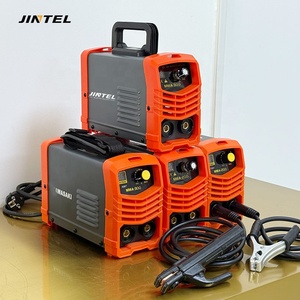
Compact 300A inverter stick welder featuring dynamic arc control, duty-cycle stability, and robust thermal protection for site repairs.
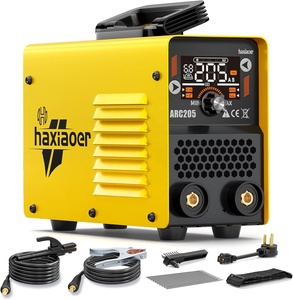
Dual-voltage synergistic welding station optimized for precision MIG wire feeding and Lift-TIG capabilities across light metal fabrication.
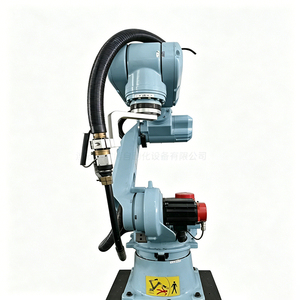
High-speed automated robotic welding cell engineered for heavy shipbuilding, structural steel workshops, and repetitive seam accuracy.
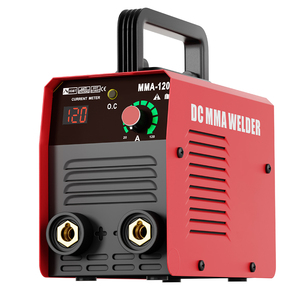
Ultra-lightweight 910W manual metal arc power source built with energy-saving IGBT modules for light maintenance work.
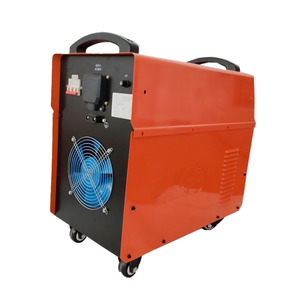
Heavy-duty 630-amp three-phase power source engineered for severe duty cycles, gouging operations, and thick structural steel joining.
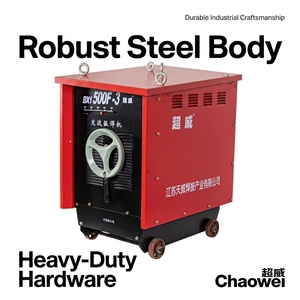
Heavy-transformer AC welding apparatus optimized for low carbon steel structural fabrication and machine shop operations.
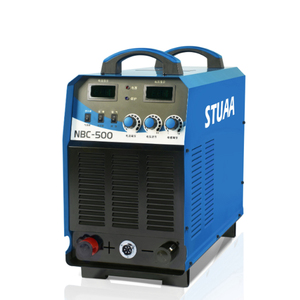
Advanced IGBT inverter power source with low spatter output, deep weld penetration, and precise wire feed speed control.
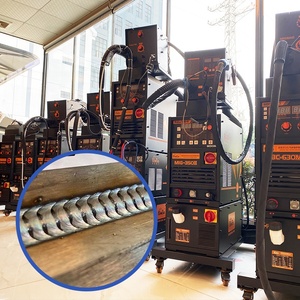
Multi-process industrial power system for heavy stainless steel and carbon steel manufacturing, equipped with high-torque wire drive.
An authoritative technical evaluation of solid-state joining technology, direct-drive vs. inertia mechanics, metallurgical gains, and global sourcing strategies for high-integrity components.
Friction welding is a solid-state joining process that produces coalescence by converting mechanical energy into thermal energy at the joint interface under applied axial pressure. Unlike fusion welding processes where base metals are melted using high electric arcs, friction welding operates entirely below the melting point of the parent materials. This completely eliminates melting-related defects such as gas porosity, slag inclusions, segregation, and solidification cracking.
During the process, one component is held stationary while the mating component is rotated at controlled high speeds. The components are forced together under a precise friction pressure. The mechanical friction generates intense localized frictional heat, plasticizing the metal at the joint interface. Once the plastic state is reached, rotation is rapidly braked, and a massive forge force (upset pressure) is applied. This consolidates the plasticized material, grain-refining the bond line through dynamic recrystallization and forging a 100% full-surface forged weld joint.
Driven continuously by an electric motor or hydraulic system. Offers total control over continuous rotational speed, friction pressure, burn-off displacement, and rapid braking sequence.
Utilizes energy stored in a rotating flywheel disconnected from the drive motor before contact. Kinetic energy is completely converted into frictional heat, self-regulating the weld cycle.
Utilizes high-frequency linear oscillating motion instead of rotation. Essential for non-round components, blisks, aircraft engine blades, and complex structural forgings.
To guide procurement officers and manufacturing engineers in selecting the optimal joinery process, the technical comparison table below illustrates why solid-state friction welding is replacing conventional arc processes across high-stress industrial applications:
| Performance Parameter | Solid-State Friction Welding | MIG / MAG Arc Welding | Submerged ARC Welding (SAW) |
|---|---|---|---|
| Metallurgical Integrity | 100% forged bond line; zero melting defects, fine equiaxed grain structure. | Risk of porosity, inclusions, spatter, and coarse dendritic structure. | High heat input; wide Heat-Affected Zone (HAZ), risk of dilution. |
| Dissimilar Metal Joining | Excellent (e.g., Al to Cu, Al to Steel, Ti to Stainless). | Extremely difficult or impossible due to brittle intermetallics. | Restricted to compatible carbon/alloy steel grades. |
| Consumable Requirements | Zero (No shielding gas, filler wire, or flux required). | High consumption of filler wire & shielding gas. | High consumption of submerged flux & thick wire electrodes. |
| Cycle Time / Speed | Seconds per joint (Ultra-fast, high repeatability). | Minutes to hours depending on multi-pass thick wall requirements. | Moderate to slow (Requires joint prep, multi-pass cleaning). |
| Operator Skill Dependency | Automated CNC closed-loop control; zero operator variance. | High manual skill required for quality assurance. | Semi-automated; requires dedicated weld setup operators. |
| Environmental Impact | Eco-friendly; zero smoke, fumes, arc flash, or spatter. | Generates toxic fumes, intense UV light, and weld spatter. | Generates slag waste and particulate dust. |
One of the highest value-added advantages provided by custom OEM friction welders is the capability to weld dissimilar metals that possess vast differences in melting points, thermal conductivities, and mechanical properties. In automotive EV battery systems and electrical power transmission, joining Copper (Cu) to Aluminium (Al) is critical for weight reduction and high electrical conductivity. Traditional fusion arc welding results in brittle intermetallic compounds (IMCs) like Al₂Cu that cause immediate structural failure under shock or electrical load.
Friction welding prevents the thermal threshold required to form brittle IMC phases. The solid-state atomic diffusion created under forged upsetting yields a joint strength that equals or exceeds the parent weaker material strength. OEM components routinely joined using Paragweld custom equipment include:
Strategic insights for procurement directors, OEM engineering teams, and plant managers navigating global supply chain transformations.
Modern B2B procurement is rapidly shifting away from standalone machinery toward smart, IoT-enabled friction welding platforms. Next-generation systems feature real-time sensors monitoring torque curve, axial displacement (burn-off length), forge pressure, dynamic spindle RPM, and interface temperature. Integrated PLCs generate unique digitally verifiable weld signatures for 100% traceability per workpiece.
With rising raw material costs and stringent corporate ESG targets, industrial buyers prioritize machinery that eliminates consumable expenses. Solid-state friction welders reduce electricity consumption by up to 60% per joint compared to high-power SAW systems and remove wire/gas costs entirely while achieving higher cycle speeds.
Off-the-shelf welding machinery often fails to meet specific component geometries or floor space restrictions. Procurement trends show a 45% growth in demand for custom OEM friction welder suppliers capable of building turnkey modular units featuring automatic flash removal, robotic loading/unloading, and inline ultrasonic non-destructive testing (NDT).
Headquartered in GIDC Vatva, Ahmedabad, India, Parag Electrodes Agencies Pvt. Ltd. combines decades of metallurgy experience with modern precision machinery export capabilities.
Founded by Mr. Parag Mashruwala in 1980, Paragweld adheres to rigid quality assurance protocols. Every custom OEM friction welder, MIG/TIG machine, arc welder, and plasma cutter undergoes extensive multi-stage load testing, insulation calibration, and weld-sample destruction tests prior to export dispatch.
We collaborate directly with client engineering teams to deliver custom clamping fixtures, variable axial force capacities (from 5 Tons to over 120 Tons), specialized spindle drives, and automated material handling systems tailored precisely to your factory floor requirements.
With a client footprint spanning over 30 countries across the Middle East, Southeast Asia, Africa, Europe, and the Americas, our export department handles seamless containerized shipping, customs documentation, remote PLC diagnostics, and comprehensive lifetime spare parts backing.
Addressing core technical, quality, and commercial inquiries from global B2B buyers and structural engineers.
Consult with Paragweld's senior engineering team today to design a Custom OEM Friction Welder tailored to your exact production geometry, cycle time targets, and quality standards.