

Knowledge Hub & Insights
Knowledge Hub & Insights
Factory-direct wholesale spot welders designed for high-speed sheet metal fabrication, battery pack assembly, automotive body repair, and wire mesh manufacturing.
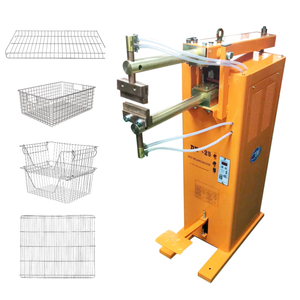
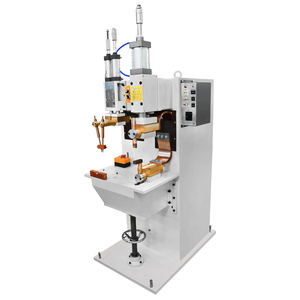
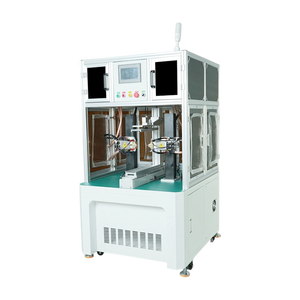
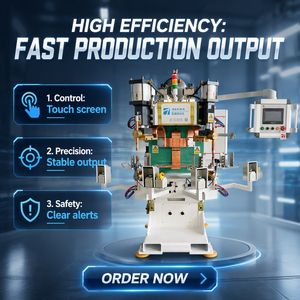
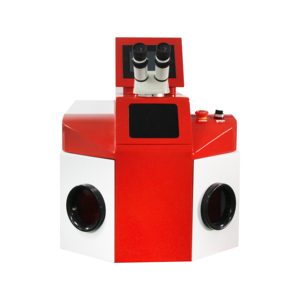
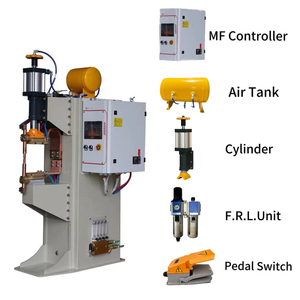
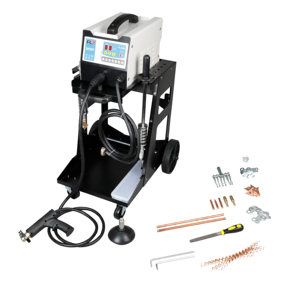
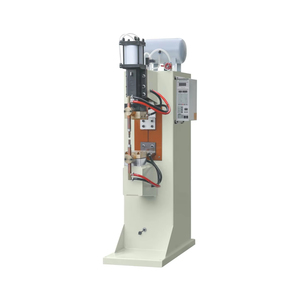
An in-depth technical analysis for global procurement teams, manufacturing directors, and welding engineers sourcing China-manufactured resistance welding equipment.
Resistance spot welding (RSW) remains the foundational thermal joining technology across modern automotive manufacturing, battery storage assembly, wire mesh production, and metal enclosure fabrication. As global OEMs demand higher production speeds, superior energy efficiency, and strict zero-defect quality control, selecting the right wholesale spot welder supplier requires a thorough understanding of electrical power dynamics, mechanical press actuation, and metallurgical thermodynamics.
At its core, spot welding converts electrical energy into localized thermal energy via Joule Heating, expressed by the fundamental formula:
Where Q represents heat generated (Joules), I represents secondary welding current (Amperes), R represents total contact resistance across electrode tips and metal interfaces (Ohms), and t represents current duration (milliseconds or power cycles). Achieving an optimal weld nugget without metal expulsion or surface indentation requires real-time control over these variables.
Industrial spot welders have evolved significantly from traditional 50/60Hz AC transformer machines to advanced 1000Hz+ Medium Frequency Direct Current (MFDC) inverter systems. Understanding the operational trade-offs between these two architectures is vital when optimizing B2B procurement strategies:
| Technical Parameter | Traditional AC Spot Welder (50/60Hz) | MFDC Inverter Spot Welder (1000Hz+) | Capacitor Discharge (CD) Welder |
|---|---|---|---|
| Primary Power Supply | Single-Phase AC 220V/380V/440V | 3-Phase Balanced AC 380V/480V | Single/3-Phase Low Grid Demand |
| Grid Energy Efficiency | Moderate (High reactive power loss) | High (Up to 40% energy savings) | Very High (Instantaneous storage) |
| Weld Time Precision | 20ms resolution (1 cycle at 50Hz) | 1ms ultra-precise resolution | 1ms - 10ms instantaneous burst |
| Thermal Efficiency & Nugget Quality | Slower heat rise, larger heat-affected zone (HAZ) | Concentrated heat, minimal HAZ | Virtually zero thermal distortion |
| Target Applications | Mild steel, thick plate, basic wire mesh | Automotive high-strength steel, EV battery, aluminum | High-conductivity alloys, silver contacts, nuts |
| Initial Capital Cost | Low to Moderate | Moderate to Premium | Moderate |
China spot welder manufacturers engineer specialized electrode alloy configurations and force control mechanisms depending on the parent material's electrical conductivity and thermal expansion behavior:
Strategic market insight for global buyers navigating supply chain transitions, automation integration, and energy compliance standards in spot welding machinery.
Stand-alone manual pedal spot welders are rapidly being superseded by automated 6-axis robotic welding guns and multi-head CNC row welders. Global buyers are prioritizing suppliers who offer turnkey PLC integration (Siemens, Omron, Mitsubishi) and fieldbus communication protocols (Profinet, EtherNet/IP).
Next-generation spot welding power supplies feature closed-loop dynamic resistance feedback. If tip wear or oil residue alters contact impedance, the MFDC controller automatically adjusts current amplitude in real-time, sending weld data logs directly to MES cloud platforms.
With stringent EU Carbon Border Adjustment Mechanisms (CBAM) and global sustainability mandates, manufacturers are phase-out single-phase AC machines in favor of 3-phase balanced MFDC inverters that cut factory peak kVA demands by up to 35%.
Replacing traditional pneumatic air cylinders with electric servo-driven welding guns allows precise control over electrode displacement, impact velocity, and squeeze force. This reduces cycle time by 20–30% while eliminating pneumatic hammer noise and tip squirt.
The global expansion of EV gigafactories and stationary energy storage systems is accelerating demand for micro-resistance spot welders capable of bonding dissimilar metals (e.g., copper-to-aluminum and nickel-to-copper clad alloys).
Modern B2B buyers require flexible production lines. Spot welding machinery suppliers are adopting standardized quick-change electrode arms, quick-disconnect water lines, and modular clamping jigs to minimize setup times between product runs.
Four decades of manufacturing authority, engineering innovation, and global export capability backed by rigorous ISO quality standards.
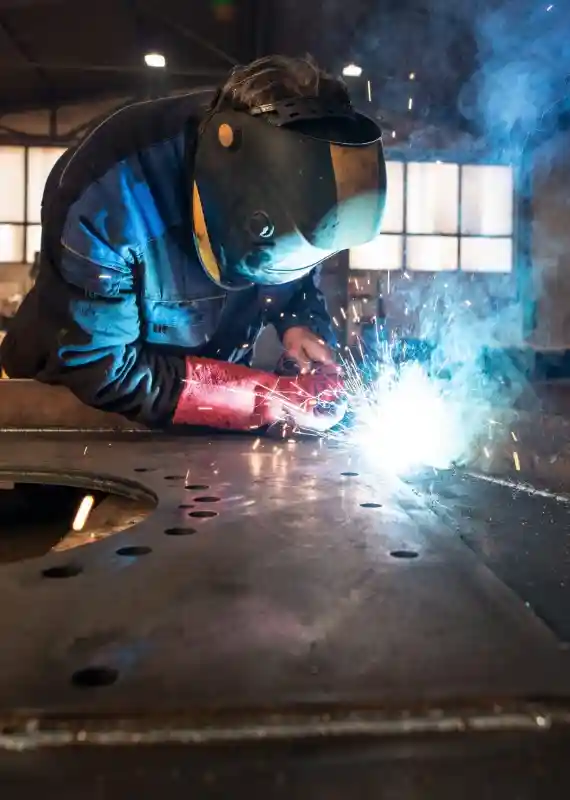

Founded in the industrial hub of GIDC Vatva, Gujarat, our enterprise has grown into a premier global manufacturer and exporter of heavy-duty welding machines, resistance spot welders, plasma cutters, and specialized consumables. Over 44+ years of metallurgical expertise ensures every equipment build withstands demanding industrial environments.
Request Factory Audit ReportUnlike assemblers who outsource critical components, we design and wind 100% duty-cycle copper welding transformers in-house, ensuring maximum electrical efficiency and extended lifespan under continuous multi-shift production.
Every spot welder undergoes comprehensive load testing, insulation resistance checks, secondary current waveform verification, and water-pressure leak audits prior to export packaging.
We handle complete export documentation, heavy-duty sea-worthy wooden crate packing, custom voltage matching (220V to 480V, 50/60Hz), and rapid spare part dispatch for seamless global deployment.
Detailed answers to essential technical, logistical, and operational questions commonly raised by international purchasing teams.
Get factory-direct pricing, custom fixture engineering support, and technical datasheets from China's leading spot welder manufacturing specialists.
Contact Us