Knowledge Hub & Insights
Knowledge Hub & Insights
Heavy-duty, CE & ISO certified industrial welders engineered for structural steel, pipeline, pressure vessels, and automated B2B manufacturing.
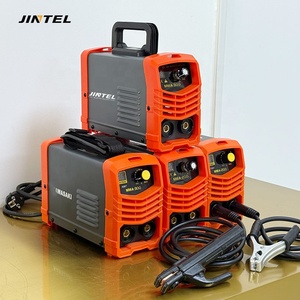
Compact inverter manual metal arc welder utilizing robust IGBT technology for versatile field maintenance and shop fabrication.
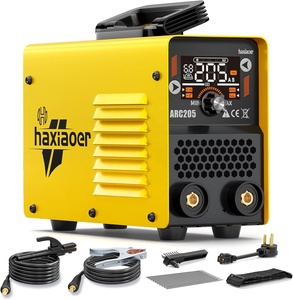
Smart multi-process welding system supporting Synergy MIG, Lift TIG, and MMA welding modes with dual voltage 110V/220V auto-sensing.
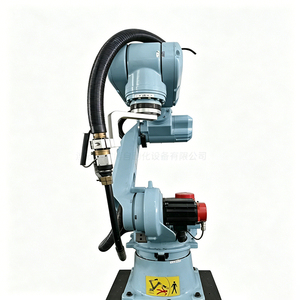
Precision robotic automation system tailored for continuous heavy metal arc welding in shipbuilding, structural steel, and mass production lines.
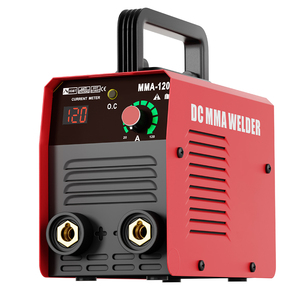
Ultra-lightweight household arc welding unit featuring advanced single-board inverter circuits for DIY, repair, and light maintenance work.
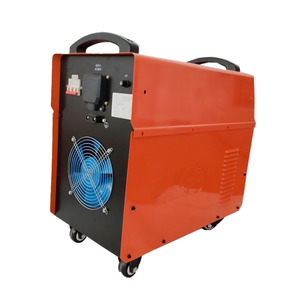
Industrial-grade 380V manual arc welding machine built for continuous high-current gouging and thick plate structural steel welding.
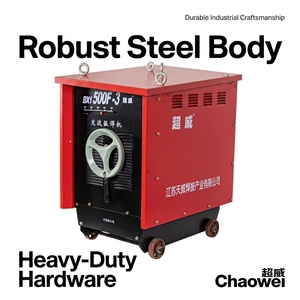
Classical heavy-transformer AC arc welder designed for low-carbon steel structural fabrication, forging plants, and machine shops.
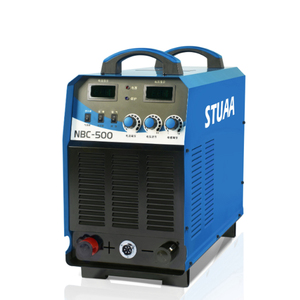
High-power modular IGBT inverter MIG/MAG welder delivering low spatter, deep penetration, and high deposition rates for steel fabricators.
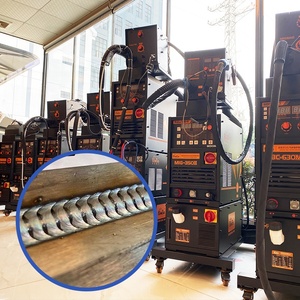
Commercial multi-process MIG welder equipped with a heavy-duty external 4-roll wire feeder for stainless, mild steel, and flux-cored operations.
Navigating the global landscape for China top induction welder factories & suppliers requires a deep evaluation of thermal efficiency, circuit reliability, duty cycle standards, and electromagnetic compatibility (EMC). Founded on principles of heavy industrial reliability—with manufacturing traditions tracing back to 1980 through pioneering facilities like GIDC Vatva—our industrial welding equipment and high-frequency heating ecosystems setting the benchmark for precision thermal joining.
Whether your facility requires Solid-State High-Frequency (H.F.) Induction Welders for seamless steel tube production, Submerged Arc Auto Welders (such as the MZ-1250 series) for pressure vessel fabrication, or intelligent IGBT Inverter MIG/TIG machines for precision machine shops, our supply chain ensures strict alignment with international ISO9001 and CE directives.
In modern metallurgical processing and structural metal joining, selecting between high-frequency solid-state induction welding and digital inverter arc welding is a foundational engineering decision. Induction welding relies on the principles of electromagnetic induction to generate Joule heating directly within the skin depth of conductive workpieces. This contact-free or localized resistance heat generation is ideal for high-speed pipe longitudinal seam welding, brazing, and surface heat treatment.
Conversely, modern inverter arc welders utilize high-frequency switching (typically 20kHz to 100kHz using Insulated Gate Bipolar Transistors / IGBTs) to rectify and step down line voltage into a dynamic, ultra-stable DC welding arc. Understanding these physical principles is critical for procurement directors evaluating overall power factor, thermal distortion risk, and energy consumption per meter of weld joint.
Utilizes MOSFET or IGBT power modules converting 3-phase line AC into high-frequency oscillating current (100 kHz - 800 kHz). Delivers up to 90% electrical-to-thermal efficiency without consumable arc electrodes.
Real-time microprocessors sample arc voltage and current waveform at microseconds intervals, dynamically adjusting waveform parameters for zero-spatter MIG/MAG and AC/DC TIG pulse welding.
Integrated closed-loop liquid cooling modules and multi-point temperature sensors prevent thermal overload in heavy-duty 100% duty cycle continuous manufacturing operations.
The following engineering data table highlights key operational parameters across primary equipment categories manufactured by leading Chinese and global industrial suppliers:
| Equipment Technology Class | Primary Application | Power Efficiency | Typical Duty Cycle | Key Sourcing Advantage |
|---|---|---|---|---|
| Solid-State HF Induction Welder | Continuous Pipe & Tube Mill Seams | 88% - 93% | 100% Continuous | No contact wear; ultra-fast linear speed |
| IGBT Inverter Multi-Process MIG/ARC | Automotive & Structural Fabrication | 85% - 89% | 60% - 100% @ 400A | Synergic arc tuning, multi-material flexibility |
| Submerged Arc Auto Welder (SAW) | Pressure Vessels & Shipbuilding Steel | 82% - 87% | 100% Heavy Duty | Deep joint penetration; massive deposition rate |
| Industrial 6-Axis Robotic Arc Cell | Mass Automation & OEM Assembly | 86% - 90% | 100% Automated | Sub-millimeter repeatability; labor reduction |
| Manual MMA / Arc Inverter Welder | On-Site Repair & Machine Shop Work | 80% - 85% | 35% - 60% Portable | Extreme portability, low initial capital investment |
The global industrial equipment market is experiencing a profound transition toward smart power electronics, decarbonization, and modular equipment architectures. As global procurement officers evaluate top suppliers and factories in China and international hubs, four strategic trends dominate enterprise purchasing requirements:
With escalating global electricity costs and stringent environmental directives (such as the EU's Ecodesign Directive for welding equipment), industrial buyers prioritize inverter machines and induction generators equipped with active Power Factor Correction (PFC). Modern PFC topologies boost power factors up to 0.99, reducing utility kVA penalties and enabling full-power operation on fluctuating generator lines.
Industry 4.0 demands that every welding unit act as an intelligent node on the shop floor network. Top tier Chinese factories now integrate MQTT and OPC-UA protocols into machine digital controls. This allows plant managers to log heat input, current fluctuations, gas flow rates, and arc-on time in real time—ensuring complete traceability for ISO 3834 compliance and nuclear/aerospace grade auditing.
Equipment downtime represents a direct loss in production yield. Leading manufacturers are shifting from monolithic power PCB designs to standardized modular IGBT bricks and plug-and-play control cards. This architectural change allows internal plant technicians to perform sub-component replacements within 15 minutes without requiring factory technician dispatch.
In the domain of high-frequency induction heating, off-the-shelf equipment rarely achieves optimal impedance matching with specialized workpiece geometries. Leading suppliers now offer turn-key electromagnetic simulation (FEA) to custom-engineer induction coils, impedance transformers, and internal water-cooling manifold configurations tailored to specific metallurgical lines.
Looking ahead at the technological roadmap for industrial thermal processing equipment, the integration of Wide Bandgap (WBG) semiconductors—specifically Silicon Carbide (SiC) MOSFETs—marks the next frontier in power supply design. Compared to traditional Silicon IGBTs, SiC switches operate at significantly higher switching frequencies (exceeding 200 kHz) with dramatically reduced thermal switching losses.
This transition yields three distinct engineering advantages for factory buyers:
Addressing key engineering, compliance, and logistics questions for B2B buyers evaluating China induction welders and industrial arc equipment.
Connect with our senior application engineers to receive full technical data sheets, customized induction coil calculations, or bulk B2B quotations.
Get Catalog