China Best Plastic Welder Manufacturers & Factories
An Engineering Benchmark on Thermoplastic Fusion, Inverter Arc Technology, Automated Extrusion, and Global OEM/ODM Sourcing Optimization
44+
Years Manufacturing Excellence
5,000+
Global Industrial B2B Clients
99.4%
Weld Tensile Integrity Rate
30+
Countries Exported Worldwide
Executive Technical Summary & Information Gain Overview
The modern thermoplastic fabrication and industrial welding sector is undergoing a massive shift toward high-precision digital inverter control, closed-loop thermal feedback, and automated multi-axis robotic processing. As global engineering standards demand leak-proof joints in geomagnetic containment, heavy-duty chemical pipelines, structural polymer assemblies, and high-tensile metal structures, selecting an top-tier OEM manufacturer in China requires evaluating technical thermal stability, IGBT switching frequency, duty cycle guarantees, and compliance with DVS 2207 / ISO 21307 standards.
This technical white paper explores China's leading manufacturing capabilities, technical specifications of versatile fusion and arc welding equipment, future procurement trends, and a comprehensive buyer evaluation framework designed for procurement managers and project engineers worldwide.
Featured Industrial Machinery
Top-Rated Welding Systems & Portable Extrusion Welders
Explore our engineering-grade welding machinery engineered for structural plastic processing, heavy fabrication, pipeline construction, and industrial repair.
Compact OEM
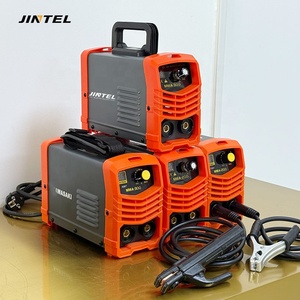
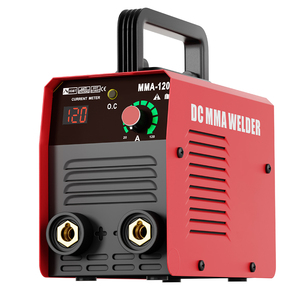
Most Popular OEM Small Portable Arc Welders MMA300A Electric ARC Machine
Ultra-lightweight inverter welder featuring rapid thermal stabilization, digital amperage readout, and low-spatter technology suitable for field plastic structural frames and steel repair.
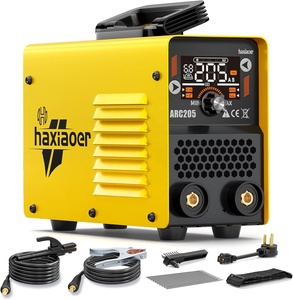
New 2-in-1 MIG & ARC Stick Welder 205A Synergy Dual Voltage Machine
Precision micro-processor controlled multi-process system integrating flux-cored wire feeder and MMA stick modes for versatile maintenance and polymer composite framing.
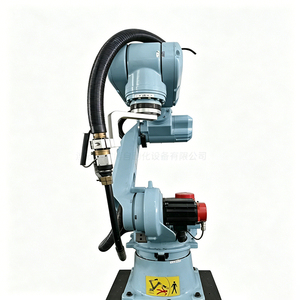
Heavy Duty 6-Axis Industrial Robotic Welding Arm System
High-precision 6-DOF automated manipulator engineered for seamless continuous seam plastic extrusion tooling, heavy shipbuilding plate joinery, and repetitive production lines.
New Mini Arc Welding Machine 910W Handheld CE Certified Unit
Compact hand-held fusion welding power pack designed for quick onsite repairs, thin-gauge sheet joining, and light plastic/metal composite installation.
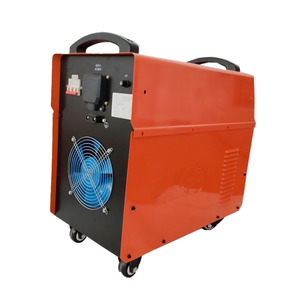
Heavy-duty 630A power supply built for extreme environments, heavy vessel liners, structural steel melting, and continuous high-duty-cycle industrial operations.
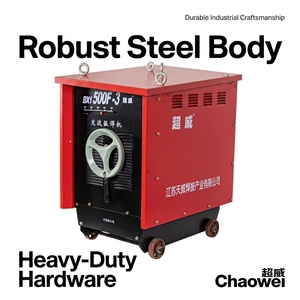
BINGO Industrial 380V Heavy Duty MIG/MAG/ARC Welder System
High-power 380V industrial station equipped with heavy-duty dual-drive wire feeder, optimized for stainless steel, mild steel, and heavy polymer enclosure framing.
Industrial plastic welding is a precise thermal bonding process reliant on molecular interdiffusion across polymer interfaces. Unlike traditional adhesive bonding or mechanical fastening, high-grade plastic welding produces a homogenous bond that matches or exceeds the tensile strength of the parent material. Leading Chinese equipment manufacturers utilize four fundamental technologies:
Hot Extrusion Welding (DVS 2207-4 Standard): Combines a forced-air preheating nozzle with a miniature screw extruder. Thermoplastic welding rod (HDPE, PP, PVDF) is plasticized inside an electrically heated barrel and forced under pressure into the joint prep groove. Essential for thick-walled plastic tanks, geomembrane liners, and environmental containment structures.
Hot Wedge & Hot Plate Fusion: Uses a precision-controlled heated metallic wedge (ranging from 200°C to 450°C) driven between overlapping flexible polymer sheets. Mechanical pressure rollers compress the plasticized edges, producing continuous, high-speed, leak-free seams in civil landfill liners and water reservoirs.
High-Frequency Ultrasonic Welding: Converts 20kHz–40kHz electrical signals into mechanical vibrations via piezoelectric transducers. Acoustic energy generates localized friction at the joint interface, instantly melting low-viscosity thermoplastics such as ABS, Polycarbonate, and Polypropylene within milliseconds.
Digital Inverter & Electro-Fusion Controls: Microprocessor-driven current regulation delivers consistent energy output for thermal tracking, preventing polymer chain degradation caused by localized overheating.
Material Compatibility Matrix & Thermal Processing Window
Achieving certified, non-destructive testable welds requires strict adherence to material melting dynamics. The table below highlights key parameters used across industrial manufacturing plants:
The global market for industrial plastic and metal arc welding machines is advancing rapidly due to automation, IoT integration, and energy-efficient power electronics. OEM factories in China are at the forefront of this evolution, introducing several key technological advancements:
A. Microprocessor-Controlled Closed-Loop PID Temperature Regulation
Legacy heat guns and extrusion tools often suffered from thermal drift caused by fluctuating ambient temperatures or supply voltage drops. Modern Chinese plastic welders incorporate dual-loop PID controllers linked with thermocouple sensors positioned directly inside the heating element and extrusion shoe. This maintains temperature tolerances within ±1.0°C, preventing thermal oxidation and weak weld seams.
B. Digital Twin & Real-Time Data Logging
High-consequence infrastructure projects (such as municipal gas pipelines and hazardous waste containment pits) require verifiable quality assurance. Next-generation extrusion guns and electro-fusion machines now feature onboard memory chips and Bluetooth/Wi-Fi modules. They log joiner identity, GPS location, heating duration, peak pressure, and cooling cycles in real time to generate automated compliance reports.
C. High-Efficiency IGBT Inverter Power Architecture
By substituting legacy heavy copper transformer cores with high-frequency Insulated Gate Bipolar Transistors (IGBTs) operating at 20kHz to 50kHz, modern welders reduce energy consumption by up to 38% while drastically decreasing unit weight. This enables portable field welding power packs to supply stable arc and thermal currents even under generator supply fluctuations.
D. Automated Multi-Axis Robotic Integration
To meet high-volume manufacturing demands in automotive fuel tanks, battery enclosures, and chemical filter housings, 6-axis industrial articulated robots are increasingly paired with compact extrusion heads or ultrasonic horns. Automated path control guarantees uniform bead geometry, eliminates operator fatigue, and increases unit throughput by over 300%.
3. Global Procurement Trends & Sourcing Intelligence (2025–2030)
International B2B buyers, EPC contractors, and regional distributors are re-evaluating their sourcing strategies to optimize Total Cost of Ownership (TCO) while ensuring robust supply chain resilience. Key market trends shaping Chinese supplier evaluations include:
1. Direct Factory Customization & Modular OEM/ODM Options
Global buyers are moving away from standardized off-the-shelf equipment toward customized specifications. Premier Chinese OEM manufacturers offer modular customization, including custom voltage inputs (110V 60Hz, 220V 50Hz, 380V 3-Phase), customized Teflon shoe profiles for unique pipe radii, branded digital interfaces, and specialized rugged transit cases.
2. Stringent International Quality & Safety Compliance
Export qualification requires compliance with international standards. Reliable Chinese factories hold comprehensive certification portfolios, including:
CE Marking (Low Voltage Directive 2014/35/EU & EMC Directive 2014/30/EU): Essential for European Union distribution.
ISO 9001:2015 Quality Management Systems: Ensures consistent manufacturing quality and traceable component sourcing.
DVS (German Welding Society) Operational Alignment: Guarantees compliance with international plastic welding standards.
RoHS & REACH Compliance: Verifies eco-friendly, non-hazardous construction materials.
3. Total Cost of Ownership (TCO) vs. Initial Capital Expenditure
While initial purchase price remains a key factor, enterprise buyers focus heavily on long-term operational efficiency. Sourcing directly from certified Chinese manufacturers yields an average initial equipment cost reduction of 30% to 50% compared to European or North American brands, while maintaining equivalent duty cycle reliability and spare parts availability (e.g., heating elements, nozzles, carbon brushes, and IGBT modules).
Combining four decades of manufacturing heritage with modern manufacturing technology to deliver world-class welding systems.
44+ Years Manufacturing Legacy
Decades of industrial expertise in designing robust power supplies, hot-air heating units, and high-duty inverter circuits built to perform in tough job-site environments.
100% Factory Load Testing
Every unit undergoes strict quality control before shipment, including continuous thermal endurance runs, dielectric insulation testing, and weld tensile verification.
Flexible OEM / ODM Customization
Complete flexibility for private label branding, customized extrusion shoe geometries, tailored software controls, and specialized export packaging options.
Rapid Global Logistics
Streamlined export processing, air/sea freight consolidation, and established distribution routes servicing over 30 countries across Europe, the Americas, the Middle East, and Asia.
Complete Parts & Accessories Ecosystem
One-stop sourcing for welding guns, replacement ceramic heating cores, Teflon shoes, welding rods, water coolers, and industrial electrodes.
Dedicated Technical Support SLA
Multilingual engineering team providing pre-sales feasibility consultations, operational video guides, maintenance assistance, and prompt warranty support.
4. Technical Procurement FAQ for Global B2B Buyers
Clear answers to common questions about technical specifications, supplier verification, order customization, and international shipping options:
Q1: How do I select between a handheld extrusion welder and a hot air heat gun for plastic tank fabrication?
Selection depends primarily on plate thickness and structural strength requirements. For sheet thicknesses under 5mm or localized detail work, a hot air heat gun with a speed welding nozzle is sufficient. For structural tanks, thick HDPE containment liners, or plates exceeding 6mm, a hand-held extrusion welder (such as our 910W or 300A systems) is required under DVS 2207 standards. The extruder delivers plasticized welding rod deep into the V-groove joint under forced pressure, achieving full-penetration welds capable of holding heavy fluid loads without stress cracking.
Q2: What is the average lead time for custom OEM orders and private label requests?
Standard production models are generally stocked and ready for export within 7 to 10 working days. For custom OEM orders involving custom housing colorways, private brand labeling, specialized plug configurations, or customized digital controller firmware, typical lead times range from 15 to 25 business days depending on order volume and packaging specifications.
Q3: How do Chinese factories guarantee temperature stability in harsh outdoor field conditions?
Our premium welder designs feature dual closed-loop PID electronic controllers coupled with high-sensitivity thermal sensors embedded within the heating chamber. Additionally, cold-start protection algorithms prevent the drive motor from starting until the extruder barrel reaches its set operating temperature, protecting internal gears from cold-rod binding.
Q4: What quality control standards and certifications apply to exported industrial welding equipment?
Export machinery must strictly conform to CE safety directives (EN 60974-1 for arc welding equipment and EN 62841 for electric hand tools). Manufacturing facilities operate under ISO 9001:2015 certified quality management systems. Equipment undergoes pre-shipment testing, including high-voltage insulation tests, continuous thermal overload cycles, and output amperage stability checks.
Q5: Can these welding machines operate under fluctuating portable generator power supplies on job sites?
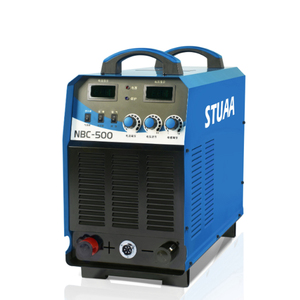
Yes. Our advanced IGBT inverter power units (including the NBC-350 and ZX7-630G series) incorporate wide voltage tolerance circuitry capable of handling input voltage fluctuations of ±15%. Integrated anti-surge protection prevents voltage spikes from damaging sensitive electronic control boards.
Q6: What maintenance protocols are recommended to extend the operational life of extrusion heating elements?
Key maintenance practices include: (1) Allowing the blower motor to run a 3-minute cool-down cycle before turning off the master power switch to prevent residual heat damage to ceramic cores; (2) Regularly inspecting air inlet filters for dust accumulation; and (3) Using clean, dry welding rods to prevent nozzle clogs. Replacement heating elements and carbon brushes are readily available with your shipment.
Q7: What is the Minimum Order Quantity (MOQ) for international B2B buyers?
We support growing businesses with flexible MOQs. For standard models, the minimum order quantity starts at just 1 set to facilitate initial evaluation. For customized OEM/ODM orders with private labeling and custom color packaging, MOQ typically starts at 50 to 100 sets.
Q8: What warranty coverage and spare parts support are provided after export shipment?
All equipment includes a 12-month comprehensive global warranty covering core components (IGBT modules, main transformers, digital control boards, and drive motors). We supply free replacement parts during the warranty period and provide technical video support for troubleshooting and repairs.
Partner with China's Premier Plastic & Arc Welder Manufacturers
Need custom OEM/ODM manufacturing, technical specifications, or factory-direct pricing? Our application engineers are available to support your procurement needs.