Knowledge Hub & Insights
Knowledge Hub & Insights
Explore our export-grade MMA, MIG/MAG, TIG, and Robotic welding systems engineered for structural steel fabricators, shipyards, pressure vessel manufacturers, and machine workshops worldwide.
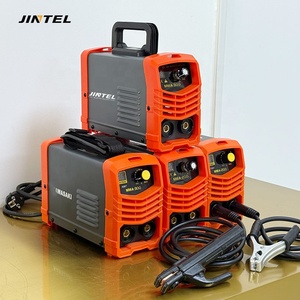
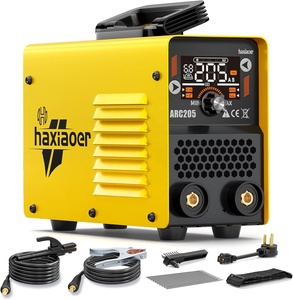
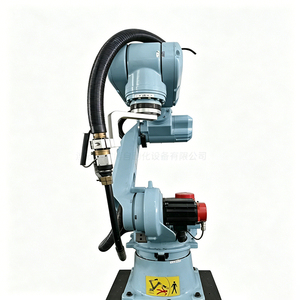
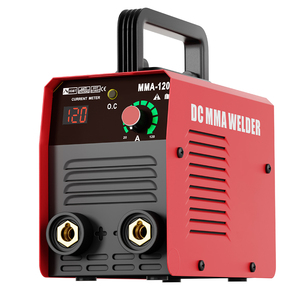
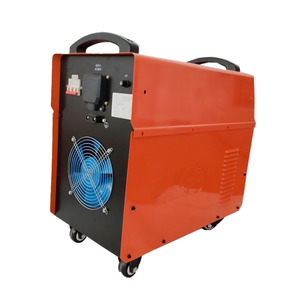
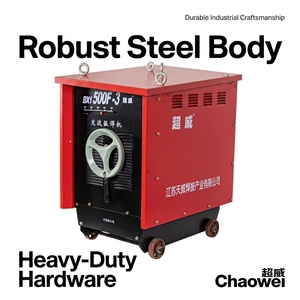
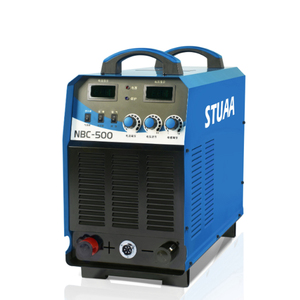
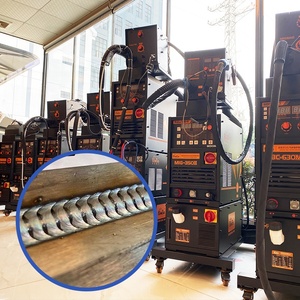
Established with a vision to deliver robust welding systems, our enterprise integrates high-capacity manufacturing facilities with advanced metallurgical R&D to supply world-class MIG, TIG, ARC, and Submerged ARC welding machines across 30+ countries.
Founded on foundational expertise in welding electrodes and heavy arc machinery, our production lines operate under strict quality management systems (ISO 9001:2015). We maintain full vertical integration—from transformer coiling and PCB SMT assembly to final stress testing.
Unlike commercial-grade welders that suffer thermal cutout under heavy loads, our industrial ZX7, NBC, and Submerged ARC units are rated for continuous operational stress in high ambient temperatures (up to 50°C), utilizing heavy copper busbars and forced wind-tunnel cooling architecture.
We partner with international brand owners and machinery dealers to offer customized voltage inputs (110V, 220V, 380V, 415V, 440V dual/triple phase), custom enclosure colors, private label silk-screening, and full spare parts kits shipped with global compliance documentation.
Choosing the correct industrial welding power source requires matching metallurgical requirements, joint geometry, duty cycle, and energy efficiency targets. Below is an expert-level technical comparison matrix for B2B engineering teams.
| Welding Process | Typical Amperage Range | Primary Topology | Duty Cycle @ 40°C | Efficiency Rating | Core Industrial Application |
|---|---|---|---|---|---|
| Manual Metal Arc (MMA / Stick) | 160A – 630A | IGBT Inverter / AC Transformer | 60% – 100% | 85% – 92% | Field Construction, Structural Steel, Foundry Repair |
| MIG / MAG (GMAW) Synergy | 200A – 500A | Multi-Module IGBT Inverter | 60% – 100% | 88% – 94% | Automotive Frames, Heavy Machinery, Sheet Fabrication |
| TIG (GTAW) High Frequency | 180A – 400A | MCU Digital Pulse Inverter | 60% | 86% – 90% | Pressure Vessels, Stainless Piping, Aerospace Alloys |
| Submerged Arc Welding (SAW) | 630A – 1250A+ | Thyristor / Inverter Heavy Transformer | 100% Continuous | 90% – 95% | Shipbuilding H-Beams, Wind Towers, Tank Fabrication |
| Robotic Arc Welding Station | 250A – 500A Bus-Controlled | High-Speed DSP Digital Communication | 100% Continuous | 93% – 96% | Automated Mass Production, Heavy Vehicle Chassis |
Modern industrial manufacturing has systematically transitioned from bulky mains-frequency (50/60Hz) iron-core transformers (like the classic BX1 series) to advanced high-frequency IGBT (Insulated Gate Bipolar Transistor) inverter power supplies (such as the ZX7 and NBC series). Inverter topology converts incoming AC power to DC, then switches it at frequencies ranging from 20kHz to 100kHz using PWM (Pulse Width Modulation) control.
This shift delivers significant operational advantages: high switching frequencies reduce transformer core mass by over 70%, drastically decreasing electrical footprint while achieving power factor ratings above 0.93. For large-scale manufacturing facilities, inverter technology directly translates into a 30% to 40% reduction in monthly primary electrical utility expenditure.
Next-generation industrial MIG machines integrate microprocessor-driven synergic control algorithms. Rather than requiring operators to independently tune wire feed speed and arc voltage—a common source of burn-through and spatter defect—synergic welders store pre-programmed dynamic curves for carbon steel, stainless steel, and aluminum filler wires across varying shielding gas compositions (100% CO2, 80/20 Ar/CO2, Pure Argon).
When an operator selects wire diameter (e.g., 0.8mm, 1.0mm, 1.2mm, 1.6mm) and material thickness, the onboard DSP instantly calculates optimal current waveforms, inductance response, and burn-back timing. This delivers consistent penetration profiles and minimizes post-weld cleanup cost.
As global industrial supply chains prioritize decarbonization, operational productivity, and automation, B2B procurement teams must align equipment specifications with long-term technological trajectories.
Due to global skilled welder shortages, demand for 6-axis industrial robot arms and collaborative robots (Cobots) paired with high-amperage digital power sources is accelerating. Modern procurement focuses on bus-integrated power sources supporting EtherCAT, DeviceNet, and Modbus communication for seamless robotic cell deployment.
Industrial welders are evolving into connected edge nodes. Smart welding equipment continuously captures real-time weld parameters—voltage, arc time, gas flow, thermal duty, and wire consumption—transmitting data to factory MES (Manufacturing Execution Systems) for ISO qualification and predictive maintenance.
International environmental standards dictate stricter standby power usage and dynamic power factor correction (PFC). Green manufacturing initiatives favor inverter power sources equipped with smart standby modes that idle cooling fans and control circuits during downtime, drastically reducing idle power draw.
Addressing critical technical, operational, and commercial inquiries raised by industrial plant managers, sourcing directors, and equipment distributors.
The Duty Cycle represents the percentage of a 10-minute operation period that a welding machine can safely output its rated current without overheating at a standardized ambient temperature (typically 40°C). For example, an industrial welder rated at 500A @ 60% Duty Cycle can operate continuously at 500 Amps for 6 minutes, but must rest/cool for 4 minutes. For continuous automatic or robotic welding applications, buyers should specify machines designed for a 100% Duty Cycle at their target operational current.
Selection depends on material thickness, structural requirements, and production volume:
• MMA (Stick/ZX7/BX1): Ideal for outdoor field construction, heavy repair work, and thick structural steel where surface cleanliness varies.
• MIG/MAG (NBC/BINGO): Best suited for high-speed manufacturing, automotive fabrication, and general shop metal assembly where high metal deposition rates are required.
• TIG: Selected for critical root passes, thin-wall stainless steel tubing, aluminum alloys, and high-purity pressure piping requiring aesthetic bead control.
• Submerged ARC (SAW/MZ Series): Sourced specifically for heavy plate jointing (>12mm), pressure vessels, wind towers, and long structural beam fabrication requiring maximum penetration and high deposition rates under flux cover.
Export-grade industrial machinery must comply with major global electro-technical safety benchmarks. Essential certifications include the CE Mark (conforming to Low Voltage Directive 2014/35/EU and EMC Directive 2014/30/EU), ISO 9001:2015 quality management systems, and IEC 60974-1 / EN 60974-10 standards governing arc welding equipment safety and electromagnetic compatibility.
Light industrial and field service welders often utilize dual-voltage autosensing technology (110V/220V single phase) to enable flexible deployment across jobsite power outlets and generator sets. Conversely, heavy-duty industrial machines (300A to 1250A) require balanced three-phase input (380V/415V/440V) to deliver stable output arcs, prevent phase imbalance on factory power grids, and minimize input cable sizing requirements.
As an established manufacturer, custom production capabilities include custom transformer winding ratios for non-standard grid voltages, custom chassis branding and powder-coating colors, customized UI control panels (digital LCD vs analog meters), tailored wire feeder drive roll kits, inclusion of heavy-duty water cooling units, and customized export packaging (reinforced wooden crates or palletized master cartons).