
Knowledge Hub & Insights
Knowledge Hub & Insights
Explore our CE-certified ultrasonic metal and plastic welding machinery engineered for micro-spot battery joining, automotive interior assemblies, cleanroom medical packaging, and high-frequency thermoplastic fusing.
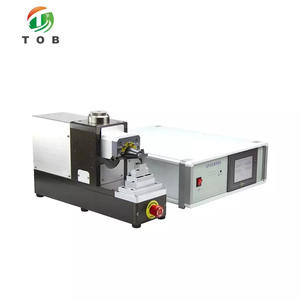
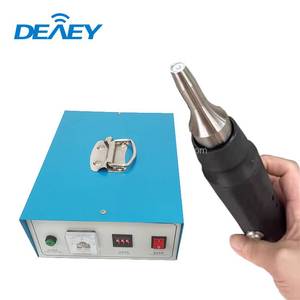
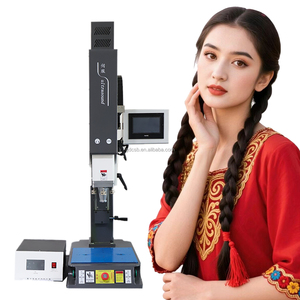
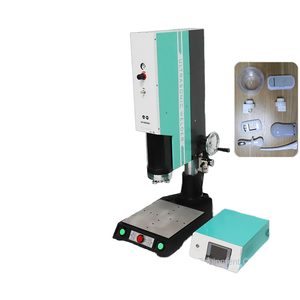
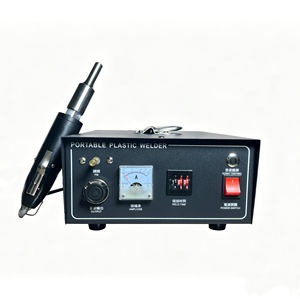
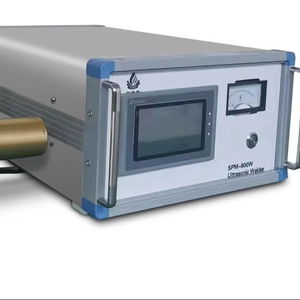
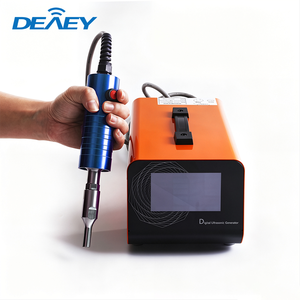
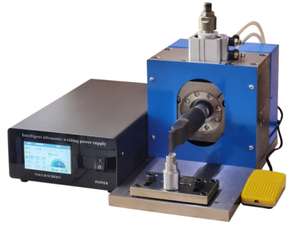
Rooted in four decades of industrial machine innovation since 1980, our global manufacturing ecosystem adheres to strict European CE safety standards and ISO quality protocols.
In modern industrial manufacturing, Ultrasonic Welding (USW) has transitioned from a specialized joining niche to a primary, non-negotiable manufacturing process across the automotive, new energy storage, medical device, and electronics assembly sectors. As global OEM compliance standards tighten—demanding zero-defect assembly, zero thermal deformation, and ultra-low electrical impedance—procurement directors and manufacturing engineers must look beyond basic equipment cost and evaluate suppliers based on acoustic resonance stability, transducer mechanical quality factor ($Q_m$), and compliance with the European CE Machinery Directive (2006/42/EC) and EMC Directive (2014/30/EU).
Ultrasonic welding is a solid-state or localized thermal fusion process that utilizes high-frequency mechanical vibrations (ranging from 15 kHz to 40 kHz) to join workpieces together under controlled static pressure. Unlike conventional resistance spot welding or laser arc welding, ultrasonic joining does not require external filler metals, chemical adhesives, or elevated bulk temperatures.
The conversion of standard electrical power into high-integrity solid-state molecular bonds relies on four essential sub-assemblies:
High-frequency mechanical shear stress causes localized intermolecular friction at the joint interface (specifically along molded energy directors), rapidly elevating temperature above the glass transition point ($T_g$) or melting point ($T_m$) within milliseconds to form a molecular weld.
Occurs completely in the solid state. High-frequency lateral oscillation scrub surfaces clean of oxide films, inducing plastic deformation and atomic diffusion across copper, aluminum, and nickel foils without melting the base metals.
Advanced digital generators dynamically control output by tracking total energy (Joules), peak power (Watts), absolute collapse distance (millimeters), and total weld duration (milliseconds) to guarantee 100% process repeatability.
Selecting the correct operating frequency (15 kHz to 40 kHz) and power output rating is vital for minimizing internal acoustic stress and maximizing joining speed. Reference our standardized engineering selection parameters below:
| Frequency Spec | Power Output Range | Typical Amplitude | Primary Material Compatibility | Industrial Applications | CE Certification Standards |
|---|---|---|---|---|---|
| 15 kHz (High Power) | 2,600W – 15,000W | 60 – 120 µm | HDPE, PP, Large ABS, Heavy Thermoplastics | Automotive bumpers, ducting, large container sealing, PSA slabs | EN 60204-1, EN 61000-6-2/4 |
| 20 kHz (Standard Industrial) | 1,500W – 4,000W | 30 – 80 µm | ABS, PC, Acrylic, Non-Ferrous Foils (Cu/Al) | Battery pouch cell tab welding, car door panels, electrical wire splices | ISO 12100, EN 60204-1 |
| 28 kHz / 30 kHz (Mid-Frequency) | 800W – 1,200W | 20 – 40 µm | Blister packaging, PVC, Synthetic Textiles | Handheld spot welding, packaging blisters, interior trim riveting | CE Low Voltage & EMC Directives |
| 35 kHz / 40 kHz (Micro-Precision) | 400W – 1,000W | 10 – 25 µm | Thin Foils, Micro Electronics, Medical Polymers | Sensory housings, medical IV fluid bags, precision lab battery research | Cleanroom ISO Class 7 Approved |
As manufacturing paradigms shift toward Industry 4.0 automation and green energy transition, procurement strategies for ultrasonic welding machinery are evolving. Modern global buyers are moving away from legacy standalone manual welders toward fully integrated, data-connected acoustic processing stations.
The global surge in EV battery gigafactories has driven demand for multi-layer ultrasonic metal spot welders capable of joining up to 100 layers of ultra-thin copper and aluminum anode/cathode foils with zero splatter, low thermal impact, and milliohm-level electrical resistance.
Traditional pneumatic cylinders are increasingly being replaced by precision electric servo actuators. Servo-driven ultrasonic welders grant absolute control over force profiles, allowing instantaneous down-force adjustment during the melt phase to yield superior joint density.
Procurement specifications now frequently mandate Ethernet/IP, Profinet, or Modbus TCP protocols for seamless communication with factory Manufacturing Execution Systems (MES), enabling complete historical traceability of every individual weld cycle.
When selecting a qualified ultrasonic welding equipment supplier, engineering and procurement teams must perform rigorous due diligence across the following core technical vectors:
The horn (sonotrode) undergoes continuous cyclic stress up to 40,000 times per second. Suppliers must utilize premium acoustic materials such as certified Titanium Alloy Ti-6Al-4V (Grade 5), high-strength Aluminum 7075-T6, or specialized vacuum-hardened tool steels. Furthermore, suppliers must demonstrate FEA modal analysis capability to ensure the tool's resonant frequency is perfectly uniform across the welding face without spurious transverse vibration modes.
Analog, manual-tuning generators suffer from frequency drift as the horn heats up during continuous high-speed production runs. Modern smart generators feature dynamic load compensation, automatically shifting resonant frequency in steps as small as 0.1 Hz while maintaining constant vibration amplitude regardless of line voltage fluctuations.
For European and global exports, CE compliance is not merely a label—it requires rigorous third-party verification. Equipment must incorporate dual-channel emergency stop safety relays, shielded acoustic enclosures to comply with noise exposure limits (ISO 11202), and robust electromagnetic shielding to prevent interference with surrounding robotic controls.
Combining over four decades of heavy industrial machine engineering with modern acoustic research, we deliver turnkey ultrasonic welding solutions tailored to strict global client benchmarks.
Every standard and custom machine build undergoes stringent quality control testing in accordance with European Machinery Directives, complete with full technical documentation and declaration of conformity.
Our in-house acoustic design team utilizes advanced ANSYS finite element software to engineer custom titanium horns, textured anvils, and pneumatic fixtures tailored to your exact CAD part geometry.
With an established export infrastructure spanning over 30 countries, we offer rapid air/sea dispatch, spare parts inventory (transducers, generators, horns), and online/onsite technical commissioning support.
Answers to common technical, operational, and regulatory questions submitted by industrial buyers and engineering leads.