Industrial Welding Technology Blog & Knowledge Center — Paragweld

Knowledge Hub & Insights

Industrial Welding Blog & Guides

Explore expert technical articles, equipment operation manuals, maintenance guides, and industrial fabrication insights.

0%

For global buyers, choosing a TIG welder involves more than comparing prices or output amperage. The right machine should suit the metals, thicknesses, and working conditions you encounter. The Inverter TIG Welder Series can include models with different controls, power ranges, and portability. Small details matter. A clear display, responsive foot pedal, and steady gas flow can make a noticeable difference at the workbench.

This guide compares key features buyers can assess before shortlisting a model. We consider AC/DC capability, pulse settings, arc-start options, duty cycle, and the accessories included. A stable arc can help produce cleaner welds on thin material. Torch comfort matters during longer jobs. So does a realistic duty-cycle rating. Yet specifications alone cannot predict every workshop result. No single model suits everyone.

Before ordering, check the input voltage and plug requirements against your workshop supply. Confirm local service access, spare-part availability, warranty terms, and the user manual in your preferred language. Ask whether the package includes essentials such as a torch, regulator, and work clamp; bundles can vary by seller. A detailed comparison is useful, but it is not a substitute for checking the exact model and seller listing. That limitation is easy to overlook. Use this overview to narrow your options, then verify the details that matter for your work.
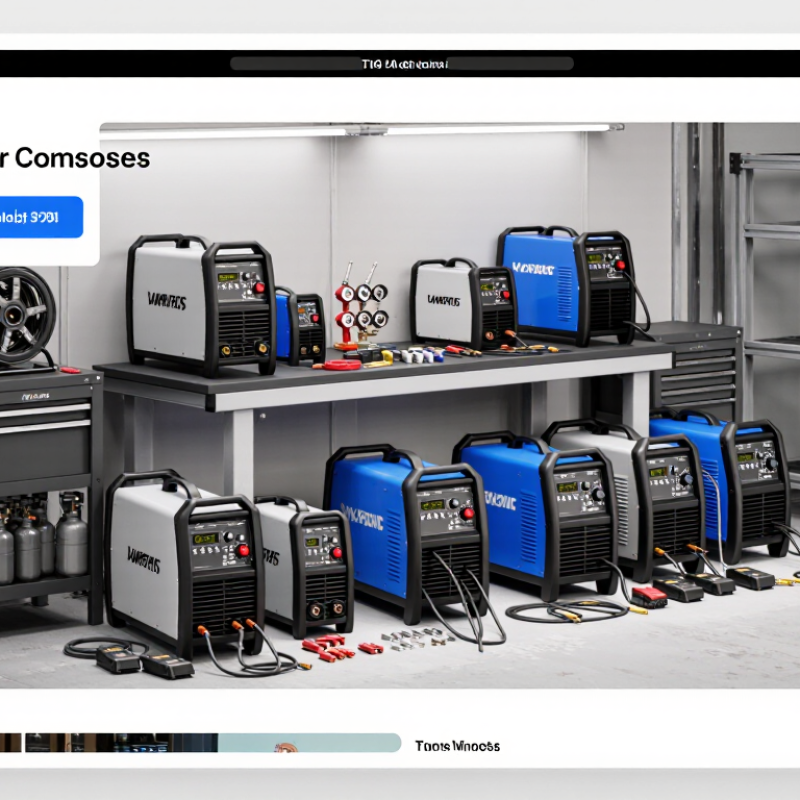
Top Inverter TIG Welder Series for Global Buyers?

What Is an Inverter TIG Welder and How Does It Work?

An inverter TIG welder converts incoming electrical power into a stable, adjustable welding current. Inside the machine, electronic components switch the power at high frequency, allowing a smaller transformer to control the output. The result is a compact unit with precise current adjustment. That matters when welding thin sheet metal, where a small change can prevent burn-through.

During TIG welding, an arc forms between a non-consumable tungsten electrode and the workpiece. Shielding gas, commonly argon, protects the hot weld area from air. Filler rod can be added by hand when the joint needs extra metal. No filler is needed. Many inverter models provide high-frequency arc starting or lift starting, plus controls for current and, on some machines, pulse settings. DC output is commonly used for steel and stainless steel; AC is often selected for aluminum because it helps manage the oxide layer. Check the machine’s input-voltage range and duty cycle before choosing one for a workshop. Small parts reveal it. In practice, settings vary with joint fit, material thickness, and torch movement, so a display reading alone cannot guarantee a clean weld. The operator still has to watch the puddle.

Key Features That Define a High-Performing TIG Welder Series

A high-performing inverter TIG welder series should offer steady arc control across a useful range of current settings. A clean start matters, especially on thin sheet where a sudden current spike can burn through the edge. Adjustable pre-flow and post-flow help protect the tungsten and weld pool. Small details matter. Clear controls and readable displays also reduce setup mistakes when operators change materials or tasks.

Look beyond maximum amperage. Check the rated duty cycle, input requirements, thermal protection, and whether each model supports the processes and materials you use. AC capability can be useful for aluminium, while DC output suits many steel applications. Pulse settings may help manage heat, but they cannot replace sound technique. Not every spec sheet tells the full story. Test a representative machine on real work, including low-current starts and longer weld runs. Compare torch connections, foot-pedal response, and access to consumables; these can affect daily use more than a headline power rating. A broad series is valuable when its models differ in practical ways, though too many confusing options can slow purchasing decisions.

Top Inverter TIG Welder Series for Global Buyers? - Key Features That Define a High-Performing TIG Welder Series
Key Feature Portable DC TIG Series Versatile AC/DC TIG Series Industrial AC/DC TIG Series
Typical rated-current class Often around 160–200 A Often around 200–250 A Commonly around 300–500 A
Input power Typically single-phase; input voltage depends on the model and market Single- or three-phase options are available across product ranges Usually three-phase; confirm voltage, frequency, and supply tolerance for the destination site
TIG current type DC TIG, suited to materials such as stainless steel and mild steel DC TIG and AC TIG; AC capability supports aluminum welding AC/DC TIG for a wider range of materials and higher-current work
Other welding process Many models also provide stick (MMA) welding Many models combine TIG and stick (MMA) functions Some configurations include stick (MMA); verify the listed process modes
AC controls Not applicable to DC-only models Look for adjustable AC balance and frequency where the application requires them Adjustable AC balance and frequency can help tailor the arc to the job
Arc-start and pulse functions HF or lift start; pulse may be available on selected models HF start and pulse are common features to compare Check start options and pulse settings against production requirements
Duty cycle Compare the rated duty cycle at the stated current and ambient temperature Check duty-cycle ratings at both the required output and supply voltage Prioritize verified duty-cycle data at production current and site conditions
Cooling and portability Air-cooled torches and a compact power source are common for field work Air- or water-cooled torch options depend on output and configuration Water cooling is often used for sustained high-current work; check whether the cooler is included
Best-fit use Maintenance, light fabrication, and mobile repair Workshop fabrication involving both ferrous metals and aluminum Higher-output fabrication and applications requiring longer welding periods
The ranges and configurations above are general market guideposts, not guaranteed specifications. Actual output, input compatibility, duty cycle, and included accessories vary by model; check the manufacturer’s datasheet and local electrical requirements before purchase.

How TIG Welder Series Differ in Power, Control, and Applications

Top Inverter TIG Welder Series for Global Buyers?

TIG welder series differ mainly in output range, arc control, and duty cycle. TWI’s technical guidance gives a broad typical TIG current range of about 5–300 A, depending on the job. Lower-output units suit thin sheet and careful repair work. Higher-output models handle thicker sections and longer welds. A wider range helps, but it does not guarantee better results.

Control features matter at the torch. Pulse settings can reduce heat input on thin stainless steel, while AC balance helps manage aluminum’s oxide layer. Check whether the machine offers adjustable start current, downslope, and post-flow. These settings affect the puddle, crater, and tungsten protection. A neat specification sheet can still mislead; consider the operator and material, too.

Tips: Match rated output to your thickest regular work, then check duty cycle at that amperage. For example, a 200 A rating at a low duty cycle may not suit long production welds. Compare input power, torch compatibility, and pedal control before choosing. Test a sample bead if possible. The difference is visible in the arc’s steadiness.

How to Choose an Inverter TIG Welder for Your Requirements

Choose an inverter TIG welder around the work you actually do, not its largest advertised output. Match its amperage range to material thickness; thin sheet needs steady control at low current. AC output is important for aluminum, while DC suits common steel and stainless-steel work. Check the input voltage available in your shop or on site. A machine that needs a supply you do not have is not a bargain.

Read the duty-cycle rating carefully. IEC 60974-1 specifies welding equipment performance and testing, including thermal requirements; compare ratings under the same conditions. Grand View Research estimated the global welding-equipment market at USD 15.1 billion in 2023 and projected 5.8% annual growth from 2024 to 2030. That market growth brings more options, but does not make every feature useful. Look for stable arc control, a practical foot pedal, and clear settings. A higher amp rating looks reassuring, yet may hide weak low-current performance. Test-start the torch if possible. Fit the job. Consider torch cooling, consumable availability, and service access before buying. One detail is easy to miss: a comfortable torch can matter more than another menu setting. Keep it simple.

How to Choose an Inverter TIG Welder: Reference Melting Points

These approximate melting points are for pure metals; real alloys have different melting ranges. Use material type and thickness to guide your choice of AC or DC capability, output-current range, and duty cycle. Melting point alone does not determine welding settings.

Global Factors to Check: Voltage, Standards, and After-Sales Support

For a global buyer, an inverter TIG welder’s voltage range matters as much as its output rating. Compare the input range with the site’s measured supply, including single- or three-phase connection and frequency. Check whether the machine derates at low voltage; a stable arc on a showroom supply proves little. The IEA’s Electricity 2024 report projects average global electricity-demand growth of 3.4% per year in 2024–2026. That is not a measure of local voltage quality, so test the actual workshop supply before ordering.

Check the applicable edition of IEC 60974-1 for welding power-source safety and performance, and IEC 60974-10 for electromagnetic compatibility. Requirements and acceptance procedures can differ by destination market. Ask for the conformity documents and test records that match the exact model and configuration. Small detail, big consequences. A document for a similar unit may not cover your chosen voltage version.

After-sales support should be verified in practical terms: written warranty duration, response time, local repair options, and availability of control boards, fans, and torches. Confirm who pays freight for warranty repairs and whether manuals and fault-code help are available in your team’s language. Paper compliance can still leave a shop waiting for one replacement board. That part deserves a phone call before purchase.

FAQS

What makes a TIG welder suitable for thin sheet?

Look for steady low-current control and a clean start. A sudden current spike can burn through a thin edge.

Why do pre-flow and post-flow settings matter?

They help shield the tungsten and weld pool. Clear controls also reduce setup mistakes.

Is maximum amperage the best way to compare models?

No. Check duty cycle, input needs, thermal protection, and supported processes. A high rating alone tells little.

When are AC and DC output useful?

AC can suit aluminium, while DC works for many steel applications. Match the output to your materials.

Can pulse settings replace welding skill?

No. Pulse may help control heat, but sound technique still matters. Test it first.

What should buyers check about workshop power?

Compare the machine’s voltage range with measured site supply, phase, and frequency. Ask whether output drops at low voltage.

Which documents should be reviewed before purchase?

Check the applicable IEC 60974-1 and IEC 60974-10 documents for the exact model and configuration. Similar paperwork may not cover it.

What after-sales details are worth confirming?

Ask about warranty length, repair response, local service, and spare control boards, fans, and torches. Confirm freight costs and language support.

How can a machine be tested for daily work?

Try low-current starts and longer weld runs on representative materials. Check pedal response, torch connections, and consumable access. Small details matter.

Conclusion

An Inverter TIG Welder Series offers a range of welding machines that use inverter technology to convert and regulate electrical power, supporting a stable arc and precise heat control. Models may differ in output capacity, adjustment options, duty cycle, and available functions, making some better suited to thin materials and detailed work while others can handle heavier tasks. Features such as reliable arc starting, adjustable current, and effective thermal protection can help users achieve consistent results and work comfortably.

Choosing the right machine starts with matching its power and control features to the materials, workload, and skill level involved. Global buyers should also confirm that the unit supports the local input voltage and frequency, uses compatible connections, and comes with clear documentation and dependable after-sales support. Comparing these practical factors helps identify a welder that fits both the intended application and the conditions where it will be used.

Oliver

Oliver

Oliver is a seasoned marketing professional with a strong understanding of product strategy, customer needs, and digital communication. As a valued member of our company, he combines market insight with practical product knowledge to create clear, useful, and engaging content for our website.......
Chat on WhatsApp