Knowledge Hub & Insights
Choosing the right supplier for a machine shop can affect weld quality, production speed, and worker safety. This guide examines the Top 10 Machine Shop Welding Equipment Suppliers through practical workshop needs, not marketing claims alone. We consider welding power sources, MIG and TIG systems, plasma cutters, fume extraction, consumables, replacement parts, and technical support.
A reliable supplier should provide equipment that performs steadily beside a busy fabrication table. Operators may need a compact TIG unit for stainless steel brackets, or a heavy-duty MIG welder for thick structural frames. Product documentation, service availability, warranty terms, and training support also deserve close attention. These details often matter more than a low purchase price.
Real workshop experience shows that no supplier is perfect. Some offer excellent machines but limited local repairs. Others provide strong support while carrying fewer specialized models. Rankings can also change by region, budget, and production volume. That is worth remembering.
The suppliers discussed here are evaluated using professional criteria, including build quality, arc stability, duty cycle, energy efficiency, user feedback, and long-term operating costs. We also consider whether their equipment suits small repair shops, contract manufacturers, and high-output industrial facilities. Independent testing and verified customer experiences can improve confidence, although every review has limits. A machine that performs well in one shop may feel inadequate in another.
This overview aims to help purchasing managers and welding professionals compare reputable options with clearer expectations. The best choice is not always the most expensive. It is the supplier that consistently supports safe, precise, and maintainable work.
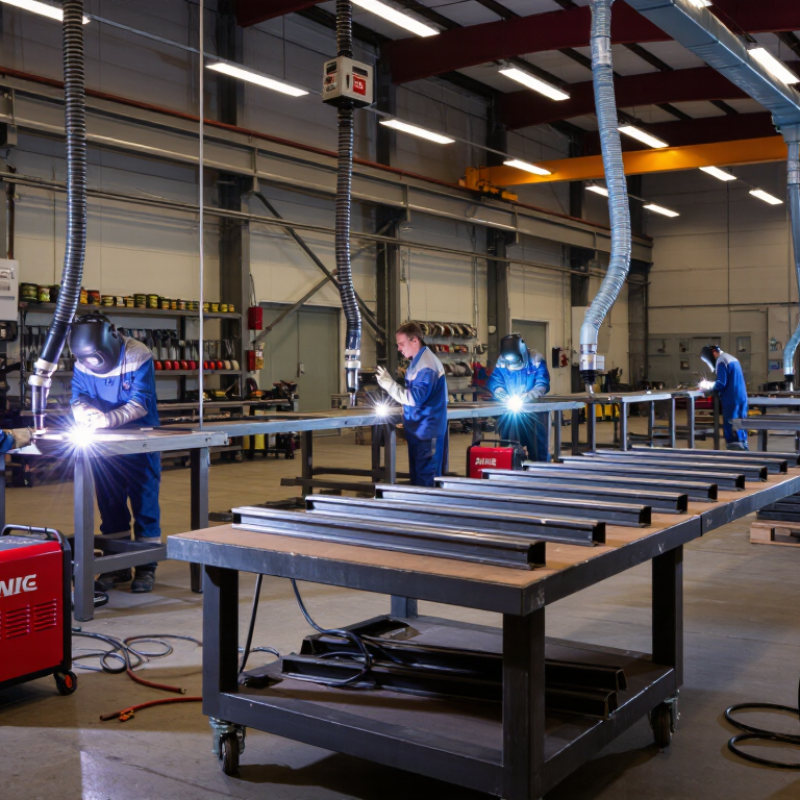
A machine shop welding equipment supplier is more than a seller of torches, power sources, and positioners. The supplier should understand production pressure, material thickness, joint design, and operator skill. Experience appears in small details. Can they recommend a suitable duty cycle for eight-hour fabrication? Can they match consumables with stainless steel, aluminum, or carbon steel work?
Technical knowledge also matters. A dependable supplier explains amperage ranges, shielding gas requirements, grounding methods, and maintenance intervals in clear language. They should provide accurate manuals, training, spare parts, and practical troubleshooting support. When a machine produces unstable arcs, fast answers can prevent rejected welds and costly downtime. Vague advice is a warning sign.
Trust develops through documented quality and consistent service. Suppliers should identify inspection procedures, warranty limits, delivery times, and applicable safety standards before an order is placed. They must also understand the shop’s workflow, not simply push the most expensive equipment. A site visit can reveal useful details, such as limited floor space, poor cable routing, or insufficient ventilation. No supplier gets every detail right. Buyers should still question assumptions and test equipment under real working conditions. A supplier willing to discuss limitations often proves more reliable than one making perfect promises.
Machine shops need more than one welding machine. Their equipment mix should match material, joint design, production volume, and finish requirements. Core categories include GMAW, GTAW, SMAW, plasma cutting, resistance welding, and multi-process power sources. GMAW supports fast steel fabrication, while GTAW offers cleaner control on aluminum, stainless steel, and thin sections. Plasma systems handle accurate cutting, but they demand suitable air quality and grounding.
The Grand View Research welding equipment market report estimated the global market at approximately USD 16 billion in 2023, with continued growth projected through 2030. This expansion reflects automation, infrastructure work, and demand for efficient fabrication. Machine shops should also evaluate wire feeders, welding positioners, cooling units, fume extraction, and programmable controls. A powerful welder alone will not solve poor fit-up or unstable workholding.
Details matter.
In supplier evaluations, I look for duty-cycle ratings, arc-start consistency, service access, replacement-part availability, and documented testing. The American Welding Society emphasizes procedure control, operator qualification, and inspection discipline across industrial welding. Those requirements influence equipment selection more than catalog power ratings. A compact TIG unit may outperform a larger machine on precision parts. That assumption is easy to miss. Conversely, automated systems can reduce repetitive labor but may expose weak fixturing and inaccurate drawings. Reports from MarketsandMarkets identify automation as a major welding-equipment trend, yet smaller shops may underestimate integration costs, training time, and maintenance downtime. A supplier’s technical support should be tested before purchase, not after a production failure.
The chart compares representative operating-current ranges commonly specified for welding and cutting equipment used in machine shops. Actual ratings vary by duty cycle, material thickness, application, and equipment configuration.
A strong supplier must prove quality beyond a polished catalog. Request weld samples using your actual steel thickness, joint design, wire, and duty cycle. Check traceable inspection records, calibration dates, warranty limits, and replacement-part availability. The American Welding Society projects a U.S. shortage of 330,000 skilled welders by 2028, increasing the value of intuitive controls and dependable training. Equipment should reduce operator guesswork, not create it.
Compatibility needs practical testing. Confirm input voltage, grounding requirements, torch connections, gas flow ranges, robot interfaces, and software updates. Ask whether the system fits your existing fixtures and extraction setup. A machine can meet its advertised output yet perform poorly in a crowded shop.
I have seen demonstrations use perfect material and unusually short welds. That is not enough evidence. The NIST Manufacturing Extension Partnership emphasizes measurable process control, so request repeatability results under realistic production conditions.
Tips: Ask for three customer references with similar metals and production volumes. Set written service targets, including response time, remote diagnostics, onsite support, and technician training. Review the supplier’s technical manuals before purchasing. A useful test is simple: can your operator solve a minor fault without calling support? My own checklist still misses details sometimes, especially consumable availability. Leave room for that mistake. Compare total ownership cost, not only purchase price, and document every supplier answer for an objective decision.
A useful top-ten list should rank strengths, not advertising reach. The strongest supplier profiles include automation specialists, power-source manufacturers, fume-control providers, orbital welding experts, and service-led distributors. Other important categories include welding consumables, inspection systems, robotic cells, portable equipment, and training support.
Grand View Research valued the global welding equipment market at approximately USD 15.6 billion in 2023.
MarketsandMarkets projects continued growth through 2029, supported by automation and industrial production. The International Federation of Robotics reported 541,302 industrial robots installed worldwide in 2023. This figure does not represent welding alone, but it shows why robotic integration matters.
In my experience, a supplier with responsive technicians can outperform a cheaper supplier during production delays. That factor is often missed.
Tips:
Match the supplier’s strength to your bottleneck. Check duty cycle, service response time, spare-part availability, extraction performance, and operator training. Request test welds using your actual material and joint design. ISO 3834 guidance also supports documented quality controls for fusion welding. Yet supplier rankings remain imperfect. A highly automated provider may be unsuitable for short-run repair work. A local distributor may offer better practical support than a larger international group. Reviewers should recheck certifications, warranty terms, and lifecycle costs before publishing a final top-ten ranking.
Selecting a welding equipment supplier should begin with your shop’s actual workload, not a polished top-ten ranking. Record daily arc time, material thickness, duty cycles, power availability, and repair frequency. A supplier should match those details with documented output, service intervals, consumable availability, and operator training. In a busy fabrication bay, a machine that overheats after thirty minutes can cost more than a higher-priced unit with reliable thermal protection.
Workforce data makes supplier support even more important. The American Welding Society has projected a U.S. shortage of about 330,000 welding professionals by 2026. Training resources, clear manuals, and responsive technical support can reduce errors when new operators join the team.
The U.S. Bureau of Labor Statistics reported a median annual wage of $48,940 for welders, cutters, solderers, and brazers in May 2023.
That labor investment deserves equipment that improves consistency, not merely purchase savings.
Ask each supplier for verified duty-cycle charts, warranty exclusions, spare-part lead times, and service response targets. Request a sample weld using your steel, joint design, and shielding gas. Inspect penetration, spatter, bead profile, and restart behavior.
Numbers can mislead. I have seen shops prioritize maximum amperage, then discover their daily work rarely needs it. A better decision weighs uptime, safety documentation, training quality, and five-year operating cost.
The best supplier may not offer the lowest quote. It should offer fewer unpleasant surprises.
It should understand material thickness, joint design, production pressure, and operator skill. Selling equipment alone is not enough.
Common categories include wire welding, TIG welding, stick welding, plasma cutting, resistance welding, and multi-process systems. Details matter.
The supplier should match settings and consumables with aluminum, stainless steel, or carbon steel. Ask for test welds using your actual materials.
Duty cycle shows how long equipment can operate before cooling. A high-power machine may still struggle during continuous fabrication.
Support should include clear manuals, operator training, spare parts, maintenance intervals, and practical troubleshooting. Vague advice is a warning sign.
Check floor space, cable routing, ventilation, grounding, air quality, and workholding. A crowded corner can create real problems.
No. Automation may reduce repetitive labor, but poor fixtures, inaccurate drawings, and weak training can remain. It can expose mistakes.
Compare equipment price, service response, spare parts, training, maintenance, warranty limits, and downtime. The cheapest offer may cost more later.
Request test welds with the real joint design and material. Ask how they handle unstable arcs, delayed parts, and failed tests.
No supplier gets every detail right. A highly automated provider may not suit short repair work. Recheck assumptions before buying.
Choosing the right Machine Shop Welding Equipment supplier requires more than comparing prices. A reliable supplier should provide a complete range of solutions, including welding power sources, wire and electrode systems, protective equipment, positioners, fume extraction, cutting tools, and essential accessories for different shop environments. The best suppliers understand the demands of fabrication, repair, maintenance, and production work, while offering equipment that matches material types, welding processes, workspace limitations, and expected workloads.
This article presents ten supplier types distinguished by strengths such as product variety, specialized machinery, custom solutions, technical expertise, training, fast parts availability, and dependable after-sales support. It also explains how to evaluate build quality, compatibility, safety features, warranty coverage, service responsiveness, and long-term operating costs. By comparing these factors with your shop’s welding requirements, budget, production goals, and future expansion plans, you can select a supplier that improves efficiency, consistency, worker safety, and overall equipment value.