
Industrial Welding Technology Blog & Knowledge Center — Paragweld

Knowledge Hub & Insights

Industrial Welding Blog & Guides

Explore expert technical articles, equipment operation manuals, maintenance guides, and industrial fabrication insights.

0%

Choosing among the Top 10 Air Plasma Cutting Machines for Global Buyers takes more than comparing prices or advertised amperage. The right machine should match the metal thickness, cutting frequency, and workspace where it will be used. A compact unit may suit repair work, while a production shop may need stronger output and a higher duty cycle. Small details matter. Torch reach, air requirements, consumable availability, and clear operating instructions can affect daily work. Buyers should also confirm voltage compatibility and service support before ordering internationally.

This guide compares models using practical considerations, including cutting capacity, portability, controls, and maintenance needs. The Air Plasma Cutting Machine Series may include options for different workloads, but a series name alone cannot prove performance. Review manufacturer specifications, warranty terms, and independent user feedback where available. Check whether stated cutting thickness means clean severance or a slower, less precise cut. That distinction is easy to overlook. No single machine is ideal for every shop, and published ratings may not reflect demanding conditions. Treat them as a starting point, then compare them with your actual materials and work schedule. A careful choice can reduce downtime and avoid paying for capacity you rarely use. A little caution helps.
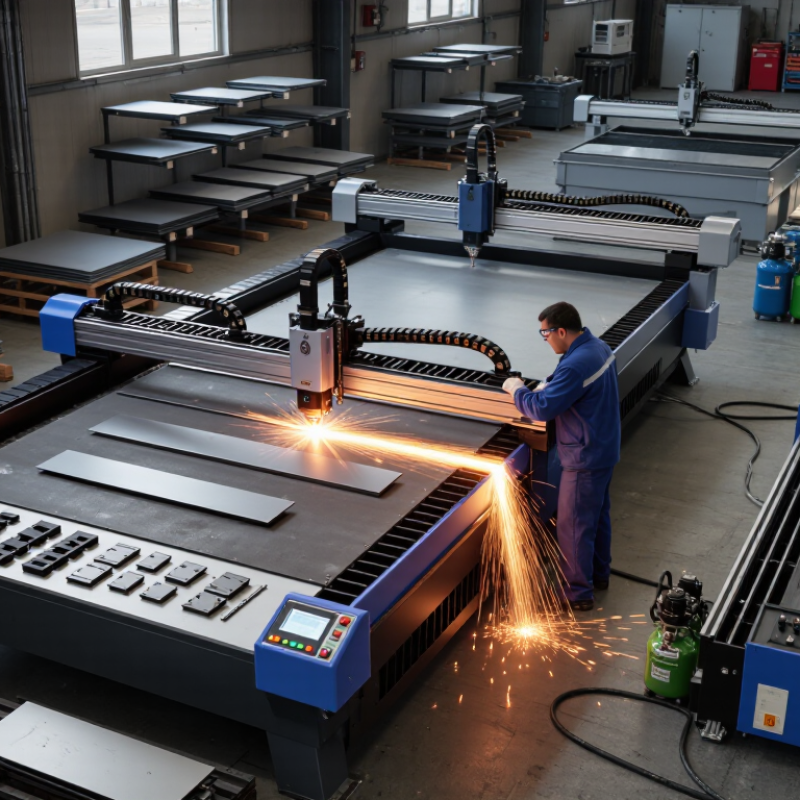
Top 10 Air Plasma Cutting Machines for Global Buyers

Air Plasma Cutting: How a Plasma Arc Reaching 20,000°C Cuts Conductive Metals

A plasma cutter does not melt metal with heat alone. It drives compressed air through a narrow nozzle, then electrically ionizes the gas into a conductive plasma arc. TWI’s technical guidance describes plasma temperatures approaching 20,000°C. The concentrated jet melts a small path through steel, aluminum, or other conductive metals, while the gas stream blows molten material away. The heat is intense. Yet the arc is not a magic blade: nozzle wear, poor grounding, and incorrect air pressure can leave a rough edge or stubborn dross.

For buyers comparing air plasma cutting machines, cutting quality matters as much as advertised power. ISO 9013:2017 assesses thermal-cut edges using measures such as perpendicularity tolerance and surface profile height. Those measurements explain why two cuts on the same plate can look different. A practical test should use the intended metal thickness, a clean ground clamp, and steady hand or torch movement. Listen for a smooth, consistent arc. Small changes in travel speed matter. TWI’s temperature figure describes the plasma, not the entire workpiece; the metal’s thickness, composition, and heat loss all affect the result. That detail is easy to overlook.

Melting Points of Conductive Metals Commonly Cut by Plasma

A plasma arc can reach approximately 20,000°C. Its concentrated heat melts conductive metal, while a high-velocity gas jet removes the molten material. The chart shows approximate melting points of pure metals; alloy compositions can change these values.

Key Ratings Explained: Amperage, Cut Thickness, and the 10-Minute Duty Cycle

When comparing air plasma cutters, amperage is useful only alongside material type and target cut quality. Higher current generally supports thicker cuts, but the stated “maximum severance” thickness may leave a rough, angled edge. For everyday fabrication, compare the manufacturer’s recommended clean-cut thickness, not just its maximum figure. Numbers need context.

IEC 60974-1:2021 uses a 10-minute duty-cycle basis for rated output. A 60% duty cycle means six minutes of cutting, followed by four minutes of cooling within that period. It does not mean six minutes at any amperage: duty-cycle ratings apply at specified output and test conditions. In a warm workshop, or with restricted airflow, a power source may need more cooling time. Watch for thermal shutdown during repeated cuts.

ISO 9013:2017 provides quality classifications for thermal-cut surfaces, including measures related to perpendicularity and surface roughness. That helps explain why two machines with similar amperage ratings can produce different edges. Check the material and thickness used for the published test, then inspect a sample cut for dross, bevel, and kerf width. A slow hand movement can leave heavy dross; moving too quickly can interrupt the arc. These details are easy to overlook when comparing rating tables.

Air Supply Requirements: Match Compressor Pressure and Flow to the Machine

For air plasma cutting machines, compressor pressure and airflow must match the cutter’s specifications at the inlet, not just the compressor’s tank label. Check the manual for the required pressure and air consumption, usually listed in PSI and CFM or L/min. Then compare those figures with the compressor’s delivered flow at the stated working pressure. A tank may show ample pressure while airflow drops during a long cut. That mismatch can cause an unstable arc, rough edges, or frequent pauses.

Test under load. Set the regulator to the machine’s specified range, then watch the pressure gauge while cutting a short piece of scrap. Keep the air hose short and wide enough to avoid restricting flow, and drain moisture from the tank and filters. Wet air can damage consumables and spoil cut quality. A compressor should also have reserve capacity for the cutter’s duty cycle; running it continuously at its limit is a poor plan. Small details matter. If several tools share the compressor, their combined demand may exceed its output. Specifications can be confusing, and even a careful setup may need adjustment after the first test cut. Check the actual cut before committing to production work.

Top 10 Air Plasma Cutters Compared by Output, Portability, and Workload

A useful comparison of the top 10 air plasma cutters starts with real cutting output, not the largest number on a product page. Check clean-cut capacity separately from maximum severance capacity; the latter may leave a rough edge that needs grinding. Match the machine’s amperage and duty cycle to the metal thickness and cutting pace you expect. A unit rated for brief cuts may struggle during repeated work on a long steel sheet. Small detail, big difference.

Portability changes the decision. Compare machine weight, handle placement, cable length, and the air supply each cutter requires. A compact unit can be easier to move between a workshop bench and a repair site, but a short lead may limit reach. For workload, consider how often you cut, how long each session lasts, and whether the compressor can maintain steady pressure. Look for clear ratings and test procedures from reliable technical documentation. Then compare the ten machines on the same basis. Specs can still mislead a little; actual results depend on material condition, operator speed, and setup. A scrap-metal test reveals more than a glossy chart.

Top 10 Air Plasma Cutting Machines for Global Buyers - Top 10 Air Plasma Cutters Compared by Output, Portability, and Workload

A brand-neutral comparison of common air-plasma cutter classes, from light repair work to heavy industrial cutting.

No. Cutter Class Output Current Typical Input Supply Typical Clean Cut Typical Severance Cut Duty Cycle at Rated Output Approx. Machine Weight Best-Suited Workload
1 Compact maintenance cutter 20–30 A 120 V or 220–240 V, single-phase, depending on model 3–6 mm (1/8–1/4 in) Up to about 8–10 mm (5/16–3/8 in) About 20–40% 4–8 kg (9–18 lb) Light repairs, thin sheet, occasional cutting, and small workshops
2 Portable light-fabrication cutter 30–40 A 220–240 V, single-phase 6–10 mm (1/4–3/8 in) Up to about 12–16 mm (1/2–5/8 in) About 25–50% 5–10 kg (11–22 lb) Mobile repair, farm maintenance, and light fabrication
3 General-purpose workshop cutter 40–50 A 220–240 V, single-phase 8–12 mm (5/16–1/2 in) Up to about 16–20 mm (5/8–3/4 in) About 30–60% 8–15 kg (18–33 lb) Regular workshop fabrication and mixed-gauge steel work
4 High-output single-phase cutter 50–60 A 220–240 V, single-phase, with a suitably rated circuit 10–16 mm (3/8–5/8 in) Up to about 20–25 mm (3/4–1 in) About 30–60% 10–20 kg (22–44 lb) Frequent fabrication, thicker plate, and repair-shop use
5 Heavy-duty portable cutter 60–80 A 220–240 V single-phase or 380–415 V three-phase, depending on model 16–20 mm (5/8–3/4 in) Up to about 25–30 mm (1–1 3/16 in) About 40–60% 18–35 kg (40–77 lb) Production workshops needing substantial cutting capacity with some mobility
6 Workshop production cutter 80–100 A 380–415 V, three-phase, typical 20–25 mm (3/4–1 in) Up to about 30–35 mm (1 3/16–1 3/8 in) About 40–60% 25–45 kg (55–99 lb) Daily fabrication, equipment repair, and repeated plate cutting
7 Industrial mid-range cutter 100–120 A 380–415 V, three-phase 25–30 mm (1–1 3/16 in) Up to about 35–40 mm (1 3/8–1 9/16 in) About 50–80% 35–60 kg (77–132 lb) High-volume fabrication and sustained industrial shifts
8 Heavy industrial cutter 120–160 A 380–415 V, three-phase 30–40 mm (1 3/16–1 9/16 in) Up to about 45–50 mm (1 3/4–2 in) About 60–100% 45–90 kg (99–198 lb) Thick plate, demanding fabrication, and continuous production lines
9 High-capacity industrial cutter 160–200 A 380–415 V, three-phase 40–50 mm (1 9/16–2 in) Up to about 55–65 mm (2 3/16–2 9/16 in) About 60–100% 70–130 kg (154–287 lb) Heavy plate processing and high-duty industrial applications
10 Very-high-output industrial cutter 200–300 A 380–415 V, three-phase 50–70 mm (2–2 3/4 in) About 70–100 mm (2 3/4–4 in), depending on the system Often 60–100% 100–250 kg (220–551 lb) Heavy industrial cutting where high output and long duty cycles are priorities

Important: These are representative ranges for cutter classes, not specifications for individual machines or a verified product ranking. Actual cutting capacity, duty cycle, weight, and electrical requirements vary by design and test conditions. “Clean cut” refers to a practical cut with comparatively limited dross; “severance cut” is the maximum approximate thickness a system may separate at reduced speed and cut quality. All air-plasma systems require a compatible supply of clean, dry compressed air. Confirm the manufacturer’s rating and local electrical requirements before purchase.

Global Buyer Checks: Voltage, Consumables, Safety Standards, and Support

Top 10 Air Plasma Cutting Machines for Global Buyers

Voltage is a practical first filter. Check the machine nameplate against the workshop supply, including phase, frequency, and input current. A 230-volt unit may not suit a 400-volt site without the correct configuration. Ask the supplier to confirm compatibility in writing; assumptions here can lead to costly installation delays. Check the nameplate.

Consumables affect uptime as much as cutting speed. Compare electrode and nozzle availability, their rated cutting ranges, and replacement costs. Ask how quickly common parts can reach your location. Published consumable life is only a guide: cut quality, air cleanliness, and operator settings can shorten it. That detail is easy to underestimate.

Safety deserves more than a logo on a brochure. Review the manual, grounding instructions, ventilation needs, and protective equipment guidance. IEC 60974-1 addresses safety requirements for arc-welding equipment, while ISO 17916 covers safety for thermal-cutting machines; confirm which standards apply to the specific unit and market. The WHO and ILO estimated 1.9 million work-related deaths globally in 2016, across all sectors—not plasma cutting alone. The figure is a sobering reminder, not a machine-specific risk estimate. Finally, check warranty terms, remote troubleshooting hours, and local service coverage. A low purchase price is less reassuring when a small torch part stops production.

FAQS

Why shouldn’t I choose a plasma cutter by amperage alone?

Amperage helps indicate cutting capacity, but material and edge quality matter too. Compare the recommended clean-cut thickness, not only maximum severance. Numbers need context.

What does a 60% duty cycle mean?

It means six minutes of cutting and four minutes of cooling in a ten-minute period, at specified output and test conditions. Not at every setting.

Why can a cutter shut down during repeated cuts?

Warm surroundings or restricted airflow can increase cooling needs. Watch for thermal shutdown, especially during long sessions.

How should I check compressor compatibility?

Match delivered airflow and pressure at the cutter’s inlet with its stated requirements. A full tank reading alone is not enough.

What can cause an unstable arc or rough edge?

Airflow may drop during a long cut, or several tools may share the compressor. Test pressure while cutting scrap. Small detail, big difference.

How can I improve cut quality?

Check sample cuts for dross, bevel, and kerf width. Moving too slowly can leave heavy dross; moving too quickly may interrupt the arc.

What should I consider when comparing portability?

Check weight, handle placement, cable length, and air-supply needs. A compact machine may be easy to move, but a short lead can limit reach.

Should I trust published cutting ratings completely?

Check the tested material and thickness, then make a scrap-metal test cut. Results depend on material condition, operator speed, and setup. I may be missing a small setup detail.

Conclusion

This guide explains how an air plasma arc, reaching temperatures of up to 20,000°C, cuts electrically conductive metals, and outlines the key ratings buyers need to understand. It clarifies how amperage and rated cut thickness affect performance, why a 10-minute duty cycle matters when planning a workload, and how to match a compressor’s pressure and airflow to a cutter’s requirements. A comparison of 10 machines highlights differences in output, portability, and suitability for occasional, workshop, or more demanding use.

For international buyers, choosing an Air Plasma Cutting Machine Series also means checking practical details beyond cutting power. The guide covers input voltage compatibility, the availability of consumables, relevant safety standards, and access to technical support. Together, these factors help buyers compare machines more confidently and select equipment suited to their materials, work environment, and expected workload.

Ethan

Ethan

Ethan is a professional marketing specialist dedicated to helping businesses understand products, identify market opportunities, and build lasting connections with their customers. With extensive knowledge of the company’s solutions, industry trends, and customer needs, he brings clarity and......
Chat on WhatsApp