Knowledge Hub & Insights
Knowledge Hub & Insights
Choosing the right Industrial MIG Welder MIG-500 PRO requires more than comparing prices or attractive product photos. Global buyers need dependable arc performance, practical controls, suitable power requirements, and responsive technical support. This guide examines seven strong options for workshops, fabrication lines, maintenance teams, and mobile welding operations.
A useful welder should produce stable wire feeding across repeated jobs. It should also handle common steel fabrication tasks without making operators fight the machine. Look for clear amperage ranges, duty-cycle information, compatible wire sizes, and accessible replacement parts. Small details matter, such as a firm torch connection, readable displays, and cooling vents that resist workshop dust. Real experience often reveals weaknesses that brochures do not mention.
Each recommendation should be checked against the manufacturer’s current datasheet and local electrical requirements. Features may vary between regions, and advertised performance can depend on input voltage, wire type, shielding gas, and ambient temperature. That is easy to overlook. We will consider welding capability, build quality, operating convenience, safety documentation, warranty support, and long-term value. The ranking is useful, but it is not absolute. A compact shop may prefer simple controls, while a production buyer may need higher duty-cycle consistency. Careful comparison remains essential.
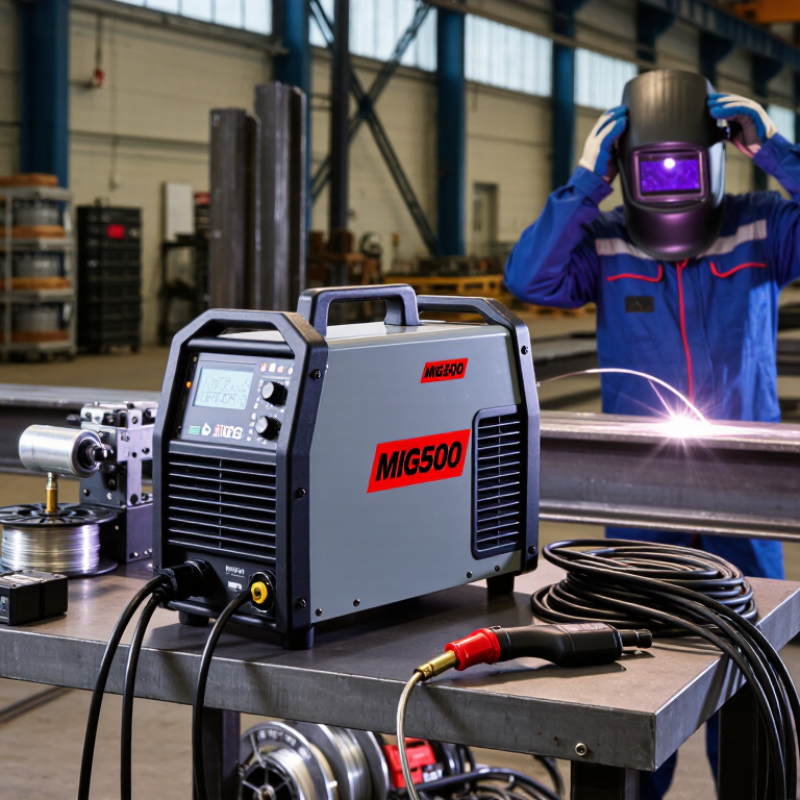
A MIG 500 PRO class welder is built around a 500 A maximum output. This rating suits heavy steel frames, structural components, and thick plate fabrication. It does not mean the machine can weld continuously at 500 A. Actual performance depends on input power, wire size, shielding gas, cooling, and workshop temperature.
IEC 60974-1 gives buyers a consistent way to compare duty cycles. The rating normally uses a ten-minute testing period at a specified ambient temperature. For example, a 60% duty cycle at 500 A allows six minutes of welding, followed by four minutes of cooling. Operators should check the exact rated current and voltage, not only the largest number printed on a panel. A machine may deliver 500 A briefly but require lower settings for long production runs. That distinction is easy to miss.
Tips: Confirm whether the duty cycle is rated at 40°C, then match it with your real shop conditions. Keep air inlets clear, use the recommended cable size, and monitor thermal alarms. A 400 A setting may be more practical for continuous work. I have seen buyers focus on peak output and overlook cooling time. That choice can reduce productivity and shorten component life. Also check three-phase requirements, wire-feeder compatibility, and service support before purchasing for international operations.
A practical comparison of seven industrial MIG 500 PRO configuration profiles for heavy fabrication, structural steel, shipbuilding, repair, and automated welding applications.
| Configuration Profile | Recommended Application | Rated Welding Output | Duty Cycle at 40°C According to IEC 60974-1 |
Three-Phase Input | Welding Processes | Wire Diameter Range | Cooling System | Protection Class | Key Selection Advantage |
|---|---|---|---|---|---|---|---|---|---|
| 1. Heavy Structural Steel Profile | Large beams, columns, frames, bridges, and thick carbon-steel assemblies. | 500 A at 60% 400 A at 100% |
60% at 500 A 100% at 400 A |
380–415 V 50/60 Hz |
GMAW/MIG/MAG, FCAW, MMA, gouging | 1.0–1.6 mm solid or flux-cored wire | Forced-air power source with water-cooled torch option | Typically IP23S for indoor industrial use | High sustained output and strong penetration for thick-section fabrication. |
| 2. Shipbuilding and Marine Profile | Hull sections, decks, marine frames, and long weld seams in controlled workshops. | 500 A at 60% 450 A at 100% |
60% at 500 A 100% at 450 A |
380–415 V 50/60 Hz |
Pulse MIG/MAG, standard MIG/MAG, FCAW, MMA | 1.0–1.6 mm | Air-cooled unit with compatible water-cooled torch system | Typically IP23S; additional site protection may be required | Pulse capability helps control heat input and improve weld appearance on long seams. |
| 3. Pressure Vessel Profile | Boilers, tanks, pressure vessels, pipe supports, and regulated fabrication work. | 500 A at 60% 400 A at 100% |
60% at 500 A 100% at 400 A |
380–415 V 50/60 Hz |
Synergic MIG/MAG, pulse MIG, FCAW, MMA | 0.8–1.6 mm | Water-cooled torch recommended for extended high-current operation | Typically IP23S | Stable arc control and repeatable parameters support documented welding procedures. |
| 4. Automated Production Profile | Robotic cells, column-and-boom systems, repetitive fabrication, and high-volume production. | 500 A at 60% 400 A at 100% |
60% at 500 A 100% at 400 A |
380–415 V 50/60 Hz |
Synergic MIG/MAG, pulse MIG/MAG, robotic interface operation | 1.0–1.6 mm | Water-cooled torch and closed-loop cooling option | Typically IP23S | Remote control, digital parameter storage, and communication interfaces improve repeatability. |
| 5. Stainless Steel Fabrication Profile | Food-processing equipment, architectural stainless steel, tanks, and hygienic fabrication. | 500 A at 60% 400 A at 100% |
60% at 500 A 100% at 400 A |
380–415 V 50/60 Hz |
Pulse MIG, standard MIG/MAG, MMA | 0.8–1.2 mm stainless or metal-cored wire | Water-cooled torch recommended for pulse welding at high amperage | Typically IP23S | Pulse operation can reduce spatter and help manage heat-sensitive stainless components. |
| 6. Outdoor Repair and Maintenance Profile | Mining equipment, agricultural machinery, construction machinery, and field repairs. | 500 A at 50–60% 350–400 A at 100% |
50–60% at 500 A 100% at 350–400 A |
380–415 V 50/60 Hz |
MIG/MAG, FCAW, MMA, carbon-arc gouging | 1.0–1.6 mm | Heavy-duty forced-air cooling; water-cooled torch optional | Typically IP23S; use weather protection outdoors | Multi-process flexibility is useful when material, joint position, and site conditions vary. |
| 7. Global Export and Multi-Voltage Profile | International distributors, contract manufacturers, and workshops serving different power grids. | 500 A at 60% 400 A at 100% |
60% at 500 A 100% at 400 A |
Selectable 3-phase input 380–415 V, 50/60 Hz |
GMAW/MIG/MAG, pulse MIG, FCAW, MMA | 0.8–1.6 mm | Air-cooled power source with water-cooling compatibility | Typically IP23S | Broad input compatibility simplifies deployment across multiple international markets. |
Technical note: The 500 A class refers to industrial welding power sources capable of delivering approximately 500 A under a specified duty-cycle condition. Under IEC 60974-1, duty-cycle ratings are measured at a 40°C ambient temperature and must be checked together with output current, voltage, thermal class, input power, and application requirements. Actual specifications, protection ratings, input current, and duty cycle may vary by configuration and should be confirmed from the applicable technical datasheet before purchase.
Match amperage with wire size, steel thickness, and daily workload. A 300-amp unit suits repairs and medium fabrication. A 400-amp unit provides more thermal headroom for structural frames. A 500-amp unit supports heavier wire and longer welds. More power is not always better.
Duty cycle shows how long a welder can operate during ten minutes. Testing usually occurs at a specified temperature, such as 40°C. One machine may deliver 60% at 500 amps. Another may deliver 100% at 400 amps. The second could suit continuous production better.
No. Check the tested amperage and duty cycle together. A machine’s maximum output may rarely match daily production needs. Oversized power supplies can increase energy use without improving results. This is easy to overlook.
IP21S generally suits sheltered indoor workshops. IP23 offers better protection from angled rain and outdoor exposure. Neither rating makes a welder waterproof. Use additional shelter when conditions are harsh.
Inspect connectors, cooling paths, and cable quality. Request regional voltage information and certified test records. Check the current datasheet before approving specifications. Older documents may mislead.
Compare five-year operating costs, not only purchase prices. Measure energy used for each finished weld. Include wire waste, spatter, rework, maintenance, and downtime. A cheaper unit may cost more during idle periods.
Efficiency can strongly affect monthly operating expenses. A stable arc may reduce wire waste, spatter, and rework. Record actual consumption during factory trials. Paper ratings are not enough.
Check coverage for control boards, transformers, cooling parts, and labor. Confirm whether authorized technicians operate near the installation site. Ask about spare-part availability and remote diagnosis. Remote support helps, but it cannot replace local parts.
Record downtime after dust buildup, voltage fluctuation, and cooling-system stress. Transport conditions also influence reliability. Cross-border technician travel can make small failures expensive. Keep detailed service records. They often reveal more than brochures.
Choosing the right Industrial MIG Welder MIG-500 PRO requires more than comparing maximum amperage. Buyers should first confirm a true 500 A output, an IEC 60974-1 duty-cycle rating, and reliable thermal protection for continuous industrial work. A practical comparison of seven machines should examine amperage stability, duty cycle, enclosure IP rating, wire-feed performance with 1.0–1.6 mm wire, and welding capability across 3–25 mm steel. These factors reveal whether a welder can support demanding fabrication, maintenance, and structural applications.
Compliance and long-term value are equally important. Before purchase, verify CE, UL/CSA, EMC, and 400 V three-phase compatibility according to the destination market and installation requirements. Total ownership cost should include electrical efficiency, consumables, warranty terms, spare-parts availability, technical support, and service coverage. The best option is not necessarily the lowest-priced unit, but the model that combines dependable output, suitable protection, verified compliance, manageable operating costs, and consistent after-sales support for global industrial users.