Knowledge Hub & Insights
Knowledge Hub & Insights
China Best Inverter TIG Welder TIG 400IJ Price? This question requires more than a supplier’s headline quotation. The Inverter TIG Welder TIG-400IJ should be assessed through output stability, duty cycle, arc control, cooling design, and after-sales support. A low factory price may change after freight, taxes, cables, torches, and warranty costs are added.
Industry data provides useful context. Grand View Research reports continued growth in the global welding equipment market, supported by construction, automotive, energy, and industrial fabrication demand. MarketsandMarkets also identifies automation, inverter technology, and energy efficiency as important market trends. These reports describe broad market movement, not a guaranteed price for one machine. That distinction matters.
Dr. John C. Lippold, a recognized welding metallurgy educator, has emphasized that “process control is central to consistent weld quality.” This principle fits the TIG-400IJ evaluation. A strong machine should create a steady arc on stainless steel, carbon steel, and suitable nonferrous applications. Operators should also inspect pulse settings, amperage range, thermal protection, and real-world duty-cycle performance. Specifications alone can mislead.
For buyers comparing China-made equipment, the practical price question is incomplete without application details. Workshop voltage, material thickness, daily welding hours, and local service access can change the final value. A machine costing less may require earlier repairs. That possibility deserves attention. Before ordering, request a current quotation, verified test footage, component details, certification records, and written warranty terms. This introduction examines those factors while separating measurable performance from optimistic marketing claims.
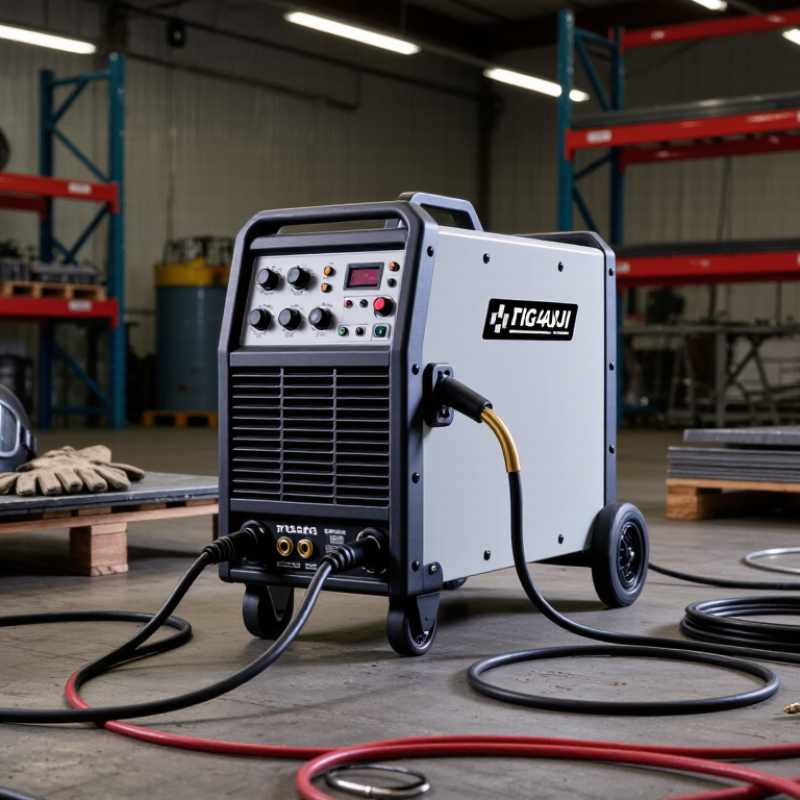
China TIG 400IJ price depends on more than the 400 A label. This class describes a heavy-duty inverter TIG welder built for demanding fabrication, maintenance, and thick stainless steel work. It normally supports stable DC TIG output and may include pulse control, remote adjustment, and arc-start functions.
A true 400 A machine needs serious electrical capacity. Check the input voltage, rated duty cycle, cooling system, and torch specification before comparing prices. A water-cooled torch is often necessary during extended welding at high current. At 400 A, heat builds quickly. The machine should also provide overload protection, clear digital controls, and dependable current regulation.
Factory pricing can change with configuration, order quantity, testing, packaging, and certification requirements. A lower China TIG 400IJ price may exclude a torch, foot pedal, water cooler, or shipping costs. Ask for the complete equipment list. I would not trust a quotation based only on maximum amperage. That number may describe a short peak rather than continuous performance. Real workshop results matter more. Even experienced buyers sometimes overlook cable size and input power. Measure the installation first. Verify the duty-cycle test conditions, because different standards can make identical figures look misleading.
| Data Dimension | Typical 400 A Inverter TIG Class | Practical Definition |
|---|---|---|
| Product category | Industrial inverter TIG welder | A high-output machine designed for demanding fabrication, repair, stainless-steel, carbon-steel and non-ferrous metal welding. |
| Rated maximum welding current | 400 A DC | The highest nominal TIG output commonly associated with the 400 A class; actual continuous current depends on duty cycle and ambient temperature. |
| Typical welding current range | Approximately 10–400 A | The lower limit varies by control design, while the upper limit identifies the machine’s output class. |
| TIG welding process | DC TIG, commonly with HF start | DC TIG is suitable for steel, stainless steel, copper and titanium. Aluminum welding requires an AC/DC version. |
| MMA / stick welding | Usually included | Provides a secondary manual metal arc function for field repairs and electrodes that are compatible with the rated output. |
| Input power configuration | Three-phase, commonly 380–415 V AC, 50/60 Hz | A three-phase supply is normally required for stable operation at high output. The exact voltage must match the nameplate specification. |
| Typical input current | Approximately 30–45 A per phase at maximum output | Actual input current depends on input voltage, efficiency, power factor, welding current and arc voltage. |
| Rated duty cycle | Typically 60% at rated output | At a 60% duty cycle, the welder can operate for 6 minutes in a 10-minute period at the stated test conditions, followed by cooling time. |
| Open-circuit voltage | Commonly 60–80 V DC | The exact value varies by design and should be checked against applicable electrical safety requirements. |
| Efficiency and power factor | Efficiency commonly above 85%; power factor often 0.70–0.95 | These figures vary significantly with load, inverter topology and power-factor-correction design. |
| TIG torch connection | Water-cooled torch recommended | A water-cooled torch helps manage heat during extended operation at high amperage; torch rating must match the intended current. |
| Shielding gas | Argon, typically 8–20 L/min | Flow depends on nozzle size, joint design, torch type, indoor airflow and welding current. |
| Recommended material thickness | Approximately 0.5–25 mm per pass, depending on material and joint preparation | TIG is usually selected for precision and weld quality; thick sections may require preheating, multiple passes or a different process. |
| Cooling method | Forced-air power-source cooling; external water cooler often used | Cooling requirements depend on torch rating, duty cycle, ambient temperature and operating current. |
| Typical machine weight | Approximately 35–65 kg for the power source | Packaging, cables, foot pedal, torch and water-cooling equipment can substantially increase shipping weight. |
| Indicative price range | Approximately US$800–2,000 ex-factory | An indicative range for a China-origin 400 A DC inverter TIG power source. Final pricing varies with AC/DC capability, accessories, certification, packaging, order quantity, freight and taxes. |
| Best-fit applications | Heavy fabrication and maintenance | Suitable for pressure-vessel work, industrial maintenance, structural components, pipe fabrication and high-duty repair operations when the required standards are met. |
Note: Technical ranges and indicative pricing are for product-class comparison only. Confirm the manufacturer’s datasheet, applicable electrical standards, duty-cycle test conditions and delivered quotation before purchase.
IGBT design, cooling, duty cycle, and accessories strongly affect the final price. A cheaper model may use fewer power modules. Its output rating needs careful checking.
Modern IGBT modules switch current quickly and reduce energy loss. They can provide smoother arc starting and better low-amperage control. Not every low-cost design performs equally.
No. Compare the duty cycle first. A machine may reach 400A briefly but cannot sustain it. A lower-priced unit may suit light work only. Check real workshop needs.
Large fans, heat sinks, sensors, and separated airflow can improve stability. Weak cooling may cause thermal shutdowns in dusty workshops. Oversized fans can add noise and collect more dust. The design is not automatically better.
Check for a torch, foot pedal, ground cable, regulator, holders, and spare collets. These parts can reduce setup time. Their quality may still be disappointing. Inspect cable flexibility, connector fit, and pedal response.
Compare the complete cost, not only the machine price. Ask about packaging, testing fees, spare parts, and shipping terms. Request prices for one, five, twenty, and fifty units. A cheap quote can hide expensive omissions.
Ask for the coverage period, excluded parts, repair time, and replacement process. A twelve-month warranty sounds useful. Written service terms matter more than the number alone. Unclear promises should remain unpriced.
Request test reports related to IEC 60974-1 and applicable electrical safety documents. Check required market markings for your destination. ISO 9001 shows a quality-management system. It does not prove automatic product compliance.
Request serial-number traceability and a pre-shipment inspection record. Ask for welding samples using your actual material thickness. Compare input voltage, efficiency, duty cycle, and arc stability. Published amperage is not enough. I would still verify the sample.
The China price of an Inverter TIG Welder TIG-400IJ depends on its actual 400 A performance, duty cycle, and compliance with IEC 60974-1 ratings. Buyers should verify whether the machine can maintain stable output under continuous operation, as well as its input requirements, welding range, arc control, and thermal protection. A high current rating is valuable only when supported by reliable internal components, effective cooling, and consistent manufacturing quality.
Price differences among suppliers may also reflect IGBT design, cooling structure, included TIG accessories, packaging, and testing procedures. When comparing quotations, review the minimum order quantity, warranty terms, spare-parts availability, certification documents, delivery conditions, and technical support. Energy efficiency and power factor can influence long-term operating costs, especially in workshops with frequent use. A complete buying decision should balance purchase price with duty-cycle performance, service capability, safety documentation, and dependable after-sales support.