Knowledge Hub & Insights
Choosing the right Metal Fabrication Welding Machines can determine whether a workshop gains precision or wastes valuable material. A clean bead, stable arc, and repeatable output matter on every project. These machines must handle steel frames, stainless panels, aluminum brackets, and demanding repair work. The best choice depends on thickness, joint design, production volume, and operator experience.
Jody Collier, a respected welding educator and author, often emphasizes, “A good weld starts with good preparation.” That principle remains practical. Before comparing machines, fabricators should inspect their power supply, ventilation, duty-cycle requirements, and available floor space. A compact MIG welder may suit light structural work, while a pulsed MIG or CNC plasma system may deliver better consistency in higher-volume production. TIG equipment offers excellent control, but it usually demands more patience and skill.
Real workshops reveal the difference. A machine can promise high amperage, yet poor wire feeding may create spatter around a 6-millimeter steel joint. That detail matters. Consumable availability, torch comfort, after-sales support, and service training also deserve close attention. I would not choose equipment based on price alone. That approach sounds efficient, but it can become expensive after repeated rework.
There is no universal winner. Sometimes, the “best” machine is simply the one operators can set accurately and maintain confidently. The following guide compares leading options for Metal Fabrication Welding Machines, using practical performance, reliability, safety, and long-term value as the main measures. Some recommendations may still require adjustment after real shop testing. That is the honest part.
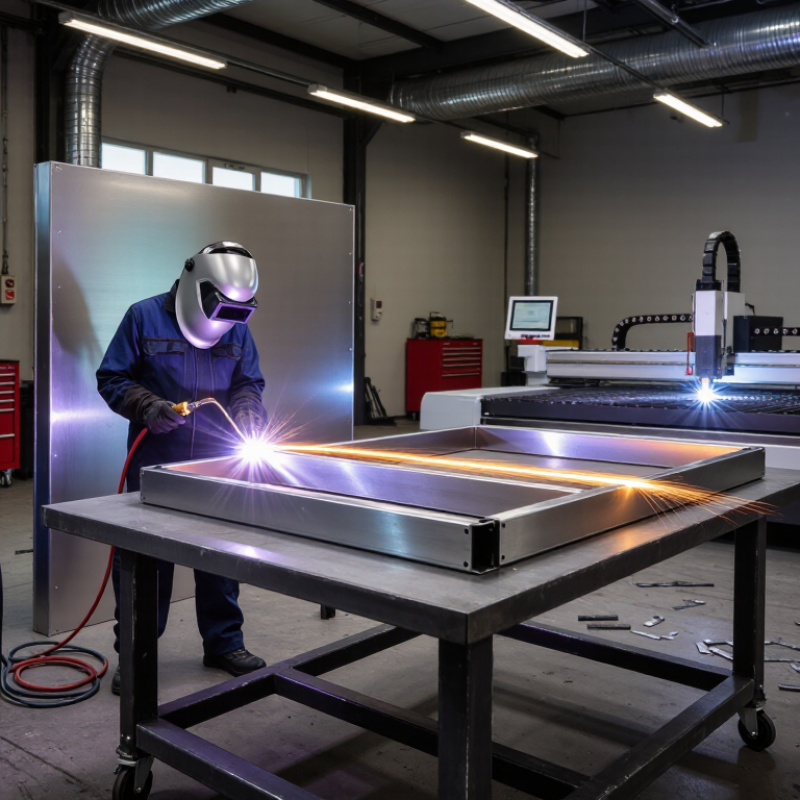
China metal fabrication welding machines are welding systems manufactured in China for joining steel, stainless steel, aluminum, and other industrial metals. They include inverter arc welders, MIG/MAG machines, TIG welders, and multi-process units. Each machine supports different fabrication tasks, from structural frames to thin sheet panels.
In a practical workshop, the power source matters greatly. A stable arc produces smoother beads and reduces grinding after welding. MIG/MAG equipment is often suitable for continuous production, while TIG machines offer cleaner control on thin materials. Check output current, duty cycle, wire compatibility, cooling design, and input voltage before purchase. A machine rated for heavy work may still overheat in a poorly ventilated shop.
Test the equipment on actual metal thicknesses. Watch the arc start, spatter level, bead shape, and control response. Small details matter. Certification, electrical protection, manuals, and replacement-part access also affect long-term reliability. Some low-cost machines perform well, but printed specifications can be optimistic. That deserves careful verification. A sample weld and a load test reveal more than a product photograph. I would also inspect cable quality and internal connections, because these parts often receive less attention. The best choice is not always the most powerful machine; it should match the operator, material, workload, and workshop conditions.
China metal fabrication welding machines work by controlling heat, current, shielding, and movement. A power source converts electrical input into a stable welding current. The arc then forms between the electrode and the metal surface. This heat melts both edges and creates a fused joint.
MIG and MAG systems feed a wire continuously through a torch. Shielding gas protects the molten pool from oxygen and moisture. TIG systems use a non-consumable tungsten electrode for cleaner, more precise welds. Resistance welders work differently. They press two sheets between copper electrodes and pass current through the contact point. Heat develops inside the joint, producing a fast weld without filler wire.
Automation is growing quickly. The International Federation of Robotics reported 276,288 industrial robots installed in China during 2023, representing about 51% of global installations. Many fabrication lines combine robotic arms, positioners, sensors, and programmable power sources. These systems can repeat travel speed and torch angles with impressive consistency.
But automation is not magic. Poor joint fit-up, dirty steel, or incorrect gas flow still creates defects. A perfect-looking bead may hide incomplete penetration. Operators must inspect settings, monitor heat input, and verify weld quality through approved procedures. This is where practical experience matters. Machines reduce variation, but they do not replace judgment. The reported robot growth also deserves reflection: faster production can increase mistakes when training and inspection lag behind. ISO 3834-based quality controls provide a useful framework for managing welding responsibility and traceability.
Metal fabrication welding machines are chosen by joint design, metal thickness, production speed, and workshop conditions. In Chinese fabrication shops, MIG/MAG machines are common for frames, brackets, and structural assemblies. They feed wire continuously, allowing operators to create long, consistent beads with fewer stops. MAG uses active shielding gas, while MIG uses inert gas. This distinction affects wire, gas, and settings. Windy work areas can disturb shielding and create porous welds. Small details matter.
TIG machines suit stainless steel, aluminum, and visible joints requiring careful control. Their separate filler rod allows precise heat management around thin sheet. The process is slower, but the bead can be clean and narrow. Stick welding machines remain useful for repairs, outdoor work, and heavy steel. They tolerate less-than-perfect surfaces better than TIG. However, electrode changes interrupt production, and slag removal adds labor. I have seen attractive welds fail because the joint was poorly fitted.
Flux-cored arc welding machines offer higher deposition rates for thicker sections. Some wires need shielding gas; others work without it on mobile sites. Laser welding machines can produce fast, low-distortion seams, but they require accurate fit-up, training, and strict safety controls. Automation improves repeatability, though it cannot correct bad drawings or warped fixtures. My preference is not fixed. A fast machine is wasteful when operators lack setup discipline. Test coupons, penetration checks, and documented parameters provide more reliable decisions than catalog claims.
Choosing the best welding machine starts with the work, not the price. A compact inverter suits thin steel and repair jobs, while a three-phase MIG or flux-cored system handles continuous fabrication better. Check output range, duty cycle, wire diameter, and input stability. A machine rated at 60% duty cycle can weld for six minutes within ten minutes. That number matters on a busy shop floor.
The MarketsandMarkets Welding Equipment Market report projects global growth from about USD 14.5 billion in 2023 to USD 20.5 billion by 2028. This growth reflects rising automation and demand for repeatable weld quality. For Chinese equipment, inspect control response, cooling design, torch connections, and spare-part availability. Ask for test welds on your actual material. Paper specifications can look impressive.
Safety and documentation also deserve attention. Verify electrical conformity, protective functions, grounding design, and manuals in a language your operators understand. ISO 3834 emphasizes controlled welding quality, traceability, and qualified procedures. A machine should support those controls, not merely produce a bright arc. I would not select the cheapest option. It may consume more wire, create unstable penetration, or stop during peak production. That mistake is expensive. Consider lifecycle cost, technician access, training, and local service before ordering.
Need more cooling. Sometimes, yes.
Choosing the best China metal fabrication welding machine starts with evaluating the manufacturer, not the catalog price. A capable supplier should explain power ratings, duty cycles, welding materials, and control systems clearly. Vague specifications deserve caution. Ask for recent test records, calibration details, and sample welds on steel thicknesses similar to your production needs.
A factory audit can reveal more than a polished website. Check assembly areas, quality inspection stations, spare-parts storage, and serial-number tracking. Look for documented procedures rather than impressive machinery alone. Request evidence of relevant safety certifications and electrical compliance for your target market. Verify whether testing is performed on every machine or only selected units. That difference matters.
Ask how the manufacturer handles installation, operator training, software updates, and service requests. Response time should be written into the contract. Confirm the availability of consumables and replacement components for several years. A low purchase price can become expensive when downtime increases. Compare energy use, maintenance intervals, warranty limits, and shipping protection. Consider communication quality too. Technical misunderstandings can delay commissioning.
A live video inspection helps.
I would also request a paid production trial before placing a large order. It exposes problems in wire feeding, arc stability, or heat control early. No evaluation is perfect. My own judgment can favor attractive pricing too quickly, especially under project pressure. Independent inspection is useful when internal experience is limited. The strongest manufacturer accepts difficult questions and provides traceable answers without exaggeration.
| Machine Category | Recommended Welding Process | Typical Output Range | Suitable Materials and Applications | Key Technical Evaluation Points | Relevant Standards or Certifications | Typical Duty-Cycle Expectation | Evaluation Priority |
|---|---|---|---|---|---|---|---|
| Industrial Inverter MMA Welder | Shielded Metal Arc Welding (SMAW) | 160–500 A; commonly supplied with single-phase or three-phase input options | Carbon steel, stainless steel, repair work, structural fabrication, construction sites, and maintenance | Arc stability, hot-start function, anti-stick protection, current accuracy, generator compatibility, and cable connection quality | IEC 60974-1 for arc-welding power sources; applicable electrical safety and electromagnetic-compatibility requirements | Approximately 35%–60% at rated current, depending on model and ambient temperature | ★★★★★ |
| MIG/MAG Welding Machine | Gas Metal Arc Welding (GMAW) | 200–500 A; wire diameters commonly include 0.8, 1.0, 1.2, and 1.6 mm | High-volume carbon-steel fabrication, sheet metal, frames, machinery, automotive components, and general manufacturing | Wire-feed consistency, synergic control, inductance adjustment, burn-back control, feeder durability, and compatibility with solid or flux-cored wire | IEC 60974-1 and IEC 60974-5 for welding wire feeders, where applicable; verify regional EMC and safety compliance | Approximately 40%–60% at rated current for general industrial models | ★★★★★ |
| AC/DC TIG Welder | Gas Tungsten Arc Welding (GTAW/TIG) | 180–400 A; AC output is required for aluminum welding | Stainless steel, aluminum, copper alloys, pressure components, sanitary tubing, precision fabrication, and thin sheet | High-frequency start, pulse frequency, AC balance, AC frequency, crater current, pre-flow and post-flow, and foot-pedal compatibility | IEC 60974-1; confirm requirements for high-frequency emission, electrical safety, and local approvals | Approximately 35%–60% at rated current | ★★★★★ |
| Multi-Process Welding Machine | MMA, MIG/MAG, and DC TIG; some models also support pulse modes | 200–500 A, depending on process and input power | Job shops, maintenance departments, small-batch fabrication, field service, and workshops requiring flexibility | Independent process controls, quick-change connections, software reliability, thermal protection, memory settings, and compatibility with different torches and feeders | IEC 60974-1; check separate conformity documentation for the complete system and accessories | Approximately 35%–60% at the rated output of each process | ★★★★☆ |
| Submerged Arc Welding System | Submerged Arc Welding (SAW) | 600–2,000 A in single-wire or multi-wire configurations | Long weld seams in beams, pressure vessels, storage tanks, shipbuilding, wind-tower sections, and heavy steel structures | Travel-system accuracy, flux recovery, wire alignment, arc-voltage control, penetration consistency, and automation integration | IEC 60974-1 for the power source; project-specific welding procedures and applicable structural or pressure-vessel standards | Often 80%–100% in automated production, subject to cooling and system configuration | ★★★★☆ |
| Resistance Spot Welder | Resistance Spot Welding (RSW) | Typical transformer capacities of 25–200 kVA for fabrication equipment | Overlapped sheet metal, cabinets, appliances, automotive parts, wire products, and repetitive assembly work | Welding-current repeatability, electrode-force control, cooling-water flow, squeeze time, weld-time control, and electrode life | IEC 62135-1 for resistance-welding equipment; verify local machine-safety and electrical requirements | High repetitive-cycle capability when cooling, electrodes, and control systems are properly maintained | ★★★★☆ |
| Laser Welding System | Fiber Laser Welding | Approximately 1,000–3,000 W for many handheld and compact production systems | Thin and medium-gauge stainless steel, carbon steel, galvanized sheet, aluminum, enclosures, kitchen equipment, and precision assemblies | Beam quality, wire-feeding stability, shielding-gas control, protective-window monitoring, laser safety enclosure, and operator training requirements | IEC 60825-1 for laser-product safety; verify machine electrical safety and regional occupational-safety requirements | Designed for extended operation, but actual production capacity depends on thermal management and duty-cycle specifications | ★★★★☆ |
| Portable Engine-Driven Welder | MMA, auxiliary power, and sometimes engine-driven MIG capability | 180–500 A welding output; auxiliary power commonly ranges from approximately 3 to 15 kW | Outdoor construction, pipelines, agricultural repair, remote maintenance, and locations without stable grid power | Engine fuel consumption, cold-start performance, voltage regulation, noise level, enclosure protection, service access, and spare-parts availability | Applicable welding-power-source requirements plus engine-emissions, electrical, and workplace-safety regulations in the destination market | Suitable for prolonged field use when engine cooling and scheduled maintenance are adequate | ★★★☆☆ |
| Manufacturer Quality Audit | Applies to all machine categories | Evaluate documented production capability rather than nameplate output alone | OEM projects, container orders, distributor programs, and customized fabrication lines | Factory audit, incoming-component inspection, calibration records, traceability, burn-in testing, weld-sample testing, corrective-action procedures, and quality-control staffing | ISO 9001 quality-management certification can support evaluation, but it should not replace product testing and document review | Require a documented test procedure covering rated output, thermal protection, insulation, grounding, and continuous operation | ★★★★★ |
| After-Sales and Export Capability | Applies to all machine categories | Assess response time, service coverage, and parts availability for the target market | International procurement, distributors, contract manufacturing, and multi-site industrial operations | English technical manuals, wiring diagrams, spare-parts lists, remote troubleshooting, warranty terms, training, packaging quality, and export documentation | Confirm conformity documents, declarations, user manuals, and test reports required by the destination country | Prefer suppliers that can provide documented warranty procedures and replacement parts for the expected service life | ★★★★★ |
They are welding systems used to join steel, stainless steel, aluminum, and other industrial metals. Common types include MIG/MAG, TIG, stick, flux-cored, laser, and multi-process machines.
The power source converts electricity into controlled welding current. An arc melts the metal edges and forms a fused joint. Heat, shielding, and movement must remain balanced.
MIG or MAG machines often suit frames, brackets, and long structural welds. They feed wire continuously, reducing stops and electrode changes. Gas flow must remain stable.
TIG suits stainless steel, aluminum, thin sheets, and visible joints. It provides careful heat control and narrow weld beads. It is slower, though.
Yes, stick welders work well for repairs, outdoor jobs, and heavy steel. They tolerate less-perfect surfaces better than TIG. Slag removal adds time.
Check output current, duty cycle, input voltage, wire compatibility, cooling, cables, manuals, and replacement-part access. Test the machine on actual material thicknesses. Product photographs prove little.
Yes, especially in a poorly ventilated area. Check the duty cycle during realistic workloads, not only short demonstrations. More power is not always better.
No. Robotic systems can repeat travel speed and torch angles accurately. Dirty steel, poor fit-up, weak fixtures, or wrong gas settings still create defects. Automation needs inspection.
Use sample welds and load tests on real materials. Inspect arc starts, spatter, bead shape, penetration, and control response. A good-looking bead may still hide defects.
Choosing the fastest or most powerful model without matching operator skill and workshop conditions. I might make that mistake too. Test coupons and documented settings support better decisions.
China Metal Fabrication Welding Machines are industrial systems designed to join, cut, or shape metal components through controlled heat, pressure, or electric current. They commonly include arc welding, MIG, TIG, resistance, and laser welding equipment, each suited to different materials, thicknesses, production speeds, and precision requirements. Understanding how these machines work helps fabricators select the right combination of power, shielding gas, electrodes, wire feed, and temperature control for stable, high-quality welds.
Choosing the best Metal Fabrication Welding Machines requires careful evaluation of welding performance, automation options, energy efficiency, safety features, maintenance needs, and compatibility with existing production processes. Buyers should also assess Chinese welding machine manufacturers by reviewing technical specifications, manufacturing quality, testing procedures, customization capabilities, certifications, spare-parts availability, warranty terms, and after-sales support. A balanced comparison of cost, reliability, productivity, and long-term service can help businesses identify equipment that delivers consistent results and supports efficient metal fabrication operations.