Industrial Welding Technology Blog & Knowledge Center — Paragweld

Knowledge Hub & Insights

Industrial Welding Blog & Guides

Explore expert technical articles, equipment operation manuals, maintenance guides, and industrial fabrication insights.

0%

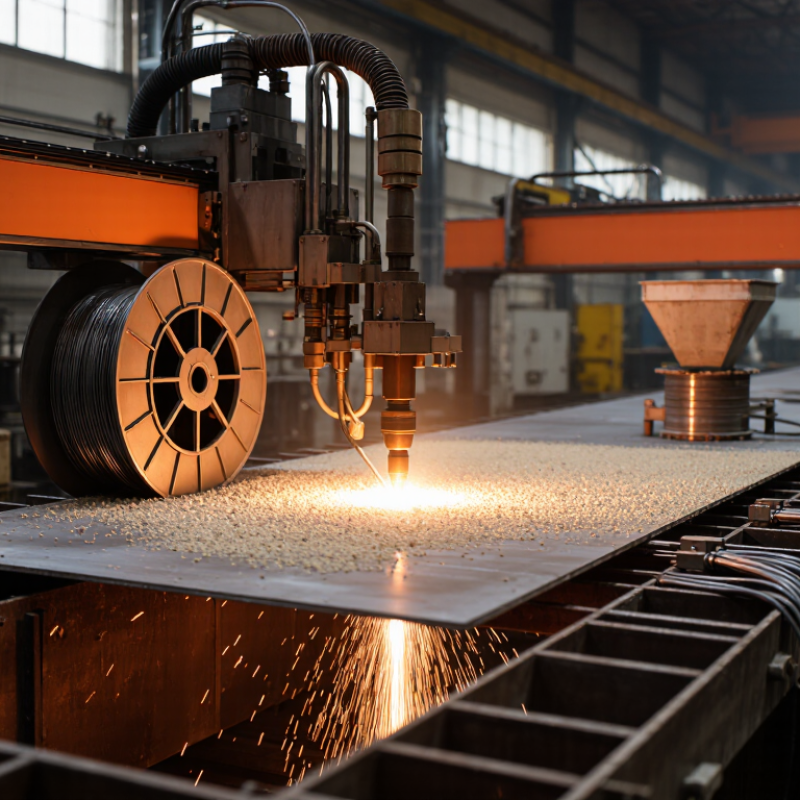
An Automatic Submerged ARC Welding System uses a continuously fed wire electrode to create an electric arc beneath a layer of granular flux. The flux shields the weld pool from the surrounding air and helps form a consistent bead. The arc itself is hidden. That detail matters: operators usually monitor travel, wire feed, and flux coverage rather than watching the arc directly.

A typical setup may combine a power source, wire feeder, flux hopper, welding head, and mechanized carriage or gantry. Together, these components support steady welding over long seams, such as joints in heavy plate or large steel structures. The system can deposit metal quickly, but speed alone does not guarantee a sound weld. Incorrect current, voltage, travel speed, or flux depth can lead to defects, excessive spatter, or uneven penetration. Results also depend on joint preparation, material, and the approved welding procedure.

This guide explains how the equipment works, what its main components do, and where the process is commonly used. It also considers practical limits. Submerged arc welding is generally suited to accessible, relatively flat or horizontal work; it is not a universal choice for every joint or position. Real production conditions can be less tidy than diagrams suggest. Careful setup, trained supervision, and inspection remain essential, and specific settings should come from qualified procedures rather than guesswork.
What Is an Automatic Submerged Arc Welding System?

What Is an Automatic Submerged Arc Welding System?

An automatic submerged arc welding (SAW) system joins metal with a continuously fed wire electrode while granular flux covers the arc. The arc stays hidden. The flux shields the molten pool and forms slag that must be removed. Typical equipment includes a power source, wire feeder, flux hopper, travel carriage, controls, and a fixture holding the work. The carriage guides travel, while controls regulate settings such as current, voltage, and speed. SAW is often used for long, repeatable seams in thicker plate, but it is less suited to small, awkward joints. Fit-up, flux condition, and access still matter. Automation cannot fix a poor root gap.

The American Welding Society’s 2023 workforce report projected that the U.S. would need 360,000 new welding professionals by 2027. That forecast is not specific to SAW. It does underline a practical point: automation can stabilize repetitive work, while skilled people remain responsible for setup and inspection. Operators should check bead profile, fusion, and slag removal against the job procedure; a smooth surface alone proves little. On a real shop floor, one missed adjustment can leave a defect hidden beneath the flux. I would not call the process hands-off. That phrase can mislead.

What Components Make Up the System?

An automatic submerged arc welding system brings together parts that feed, guide, power, and monitor the weld. The power source supplies current to a continuously fed electrode wire. A wire feeder pushes the wire through the welding head at a controlled rate. The head positions the electrode above the joint. That matters. A flux hopper and delivery tube cover the arc with granular flux as welding proceeds. The flux shields the molten metal and can help shape the finished bead.

A travel carriage or gantry moves the welding head along the workpiece. Some systems move the workpiece instead. Control equipment coordinates travel speed, wire-feed rate, and electrical settings. Operators can adjust these values for the material, joint design, and required weld size. A grounding connection completes the electrical circuit. Sensors may track position or process conditions, but they do not replace inspection.

In practice, layouts vary. A long seam may need a rail-mounted carriage, while a smaller job may use a compact fixture. Flux recovery equipment can collect unused granules, reducing waste and keeping the work area clearer. Still, recovered flux needs checking for contamination before reuse. A tidy system diagram can make setup look simple; real joints may shift, and alignment deserves attention. Even a small gap can affect the weld.

How Does the Welding Process Work?

An automatic submerged arc welding system feeds a continuous wire electrode into a prepared joint while a carriage moves the torch along the seam. Granular flux covers the joint before welding begins. The electric arc forms beneath this layer, melting the wire, the edges of the workpieces, and some of the flux. The arc stays covered. This reduces visible light and spatter, though it does not remove the need for ventilation or safe operating practices.

As the carriage advances, molten metal fills the joint and forms a weld pool. Flux melts around it, helping shield the hot metal from the air. Behind the pool, the weld cools and a layer of solid slag remains to be removed. An operator sets travel speed, voltage, wire feed, and flux delivery to suit the material and joint. The process can produce consistent welds on long, straight seams, but it is not self-correcting. A poor fit-up or unsuitable setting can still cause defects, so inspection matters.

Tips: Keep the joint clean and aligned, and check flux coverage before starting. Watch the bead and listen for changes in the arc. Small adjustments may help, but they should be tested carefully rather than guessed.

What Is an Automatic Submerged Arc Welding System?

In automatic submerged arc welding (SAW), a machine feeds a continuous wire electrode beneath a layer of granular flux. The flux covers the arc and molten weld pool, helping protect the weld as the system moves along the joint. The chart shows nominal electrical arc power, calculated as voltage × current, for three illustrative settings. Actual settings vary with the material, joint, wire, flux, and welding procedure.

Which Operating Variables Affect Weld Quality?

An automatic submerged arc welding system feeds a continuous wire beneath granular flux, shielding the arc from air. Because the arc is hidden, operators monitor current, voltage, wire feed, travel speed, and the finished bead. The AWS Welding Handbook, 9th edition, Volume 2, gives a typical SAW current range of about 300–1,000 A. That broad range is not a recipe; joint design and material thickness determine the usable settings.

Current strongly affects penetration and deposition, while voltage influences arc length and bead width. Travel too fast, and the weld may become narrow or lack fusion; travel too slowly, and excess heat can widen the bead. Wire extension, polarity, flux depth, and flux condition also matter. Moisture in flux can contribute to porosity, so dry storage and handling are essential. A smooth surface is not proof of a sound weld. Inspection still matters.

Tips: Record settings beside each procedure, then change one variable at a time during trials. Watch the slag edge and bead profile, and check a test weld for internal defects. AWS guidance gives useful starting points, but real joints can behave differently. That deserves a second look.

Where Is the System Commonly Used?

What Is an Automatic Submerged Arc Welding System?

Where Is the System Commonly Used?

An automatic submerged arc welding (SAW) system joins metal with a continuously fed wire beneath a blanket of granular flux. It is common in factories making large steel products with long, accessible seams. Think of a vessel shell rotating under a fixed welding head. That matters. SAW suits thick plate and repeatable weld paths, including pressure vessels, storage tanks, ship sections, structural beams, and large-diameter pipe. Its speed and consistent heat input can help on these jobs. Setup takes space, though, and short, awkward joints may favor another process.

The scale of steel manufacturing helps explain these applications. World Steel Association data records 1.892 billion tonnes of global crude steel production in 2023; that figure describes the industry, not SAW use specifically. Wind energy offers another example. GWEC’s Global Wind Report 2024 reports 117 GW of new wind capacity installed during 2023. Many steel wind-tower sections are rolled into cylindrical cans, then joined along long seams, a practical setting for SAW in controlled workshops. The system is less convenient for exposed repairs or highly variable site work, where wind, access, and positioning can complicate flux handling. It is easy to overstate its reach. A good fit depends on seam length, material thickness, and production layout.

FAQS

What parts make up an automatic submerged arc welding system?

It includes a power source, wire feeder, welding head, flux hopper, travel carriage, controls, and grounding connection. Sensors may track position or process conditions, but inspection is still needed.

What does granular flux do during welding?

It covers the arc and shields molten metal from air. It can also help shape the finished bead. Not a guarantee.

Which settings most affect weld quality?

Current, voltage, wire-feed rate, and travel speed all matter. Wire extension, polarity, flux depth, and flux condition can affect the result too.

What current range is typical for submerged arc welding?

A broad typical range is about 300 to 1,000 amperes. It is only a starting point; material thickness and joint design guide usable settings.

How can travel speed change the weld?

Traveling too fast can create a narrow bead or lack of fusion. Moving too slowly can add heat and widen the bead. It varies.

Why should flux be stored dry?

Moisture can contribute to porosity. Keep flux dry during storage and handling, and check recovered granules for contamination before reuse. Easy to miss.

Can a smooth bead prove the weld is sound?

No. A smooth surface does not reveal every internal defect, so inspect the weld and check test pieces where needed. A neat bead can fool you.

How should operators adjust settings during trials?

Record the settings beside the procedure, then change one variable at a time. Watch the bead profile and slag edge, but do not assume appearance tells the whole story.

Conclusion

An Automatic Submerged ARC Welding System is a mechanized setup that joins metal by creating an electric arc beneath a layer of granular flux. Its main components typically include a power source, a wire-feeding unit, a welding head, a flux delivery and recovery arrangement, and equipment to move or position the workpiece. Together, these parts maintain a steady arc and support consistent weld production.

During operation, a continuously fed electrode wire forms an arc with the workpiece. The flux covers the arc and molten weld pool, helping shield them from the surrounding air; unused flux can often be collected for reuse. Weld quality depends on operating variables such as welding current, voltage, travel speed, wire feed rate, electrode extension, and flux condition. Adjusting these settings to suit the material and joint helps control penetration, bead shape, and defects. The system is commonly used for long, continuous welds on large structures and components, including heavy plate assemblies, pipes, pressure vessels, and storage tanks.

Ethan

Ethan

Ethan is a professional marketing specialist dedicated to helping businesses understand products, identify market opportunities, and build lasting connections with their customers. With extensive knowledge of the company’s solutions, industry trends, and customer needs, he brings clarity and......
Chat on WhatsApp