Knowledge Hub & Insights
MIG welding rarely fails because of one dramatic mistake. More often, the wire feeds unevenly, the contact tip is worn, or the work clamp has a poor connection. Small details matter. The right MIG Welding Machine Accessories can improve setup consistency, reduce interruptions, and make a machine easier to control. This 2026 buying guide looks at practical choices, from guns and liners to rollers, nozzles, and protective gear.
Welding educator Jody Collier is known for practical instruction on welding technique. A useful summary of that approach—not a verbatim quotation—is: “Choose accessories that support steady control and repeatable results.” That principle is worth keeping in mind when comparing products. A premium part is not automatically the right part. Check the machine model, wire diameter, duty cycle, connector type, and materials you weld. A liner sized for one wire may cause feeding trouble with another.
Fit matters. So does maintenance. A clean nozzle and sound ground connection can make a noticeable difference at the bench. Yet accessories cannot fix every problem; settings, technique, and material preparation still count. This guide will help readers compare compatibility, durability, cost, and everyday usability. It will also point out where product claims deserve a closer look. A little skepticism helps.
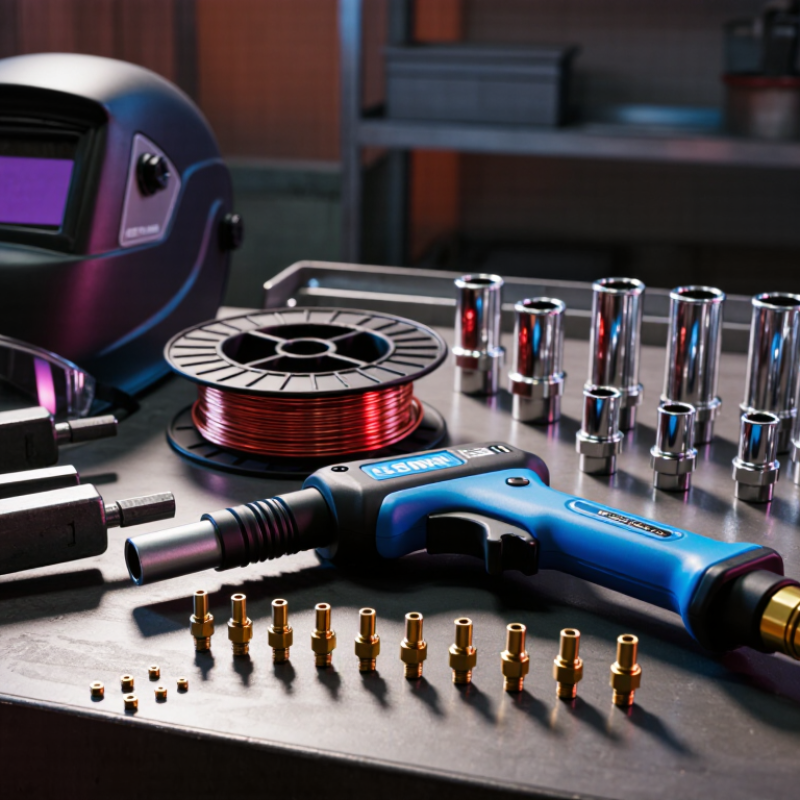
MIG accessories control how consistently the arc starts, wire feeds, and shielding gas reaches the weld pool. The contact tip transfers current to the wire; a worn or oversized tip can cause unstable feeding. The liner guides the wire through the torch, while drive rolls need the right groove and pressure. Too much pressure can deform soft wire. Small parts matter.
The U.S. Bureau of Labor Statistics projects about 45,800 annual openings for welders, cutters, solderers, and brazers from 2023 to 2033. Its Occupational Outlook Handbook reports 2% employment growth over that period. This is not a forecast for accessory sales, but it signals sustained demand for dependable welding work. In practice, a clean nozzle helps maintain gas coverage, and a sound ground clamp supports a stable electrical circuit. That sounds minor. It isn’t.
Match each part to the wire diameter, torch, and welding conditions specified by the equipment manual. A liner that is too long can kink; one that is too short may leave wire unsupported. Inspect tips and nozzles for spatter before a shift, and replace damaged parts rather than compensating with higher feed pressure. I still see accessory choice treated as an afterthought. It deserves a quick check before the first arc.
Contact tips transfer current to the wire, so a worn or oversized tip can cause erratic feeding and uneven arcs. Match the tip to the wire diameter. The nozzle directs shielding gas around the weld pool; spatter buildup can disturb coverage. A clean nozzle matters. Liners guide wire through the torch, while drive rolls grip and feed it. Set the roll pressure carefully: too much can deform soft wire, and too little can cause slipping. A sound work clamp also helps maintain a stable electrical path. AWS workforce outlooks have projected a need for about 330,000 welding professionals by 2028, underscoring the value of repeatable setup and reliable consumables.
Tips: Check the tip, nozzle, liner, and clamp before a shift. Keep a spare contact tip nearby. For aluminum wire, confirm that the liner and drive rolls suit the softer material. Small details count.
Fume control is part of a practical setup, not an optional add-on. NIOSH’s 1988 welding criteria document recommends limiting total welding-fume exposure to 5 mg/m³ as a time-weighted average. Use suitable local exhaust ventilation, and assess the task and material before choosing controls. Accessories do not fix every setup problem. I might still miss a dirty nozzle on a rushed day, so a short pre-weld check is worth keeping.
A MIG accessory must match the welder’s connections, output, and intended wire size. Start with the machine manual or its specification label. Check the torch connector, rated amperage, and duty cycle before buying a replacement gun. A gun’s plug may look right but still use a different pin layout. Small mismatches matter. For feeding parts, match the drive-roll groove and liner to the wire diameter and type. A liner made for solid wire may not feed soft aluminum wire smoothly. Contact tips should fit both the torch and wire size, while nozzles must suit the gun model and shielding-gas setup.
Then consider the actual job. Thin sheet metal needs different settings and wire choices from heavy plate, and accessories must support the machine’s working range. For aluminum or frequent short welds, a compatible spool gun can reduce feeding problems, but not every welder supports one. Check the control connection as well as the power rating. Match the regulator and hose fittings to the gas system, and confirm that the gas type suits the wire and material. It is tempting to buy a larger-rated part “just in case,” but fit and machine compatibility still come first. I would recheck the manual before ordering; product descriptions can leave out small connector details.
MIG accessories can look interchangeable on a shelf, but small mismatches cause poor feeding, spatter, and uneven bead starts. Grand View Research estimated the global welding-equipment market at about US$15.1 billion in 2023. That figure describes market scale, not accessory quality. Check the machine manual before buying tips, liners, rollers, or a replacement gun.
Material choice matters. Copper-alloy contact tips conduct heat well; confirm the tip bore matches the wire diameter, not just the gun model. Steel spiral liners suit many steel wires, while low-friction liners can help prevent soft aluminum wire from buckling. AWS A5.18/A5.18M classifies carbon-steel filler metals, so compare the wire’s classification and gas requirements with the job. A matching label is not enough.
Read the duty-cycle rating and amperage range on the gun and machine data sheets. IEC 60974-1 provides requirements for arc-welding power sources, including rated performance; use the rating under the conditions stated, not as a promise of continuous output. Look for clear material, size, and compatibility specifications. One detail is easy to miss. I still check liner fit by feeding wire through the assembled gun, because even a carefully selected liner can drag if installation is imperfect.
Choosing the right accessories starts with the wire and gun, not the price tag. Match the contact tip to the wire diameter, and confirm the liner suits both the wire and torch length. A mismatched liner can cause uneven feeding; a worn tip may contribute to burnback or an unstable arc. Check the drive rolls for the correct groove, too. Small details matter.
The American Welding Society’s workforce projections estimate that the United States may need about 330,000 welding professionals by 2028. This is not a parts-life statistic, but it highlights why dependable equipment and less avoidable downtime matter. Inspect tips, liners, nozzles, and diffusers during routine cleaning. Replace parts when they are visibly worn, distorted, or causing inconsistent feeding—not just because a calendar says so. There is no universal replacement interval; that is easy to overlook. Record wire type, diameter, and replacement date to spot recurring problems.
Tips: Keep compatible spares in a clean, labeled box. Before replacing a liner, check for kinks and debris. Follow the machine manual, and disconnect power before servicing. A checklist helps, but it can miss a loose connection; inspect carefully.
It transfers current to the wire. Match its bore to the wire diameter. A worn tip can make feeding erratic.
The nozzle directs shielding gas around the weld pool. Spatter inside can disrupt coverage. A quick visual check helps.
Use enough pressure to feed wire steadily, but avoid crushing it. Too much can deform soft wire; too little can cause slipping.
Choose parts designed for softer aluminum wire. A low-friction liner can reduce buckling. Check the machine manual before buying.
Inspect the tip, nozzle, liner, and work clamp. Keep a spare contact tip nearby. I still miss things on rushed days.
Compare its size, material, and specifications with the machine manual. Check the gun’s amperage range and duty-cycle rating, too.
It describes rated operating performance under stated conditions. It is not a promise of continuous output. Read the data sheet carefully.
No. Use suitable local exhaust ventilation and assess the task and material. Accessories alone cannot fix every setup problem.
MIG Welding Machine Accessories play an important role in achieving consistent welds, improving comfort, and protecting equipment. This guide explains how items such as torches, contact tips, nozzles, liners, cables, and protective gear support different parts of the welding process. It also highlights how the right accessories can help manage heat, maintain smooth wire feeding, and suit particular materials and project requirements.
Before buying, check that each accessory matches your welder’s connection type, wire size, operating range, and intended tasks. Compare materials, build quality, dimensions, and other essential specifications rather than choosing by appearance alone. Regular cleaning and inspection can help accessories perform reliably, while worn or damaged parts should be replaced promptly. By considering compatibility, quality, maintenance, and replacement needs together, welders can make informed choices and build a practical setup for dependable results.